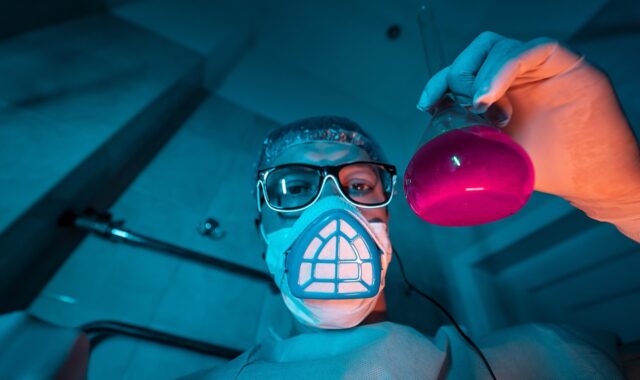
Goggles for chemicals buying guide for splash, mist, and daily handling

Quick answer for buyers
The right goggles for chemicals are not selected by price or by a chemical label on the package alone. For routine liquid handling, dilution, transfer, cleaning, plating, degreasing, and acid or caustic work, buyers should usually shortlist goggles that seal around the eyes, use indirect or no ventilation depending on the hazard, and carry the appropriate eye-protection markings for splash or droplet exposure. Safety glasses are useful for impact hazards, but they do not seal the eye area against liquid splash. A face shield can add face coverage, especially where larger-volume splash is possible, but it should normally be worn over suitable goggles rather than replacing them. The purchasing decision should start with the task, the Safety Data Sheet, and the site hazard assessment.
What chemical goggles are designed to do
Chemical goggles are primary eye protection intended to reduce the chance that liquids, droplets, dusts, or irritating materials reach the eyes during handling. Their key difference from ordinary safety glasses is the seal. Safety glasses protect against many flying particles and may provide side protection, but they leave gaps around the face. Chemical splash goggles are designed to sit against the face and limit entry paths around the lenses.

That seal matters when workers open drums, connect hoses, sample tanks, charge mixers, clean equipment, rinse lines, handle acids or caustic liquids, or use spray equipment. In these tasks, the hazard is not only a direct splash from a container. It may also come from hose whip, a blocked nozzle, a reacting mixture, pressure release, contaminated tools, or rebound splash from a vessel wall.
Eye protection is only one layer of control. OSHA guidance places eye and face protection within a wider PPE and hazard-control framework, and it does not replace ventilation, closed transfer, splash guards, compatible gloves, aprons, respiratory protection, or emergency eyewash planning. If a chemical can create hazardous vapors, toxic aerosols, or oxygen-deficient conditions, goggles alone are not an adequate control. In those cases, the task may require respiratory protection or a full-facepiece respirator selected under the employer’s respiratory protection program.
Start with the task and the Safety Data Sheet
Before comparing brands, buyers should define the exact job. OSHA 29 CFR 1910.132 requires workplace PPE selection to be based on a hazard assessment, and OSHA 29 CFR 1910.133 requires appropriate eye or face protection where employees are exposed to hazards such as liquid chemicals, acids or caustic liquids, chemical gases or vapors, and other eye hazards. In purchasing terms, the same chemical may require different eyewear when the quantity, pressure, temperature, or work method changes.
Section 8 of a Safety Data Sheet is the normal place to review exposure controls and personal protective equipment. It may specify safety goggles, chemical splash goggles, a face shield, respiratory protection, or other controls. Buyers should not treat one SDS line as a complete purchasing specification, because the actual work method still determines the exposure route and splash consequence.
- Quantity handled: A 100 ml laboratory transfer and a 200 liter drum connection do not create the same splash consequence.
- Energy in the system: Pump pressure, compressed air, agitation, spraying, and heated liquids can increase splash and mist risk.
- Chemical behavior: Corrosive, irritating, sensitizing, oxidizing, solvent-based, or reactive materials may require different combinations of eye, face, skin, and respiratory protection.
- Work position: Overhead work, tank access, pouring above eye level, and confined areas can change exposure paths.
- Other hazards: Impact, dust, optical radiation, heat, and respirator use may change the eyewear style or marking needed.
For broader procurement topics related to industrial equipment and PPE selection, see the Buying Guides section.
Venting styles and when each one makes sense
Ventilation is one of the most important buying choices because it affects both protection and fogging. More ventilation usually improves comfort and reduces lens fog, but it may also create a more direct path for liquids, dust, or mist to enter. Less ventilation improves isolation, although lenses may fog more quickly in warm, humid, or physically demanding work.
| Goggle style | Typical use | Buyer caution |
|---|---|---|
| Direct-vented goggles | Impact protection and some dust or particle tasks where liquid splash is not the main hazard | Do not select them for chemical splash work unless a qualified assessment confirms suitability. Open vents can allow liquids to reach the eyes. |
| Indirect-vented goggles | Common choice for liquid splash, droplets, and many chemical handling tasks | They reduce direct liquid entry but are not gas-tight. Confirm splash markings, fit, and compatibility with the task. |
| Non-vented goggles | Irritating mist, fine aerosol concern, or tasks where vent paths must be minimized | Fogging can be significant. Look for suitable anti-fog performance and consider work duration, heat, and cleaning needs. |
| Sealed goggles plus face shield | Higher splash consequence, drum handling, pressure transfer, corrosives, or large-volume handling | The shield adds face coverage but should not replace goggles where eye splash risk remains. |
NIOSH and CCOHS guidance both point buyers toward indirect-vented goggles for splash or fine dust situations, while CCOHS also identifies non-vented goggles for irritating chemical mists. The practical distinction is useful: for liquid splash and droplets, indirect vents often balance protection and fog control; for mists, buyers should evaluate whether non-vented goggles or a full-face respirator is more appropriate.
Standards and markings to check before purchase
For U.S. workplaces, OSHA 29 CFR 1910.133 identifies consensus standards used for protective eye and face devices and also allows devices that the employer demonstrates are at least as effective as devices built to those listed standards. The International Safety Equipment Association announced ANSI/ISEA Z87.1-2025 as the updated national standard for occupational and educational eye and face protection, while OSHA’s general industry regulation still references older incorporated editions. This difference matters for procurement: buyers should verify both the marking on the product and the compliance basis accepted by the site, customer, or jurisdiction.
Do not assume every product labeled chemical goggle has the same tested performance. Ask for the manufacturer’s technical data sheet and declaration of conformity or test information. The marking should match the hazard, not just the product category.
| Marking or documentation item | Why it matters |
|---|---|
| ANSI/ISEA Z87.1 or other applicable standard | Shows the product is made for recognized occupational or educational eye and face protection criteria. Check the edition and local compliance expectations. |
| D3 where ANSI/ISEA splash and droplet marking is used | Identifies splash and droplet protection in the ANSI/ISEA marking system used in recent selection guidance. |
| D4 or D5 where dust or fine dust is part of the task | Relevant when powders, dry ingredients, or particulate chemical hazards are present in addition to liquids. |
| Z87+ or impact-rated documentation where impact is possible | Important when chemical handling also involves flying particles, chipping, grinding, pressurized fittings, or brittle containers. |
| Manufacturer limitations | Clarifies whether coatings, frames, vents, or lens materials are suitable for the chemicals, cleaning agents, and temperatures in use. |
If purchasing for facilities outside the United States, confirm the applicable local standard rather than translating one marking system into another. European, Canadian, and other regional requirements may use different symbols, classifications, and test methods. Similar-looking goggles are not necessarily equivalent.
Fit, fogging, and compatibility decide whether goggles get worn correctly
A technically correct goggle can still fail in daily use if it does not fit the worker, conflicts with other PPE, or fogs so badly that the wearer lifts it during the task. Fit should be checked with the actual user group, not only on a mannequin or one purchaser. The frame should contact the face evenly, the strap should hold the seal without excessive pressure, and the goggle should not shift when the wearer looks down, bends, or turns the head.
Prescription eyewear is a common purchasing issue. OSHA’s eye-protection rule allows either eye protection that incorporates the prescription or protection worn over prescription lenses without disturbing the position of either the prescription lenses or the protective lenses. In buying terms, over-the-glasses goggles must have enough internal space and must not break the seal when worn over frames. For long-term users, prescription inserts or prescription-compatible systems may be more comfortable, but they still need to preserve the protective function.
Respirator compatibility is another frequent problem. Half-mask respirators can interfere with the lower edge of goggles, and tight straps can disturb the respirator seal or goggle seal. If workers use goggles with respirators, test the combination during task simulation. When both respiratory and eye protection are required, a full-facepiece respirator may be a better option, but that decision belongs in the respiratory protection program and must reflect the chemical hazard. See also: Storage Systems.
Fogging deserves serious attention. OSHA selection guidance notes that restricted ventilation can cause lenses to fog and that frequent cleaning may be required. Buyers should compare anti-fog coatings, indirect vent design, replacement lens availability, and cleaning instructions. A goggle that stays clear for the expected work period is more likely to be worn in the correct position.
Buying checklist for common chemical handling jobs
The table below is not a substitute for a site assessment, but it gives buyers a practical way to move from task to shortlist.
| Task or exposure scenario | Goggle shortlist | Additional controls to consider |
|---|---|---|
| Pouring or diluting acids and caustics | Indirect-vented chemical splash goggles with appropriate splash marking | Face shield over goggles, chemical-resistant gloves and apron, eyewash access, controlled pouring method |
| Connecting hoses, pumps, or transfer lines | Sealed splash goggles, preferably with impact rating if fittings may release or move | Line depressurization, splash guards, face shield, written connection procedure |
| Cleaning chemical process equipment | Indirect-vented or non-vented goggles depending on splash, spray, and mist risk | Ventilation, lockout or isolation, compatible gloves, protective clothing |
| Spraying or mist-generating work | Non-vented goggles or full-face respiratory protection where the assessment requires it | Respirator selection, ventilation, overspray control, exposure monitoring where applicable |
| Handling dry chemical powders | Goggles suitable for dust or fine dust exposure, with splash capability if liquid contact is also possible | Local exhaust, dust control, respiratory protection if airborne exposure requires it |
| Work with unknown or changing chemicals | Do not buy by generic category alone; review SDS and obtain safety input before selection | Hazard review, labeling, segregation, emergency planning |
Emergency readiness should be part of the buying decision. OSHA 29 CFR 1910.151(c) requires suitable quick drenching or flushing facilities where the eyes or body may be exposed to injurious corrosive materials. Goggles reduce risk, but they do not remove the need for eyewash planning when corrosive exposure is possible.
Maintenance, storage, and replacement
Chemical goggles are consumable safety equipment. Lenses get scratched, coatings degrade, straps lose elasticity, and frames can become contaminated or distorted. A purchasing plan should include replacement parts, cleaning supplies, storage cases or stations, and a discard rule. Damaged goggles should not stay in service simply because the lens is still transparent.
Cleaning instructions should come from the manufacturer. Some solvents, disinfectants, or aggressive cleaners may damage lens coatings or frame materials. In chemical plants and laboratories, a dedicated cleaning and drying location is often better than leaving goggles on benches, near open containers, or inside toolboxes where lenses can be scratched. Shared goggles also need hygiene controls and inspection between users.
Inspection should be simple enough for daily use. Check the lens for scratches, cloudiness, cracks, or coating failure. Check the frame for deformation and the seal for cuts or hardened areas. Check vents for contamination or blockage. Check the strap and adjusters. If the goggles no longer seal or visibility is poor, replace them.
Common buying mistakes to avoid
- Buying safety glasses for splash work: Side shields are not the same as a sealed goggle.
- Using a face shield alone: A shield helps protect the face but may allow liquid to travel around the sides, top, or bottom toward the eyes.
- Choosing direct vents for liquids: Direct openings can become entry paths during a splash.
- Ignoring fogging: If workers lift goggles to see, the protection is lost at the moment it is needed.
- Overlooking prescription eyewear: Regular glasses can break the goggle seal or prevent proper positioning.
- Relying on a vague product title: Verify the marking, technical sheet, and stated limitations.
- Not checking other PPE: Goggles must work with respirators, hard hats, hearing protection, hoods, gloves, and protective clothing.
Frequently asked questions
Are safety glasses enough for handling chemicals?
Usually not for splash tasks. Safety glasses can protect against impact and some flying particles, but they do not seal around the eyes. For liquid chemicals, acids, caustics, spray, or droplets, buyers should evaluate chemical splash goggles and, where splash consequence is high, a face shield worn over the goggles.
Should chemical goggles be indirect vented or non-vented?
Indirect-vented goggles are often used for liquid splash and droplet hazards because they reduce direct liquid entry while allowing some airflow. Non-vented goggles may be more appropriate where irritating mist or aerosol entry is the concern, but they can fog more easily. The choice should come from the SDS, the task assessment, and the site’s safety requirements.
Does a D3 marking mean the goggles are suitable for every chemical?
No. D3 indicates splash and droplet protection in the ANSI/ISEA marking system, but it does not prove compatibility with every chemical, concentration, temperature, or cleaning method. Buyers still need to review manufacturer limitations, the SDS, and the actual task conditions.
When should a face shield be added?
Add a face shield when the task can create a larger or more forceful splash, such as drum transfer, hose connection, pressurized cleaning, corrosive handling, or work above eye level. The face shield adds coverage for the face, but goggles remain important because they provide the closer seal around the eyes.
How often should chemical goggles be replaced?
There is no single replacement interval for every workplace. Replace goggles when lenses are scratched, cloudy, cracked, chemically attacked, or difficult to clean; when straps or frames no longer hold a reliable seal; or when manufacturer instructions or site policy require replacement after contamination or service life limits.