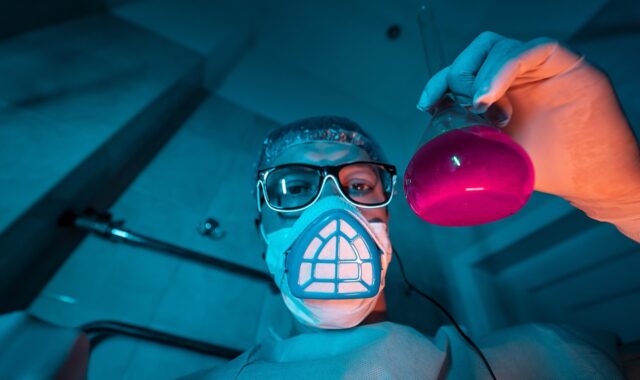
How to choose chemical lab instruments for accurate and safer testing

A practical way to choose chemical lab instruments
The right chemical lab instruments are the ones that fit the laboratory’s methods, sample workload, safety controls, and documentation requirements. A low purchase price can become costly if the instrument cannot meet detection limits, fit the fume hood or bench layout, support the required calibration, or receive timely service. Before comparing brands, define the test method, sample matrix, expected throughput, measurement uncertainty, operator skill level, utilities, and waste stream. This guide is for buyers, lab managers, and technical teams that need a structured procurement checklist rather than a basic product list.
For more equipment selection articles, visit the Buying Guides section.

Start with the method, not the instrument
A common purchasing mistake is choosing an instrument category first and then trying to make the method fit. In chemical testing, the workflow should run in the opposite direction. Start with the target analyte, concentration range, sample matrix, preparation steps, reporting format, and quality requirements. Only then should the team compare balances, ovens, pH meters, spectrophotometers, chromatographs, titrators, or spectroscopy systems.
For example, a laboratory measuring routine pH in aqueous samples does not need the same budget, utilities, or operator training as a laboratory measuring trace metals by ICP-MS. A team running basic wet chemistry may prioritize durable glassware, analytical balances, hot plates, water baths, and titration equipment. A laboratory supporting regulatory environmental analysis may need validated methods, traceable calibration, controlled sample handling, and data systems that preserve audit trails.
Before issuing a purchase request, prepare a short method profile that covers:
- Analytes or properties to be measured, such as pH, moisture, viscosity, metals, volatile organics, or purity.
- Sample matrix, including water, solvent, polymer, powder, oil, soil, gas, or corrosive liquid.
- Required range, limit of detection, precision, and reporting units.
- Daily or weekly sample volume and expected peak workload.
- Applicable internal SOPs, customer specifications, compendial methods, or regulatory methods.
- Required records, calibration certificates, maintenance logs, and data integrity controls.
Core instrument groups and how to compare them
Most chemical laboratories use a mix of general equipment, measurement instruments, sample preparation tools, and containment systems. The table below summarizes common categories and the buying checks that often matter more than brochure specifications.
| Instrument group | Typical use | Key buying checks |
|---|---|---|
| Analytical and precision balances | Weighing reagents, standards, and samples | Readability, capacity, draft protection, calibration weight class, vibration control, and data output |
| pH, conductivity, and ion meters | Routine electrochemical measurements | Electrode compatibility, temperature compensation, calibration points, replacement probe cost, and sample chemistry |
| Ovens, furnaces, incubators, and water baths | Drying, heating, digestion, conditioning, and stability work | Temperature range, uniformity, recovery time, controller accuracy, over-temperature protection, and chamber material |
| Centrifuges, shakers, mixers, and homogenizers | Sample preparation and phase separation | Rotor type, tube compatibility, speed range, imbalance protection, cleaning access, and aerosol or spill control |
| Spectrophotometers and colorimeters | Absorbance, concentration, and color measurement | Wavelength range, bandwidth, stray light, cuvette format, baseline stability, and software reporting |
| Chromatography systems | Separation and quantification of complex mixtures | Detector type, pump pressure, column compatibility, autosampler capacity, solvent use, method transfer, and service coverage |
| Atomic spectroscopy and mass spectrometry systems | Elemental and trace analysis | Detection limits, gas supply, clean sample preparation, ventilation, interference control, operator skill, and maintenance cost |
| Fume hoods and local exhaust devices | Worker protection during hazardous chemical handling | Containment performance, sash design, face velocity program, ducting, alarms, commissioning, and chemical compatibility |
This comparison shows why an instrument list alone is not enough. Buyers also need to evaluate the surrounding system: bench space, ventilation, gases, power, software, waste handling, cleaning, consumables, training, and service response.
Safety and facility fit should come before purchase orders
Chemical laboratory equipment is never isolated from the room that holds it. OSHA’s Laboratory standard, 29 CFR 1910.1450, requires a written Chemical Hygiene Plan when applicable to laboratory use of hazardous chemicals. That plan is not a shopping document, but it affects purchasing because equipment, personal protective equipment, and work practices must be capable of protecting workers from chemical hazards.
For buyers, safety review should happen before the purchase order, not after delivery. A solvent evaporator may require ventilation and cold-trap planning. Acid digestion equipment may need corrosion-resistant surfaces, secondary containment, and compatible exhaust. Gas chromatographs may require carrier gas cylinders or generators, regulators, leak checks, and safe cylinder restraint. High-temperature furnaces may need heat clearance, over-temperature protection, and a fire safety review.
Ventilation deserves special attention. A chemical fume hood is intended to protect workers from hazardous vapors, gases, aerosols, or particulates when used correctly. ASHRAE Standard 110 provides a recognized test method for evaluating fume hood containment performance, while ANSI/ASSP Z9.5 addresses laboratory ventilation management, fume hoods, exposure control devices, commissioning, testing, and related topics. Face velocity numbers alone should not be treated as proof of safe containment; hood design, sash position, cross-drafts, equipment placement, and user behavior also matter.
It is also important to distinguish between devices that may look similar. A clean bench is generally designed to protect the product, not the operator. A biological safety cabinet is designed around biological risk and airflow containment, and it may not be suitable for hazardous chemical vapors unless specifically designed and approved for that use. Ductless filtration devices can be useful in limited applications, but buyers must confirm chemical compatibility, filter capacity, breakthrough monitoring, and change-out procedures.
Accuracy depends on calibration, traceability, and records
Instrument accuracy is not just a specification printed on a datasheet. It is a maintained condition supported by calibration, reference materials, competent operators, controlled methods, and documented records. ISO/IEC 17025:2017 is widely used by testing and calibration laboratories to demonstrate competence, impartiality, and consistent operation. Even laboratories that do not seek accreditation can use its principles when planning equipment control.
NIST guidance on metrological traceability makes an important distinction: traceability is a property of a measurement result, not simply a sticker on an instrument. A useful calibration record should show the reference standard, calibration date, result, uncertainty when relevant, acceptance criteria, and any limitations. Buyers should ask vendors and calibration providers what documentation is supplied, which standards are used, and whether the calibration scope covers the range actually used in the lab.
Procurement teams should define calibration expectations before purchase:
- Which instruments need external calibration, internal verification, or both.
- What measurement range and tolerance are actually required for the method.
- Whether calibration certificates must include measurement uncertainty.
- How out-of-tolerance conditions will be investigated.
- Whether software can lock methods, record users, and export audit-ready data.
- Who is responsible for routine checks, preventive maintenance, and record retention.
For simple instruments, such as thermometers or balances, record quality is still important. For complex instruments, such as chromatography or mass spectrometry systems, documentation may also include qualification, method validation or verification, performance checks, consumable replacement, software version control, and user access management.
Compare total cost of ownership, not only purchase price
The purchase price of chemical lab instruments is only one part of the investment. A cheaper system may cost more over its service life if it uses expensive consumables, requires frequent service, has long downtime, or lacks compatibility with existing methods. A higher-priced system may be justified if it reduces manual work, improves repeatability, supports documented data handling, or allows method expansion.
Build a total cost comparison that includes at least five cost groups. First, include installation costs such as bench reinforcement, ventilation work, electrical upgrades, gas lines, regulators, water supply, drainage, exhaust, and environmental controls. Second, include operating costs such as columns, lamps, electrodes, gases, solvents, filters, vials, standards, reagents, and waste disposal. Third, include service costs such as preventive maintenance, emergency repair, travel fees, spare parts, and loaner availability. Fourth, include training and labor, especially if the instrument requires specialist operation. Fifth, include downtime risk, because delayed testing can affect production release, research timelines, or customer reporting. See also: Storage Systems.
Software is another long-term cost. Buyers should check whether the license is perpetual or subscription-based, whether updates are included, whether the system supports user permissions, and whether data can be exported in formats acceptable to the laboratory. If the lab operates under a quality system, confirm that the software supports required records before signing the order.
A procurement checklist for chemical laboratory buyers
The most reliable purchasing decisions usually come from a cross-functional review. At minimum, include the lab manager, end users, quality representative, safety officer, facilities contact, and procurement team. The checklist below can be used during supplier comparison.
- Define the method requirement, not just the desired instrument name.
- Confirm sample matrix, concentration range, throughput, and reporting format.
- Verify that the instrument can meet required accuracy, precision, and detection limits.
- Check chemical compatibility for wetted parts, seals, tubing, chambers, rotors, and probes.
- Confirm utility needs, including voltage, gases, water, drainage, exhaust, compressed air, and room conditions.
- Review safety controls such as ventilation, guarding, alarms, interlocks, spill containment, and emergency shutdown.
- Request sample documents, including manuals, calibration certificates, maintenance schedules, and software records.
- Ask about installation qualification, operational qualification, and performance qualification if your quality system requires them.
- Compare consumable availability and expected replacement intervals.
- Confirm local or regional service coverage, response time, spare parts availability, and warranty limits.
- Evaluate operator training needs and whether training is included in the purchase.
- Plan decommissioning, cleaning, contamination control, and disposal for the end of the instrument’s life.
A good purchase file should explain why the selected instrument fits the method and risk profile. This is more useful than a file that only contains quotations and a price comparison.
Common mistakes to avoid
The first mistake is buying for the highest specification instead of the actual need. A very high-sensitivity instrument may sound attractive, but it can add cost, maintenance, and operator burden if routine methods do not require that performance.
The second mistake is overlooking sample preparation. Many analytical failures begin before the sample reaches the instrument. Digestion, filtration, extraction, dilution, storage, and contamination control often determine whether the final result is reliable. Equipment such as pipettes, balances, centrifuges, hot blocks, shakers, and filtration systems deserves the same careful review as high-value analyzers.
The third mistake is separating safety from procurement. If an instrument requires ventilation, corrosive reagents, flammable solvents, high voltage, high temperature, pressure, or compressed gas, the safety and facilities review should be part of the buying process.
The fourth mistake is accepting vague calibration claims. Ask what is calibrated, at which points, against which reference, with what uncertainty if required, and how the certificate supports the laboratory’s use case.
The fifth mistake is underestimating service dependence. Some instruments are easy to maintain in-house, while others depend on factory-trained engineers. Buyers should know how quickly critical parts, field service, and technical support are available.
Frequently asked questions
What are the most essential chemical lab instruments for a new laboratory?
The answer depends on the laboratory’s purpose, but many new chemical labs begin with balances, pH or conductivity meters, glassware, pipettes, heating and drying equipment, mixers, centrifuges, safety storage, and appropriate ventilation. Specialized instruments such as HPLC, GC, FTIR, UV-Vis, ICP-OES, or ICP-MS should be selected only after methods and sample requirements are defined.
Should a lab buy new or used chemical lab instruments?
Used instruments can reduce upfront cost, but buyers should confirm service history, software access, spare parts availability, calibration status, installation requirements, and whether the vendor can still support the model. For quality-critical or regulated work, documentation gaps may offset the savings.
How often should laboratory instruments be calibrated?
Calibration frequency should be based on the method, risk, manufacturer guidance, instrument stability, past performance, and quality system requirements. High-risk or high-use instruments may need more frequent checks than stable instruments used for noncritical measurements.
What is the difference between calibration and maintenance?
Calibration compares an instrument or measurement system against a reference and documents the result. Maintenance keeps the equipment in working condition through cleaning, adjustments, part replacement, lubrication, software updates, or performance checks. A reliable lab needs both.
Why should ventilation be considered when buying chemical lab instruments?
Many chemical operations release vapors, aerosols, heat, or corrosive fumes. Ventilation affects worker protection, instrument performance, room comfort, and compliance planning. Buyers should review fume hoods, exhaust connections, room airflow, alarms, and chemical compatibility before ordering equipment that creates airborne hazards.
Conclusion
Choosing chemical lab instruments is a technical decision, not a catalog exercise. A strong purchasing process starts with the test method and sample workload, then checks safety, calibration, utilities, documentation, service, and lifetime cost. When these factors are reviewed together, the selected instruments are more likely to deliver reliable results, fit the facility, and support safer laboratory work over time.