Equipment used in chemistry lab and how to choose it for safe, practical work
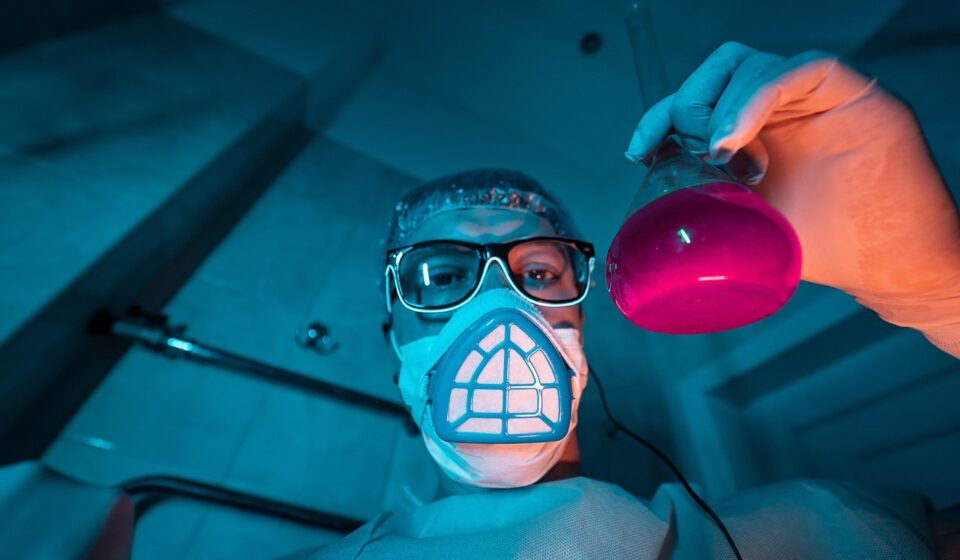
The equipment used in chemistry lab work is best treated as a working system, not a shopping list. It supports measurement, heating, mixing, containment, separation, storage, and emergency response. A small teaching lab may need durable glassware, balances, hot plates, PPE, and clear storage controls. A research or industrial lab may also need fume hoods, analytical instruments, specialized reactors, vacuum systems, and documented maintenance.
The right buying decision starts with the chemistry being performed, the hazards involved, the required accuracy, and the expected throughput. Public safety references such as OSHA’s laboratory standard, National Research Council laboratory safety guidance, and ANSI/ISEA emergency eyewash and shower guidance all support the same practical point: laboratory equipment should be selected as part of a controlled work process, not as isolated products.

For more practical purchasing topics, see the Buying Guides section.
What counts as equipment used in chemistry lab work?
In a chemistry laboratory, equipment includes the tools, vessels, instruments, furniture, utilities, and protective systems used to handle chemicals and produce reliable results. Some items are simple and inexpensive, such as beakers, spatulas, wash bottles, and funnels. Others are capital assets that may require installation, calibration, ventilation, or service contracts, including fume hoods, balances, ovens, water purification systems, gas systems, and analytical instruments.
A useful way to define lab equipment is by function rather than by product category. Most chemistry labs need equipment for seven jobs:
- Containment: beakers, flasks, bottles, hoods, glove boxes, spill trays, and secondary containment.
- Measurement: balances, pipettes, burettes, volumetric flasks, thermometers, pH meters, and conductivity meters.
- Heating and cooling: hot plates, heating mantles, ovens, baths, chillers, refrigerators, and freezers.
- Mixing and reaction: stirrers, shakers, reactors, condensers, magnetic stir bars, and clamps.
- Separation and preparation: funnels, filter assemblies, centrifuges, evaporators, sieves, and chromatography systems.
- Storage and waste handling: chemical cabinets, flammable storage cabinets, corrosive storage, waste containers, labels, and segregation trays.
- Safety and emergency response: PPE, eyewash units, safety showers, fire extinguishers, spill kits, gas detection, and signage.
This functional view helps prevent a common buying mistake: purchasing visible bench equipment while underfunding the infrastructure that makes the lab safe, usable, and repeatable.
Core bench equipment every chemistry lab should evaluate
Most chemistry labs begin with general bench equipment. These items are widely used, but their specifications still matter. A beaker is not a volumetric measuring device. A general-purpose balance may not be suitable for trace analysis. A hot plate that works for water-based samples may not be appropriate near flammable solvent vapor. Buyers should avoid treating basic equipment as interchangeable commodities.
Glassware and plasticware
Common glassware includes beakers, Erlenmeyer flasks, volumetric flasks, graduated cylinders, test tubes, watch glasses, condensers, separatory funnels, and reagent bottles. Borosilicate glass is often preferred for chemical resistance and thermal shock resistance. Plasticware may be a better choice when breakage risk, cost, or specific chemical compatibility supports it.
Selection should consider temperature range, pressure or vacuum exposure, chemical compatibility, graduations, neck type, stopper compatibility, and cleaning requirements. For quantitative work, volumetric flasks, pipettes, and burettes should be chosen according to the required tolerance class rather than appearance or nominal capacity alone.
Balances and weighing accessories
Balances are central to chemical preparation and quality control. Top-loading balances are suitable for routine weighing, while analytical balances are used for smaller masses and higher precision. Buying decisions should include readability, capacity, repeatability, calibration method, draft shielding, data output, and environmental conditions.
The balance also needs the right accessories: weighing boats, antistatic tools, calibration weights, printer or data connection, vibration-resistant tables, and cleaning tools. In practice, a balance that is technically accurate can still perform poorly if it is placed near drafts, vibration, heat, or heavy foot traffic.
Liquid handling and basic measurement
Liquid handling equipment includes pipettes, pipette controllers, burettes, dispensers, syringes, droppers, and wash bottles. Buyers should distinguish between approximate transfer tools and calibrated measuring tools. Routine preparation may tolerate simple graduated cylinders, but titration, standard solution preparation, or trace analysis requires more controlled liquid handling.
For meters and probes, including pH, conductivity, dissolved oxygen, and temperature instruments, the purchase should include replacement probes, calibration solutions, storage solutions, and written maintenance procedures. The probe is often the consumable that determines long-term measurement quality.
Heating, cooling, mixing, and reaction equipment
Chemistry labs often apply energy to samples, which makes heating and cooling equipment a safety-critical purchase category. Before comparing models, buyers should identify the sample type, solvent, temperature range, vessel shape, batch size, and whether the work is open, closed, refluxed, pressurized, or under vacuum.
Heating equipment
Common heating tools include hot plates, hot plate stirrers, heating mantles, water baths, oil baths, sand baths, ovens, muffle furnaces, and heat guns. The safest choice depends on the chemistry. Open flames are generally unsuitable where flammable vapors may be present. Hot plate stirrers provide convenient heating and agitation, but buyers should check maximum surface temperature, control stability, over-temperature protection, chemical resistance, and compatibility with external probes.
For ovens and furnaces, consider chamber volume, temperature uniformity, recovery time, exhaust needs, controller type, door safety, and whether samples may release vapors. Drying ovens, vacuum ovens, and muffle furnaces are not interchangeable, even if their temperature ranges overlap.
Cooling and temperature control
Cooling equipment may include laboratory refrigerators, freezers, recirculating chillers, refrigerated circulators, ice makers, cryogenic storage systems, and cold traps. Household refrigerators should not be substituted for laboratory units when flammable materials are involved, because lab-rated storage equipment is designed for the risks of chemical environments.
Temperature control specifications should be matched to the process. A reaction that needs only approximate cooling has different requirements from an analytical sample that must remain within a narrow temperature band. Buyers should consider alarms, data logging, defrost behavior, internal corrosion resistance, and backup plans for temperature-sensitive materials.
Mixing and reaction setups
Mixing equipment includes magnetic stirrers, overhead stirrers, vortex mixers, orbital shakers, homogenizers, and reactor systems. The right choice depends on viscosity, volume, shear sensitivity, solids content, and container geometry. Magnetic stirrers are convenient for low-viscosity liquids, while overhead stirrers are better for larger volumes or thicker mixtures.
Reaction equipment may require stands, clamps, condensers, adapters, pressure relief, inert gas connections, vacuum lines, and splash shields. These supporting items are not optional accessories in practical use; they often determine whether a reaction setup is stable and controllable.
Containment, ventilation, and chemical storage
For many labs, the most important purchasing decisions are not the instruments on the bench but the systems that limit exposure and control chemical release. OSHA’s laboratory framework emphasizes written procedures, engineering controls, PPE, and related protective measures. The National Research Council’s chemical laboratory safety guidance also treats hoods, storage, spill control, and segregation as core parts of laboratory operation.
Chemical fume hoods and local exhaust
A chemical fume hood is used to help control exposure to hazardous vapors, gases, aerosols, and dusts when appropriate work practices are followed. Buyers should not choose a hood only by width. Key considerations include face velocity target, sash design, airflow monitoring, ducted or ductless configuration, chemical compatibility, make-up air, alarm functions, and commissioning requirements. See also: Storage Systems.
Ducted hoods are common for many chemical applications, but they require building ventilation capacity and professional installation. Ductless filtered hoods may be useful for limited, well-defined chemicals, but they require filter selection, breakthrough assessment, and maintenance discipline. If the chemical inventory changes often, buyers should be cautious with any containment device that depends on specific filter media.
Storage cabinets and segregation
Chemical storage equipment should support segregation by hazard class, not just provide more shelf space. Flammable liquids, corrosive acids, bases, oxidizers, water-reactive materials, compressed gases, and toxic substances may require different storage approaches. Secondary containment trays can help capture leaks, but they do not replace proper segregation or labeling.
When buying cabinets, evaluate certification or conformance claims, internal corrosion resistance, door closing behavior, spill containment sump, ventilation policy, grounding or bonding provisions when relevant, and compatibility with the site’s emergency procedures. A cabinet that is too small often leads to overcrowding, poor labeling, and unsafe storage on benches or in fume hoods.
Waste handling equipment
Chemical waste containers, funnels, labels, satellite accumulation trays, and compatible caps should be selected before work begins. Waste equipment must match the waste stream. Solvent waste, acid waste, base waste, heavy-metal waste, sharps, broken glass, and contaminated solids may have different container and labeling needs.
Buyers should avoid one-size-fits-all waste systems. A better approach is to map likely waste streams, identify incompatibilities, and choose containers, closures, trays, and labels that make correct disposal easier for the user at the bench.
Safety equipment is part of the lab system, not an add-on
Personal protective equipment and emergency equipment do not make unsafe procedures safe by themselves. They are part of a hierarchy that also includes substitution, engineering controls, work practices, training, and maintenance. Still, they are essential purchases for any lab using chemicals.
PPE for chemistry work
Typical PPE includes safety glasses or goggles, face shields, lab coats, chemical-resistant gloves, aprons, and suitable footwear. Selection depends on splash risk, chemical permeability, cut risk, temperature, and task duration. Glove choice is especially important because no single glove material protects against every chemical. Nitrile, neoprene, butyl, latex, and laminated gloves can behave very differently with solvents, acids, bases, and oxidizers.
Buyers should include multiple sizes, compatible storage, disposal bins, and replacement frequency in the purchasing plan. PPE that does not fit or is difficult to access will not be used consistently.
Eyewash stations, safety showers, and spill response
Emergency eyewash and shower equipment should be selected and located according to the hazards present. ANSI/ISEA guidance is widely referenced for emergency eyewash and shower performance, including the expectation that equipment can provide flushing fluid for 15 minutes. Placement, access, signage, water temperature, testing, and maintenance are just as important as the fixture itself.
Spill kits should match likely spills. A general absorbent kit may be useful for small non-specific spills, but it may not be sufficient for strong acids, strong bases, mercury, hydrofluoric acid, or reactive materials. Buying spill response equipment requires knowing the chemical inventory rather than copying a generic checklist.
A practical buying framework for chemistry lab equipment
The best purchasing process begins with work definition. Before comparing brands or prices, list the experiments, sample volumes, chemicals, temperatures, pressure conditions, measurement tolerances, and throughput requirements. Then identify the hazards and controls required for those activities.
Use the following framework to turn a long equipment list into a defensible buying plan:
- Define the work: Identify the laboratory’s teaching, research, quality control, pilot, or production-support role.
- Map the workflow: Follow samples from receiving to storage, preparation, reaction, analysis, waste, and cleaning.
- Identify hazards: Review chemical classes, flammability, toxicity, corrosivity, pressure, heat, glass breakage, and waste.
- Set performance requirements: Specify capacity, accuracy, temperature range, materials of construction, software needs, and utilities.
- Check infrastructure: Confirm power, water, drainage, ventilation, gas supply, floor loading, bench space, and emergency access.
- Plan maintenance: Include calibration, cleaning, consumables, spare parts, service access, and documentation.
- Control lifecycle cost: Compare not only purchase price but also installation, validation, energy use, filters, probes, calibration, and downtime.
This framework also helps prevent overbuying. A lab does not always need the most advanced instrument; it needs equipment that fits the required method, safety controls, and workload.
Comparison table for common chemistry lab equipment
| Equipment category | Main purpose | Key buying checks | Common mistake to avoid |
|---|---|---|---|
| Glassware and plasticware | Holding, reacting, transferring, and measuring liquids | Chemical compatibility, temperature range, tolerance, breakage risk | Using approximate glassware for quantitative measurement |
| Balances | Measuring mass | Readability, capacity, calibration, location, draft protection | Ignoring vibration, drafts, and routine calibration needs |
| Hot plates and stirrers | Heating and mixing samples | Temperature control, surface material, over-temperature protection, stirring capacity | Using unsuitable heating near flammable vapors |
| Fume hoods | Exposure control for suitable chemical operations | Airflow design, sash, alarms, ducting, commissioning, chemical compatibility | Choosing only by size without checking ventilation capacity |
| Storage cabinets | Segregated chemical storage | Hazard class, cabinet material, spill containment, labeling, access control | Mixing incompatible chemicals in one cabinet |
| PPE and emergency equipment | Worker protection and emergency response | Chemical compatibility, fit, location, inspection, replacement schedule | Treating PPE as a substitute for engineering controls |
Frequently asked questions
What is the most important equipment in a chemistry lab?
There is no single item that is always the most important. For exposure control, a properly selected and maintained fume hood may be critical. For measurement quality, balances and calibrated volumetric tools may matter most. For emergency readiness, eyewash stations, safety showers, spill kits, and fire protection can be essential. The priority depends on the lab’s chemicals and procedures.
What equipment should a basic chemistry teaching lab have?
A basic teaching lab usually needs durable glassware, balances, hot plates or hot plate stirrers, thermometers or probes, pH meters, funnels, clamps, wash bottles, PPE, labeled storage, waste containers, eyewash access, and spill response supplies. The exact list should be matched to the experiments and institutional safety rules.
How should buyers choose between glass and plastic labware?
Glass is often preferred for heat resistance, visibility, and broad chemical compatibility, while plastic can reduce breakage and may be suitable for many aqueous or routine handling tasks. The decision should be based on chemical compatibility, temperature, sterility needs, measurement tolerance, and disposal practices.
Is a ductless fume hood suitable for every chemistry lab?
No. Ductless hoods can be useful for defined applications where the filter system is matched to known chemicals and maintained correctly. They are not a universal substitute for ducted chemical fume hoods, especially when chemical use changes frequently or when filter breakthrough would be difficult to manage.
What should be checked before buying used chemistry lab equipment?
Used equipment should be evaluated for condition, contamination risk, missing parts, service history, calibration status, software or firmware support, availability of manuals, and compatibility with current safety requirements. For safety-critical equipment such as hoods, pressure systems, refrigerators for flammables, and emergency devices, professional inspection is strongly advisable before use.
Bottom line for buyers
The right equipment used in chemistry lab work is the equipment that fits the chemistry, the people, the space, and the required control measures. Start with the workflow and hazards, then specify the tools needed for accurate measurement, controlled reactions, safe containment, compliant storage, and emergency response. A well-planned lab equipment purchase reduces rework, limits unsafe improvisation, and supports more reliable results over the full life of the laboratory.