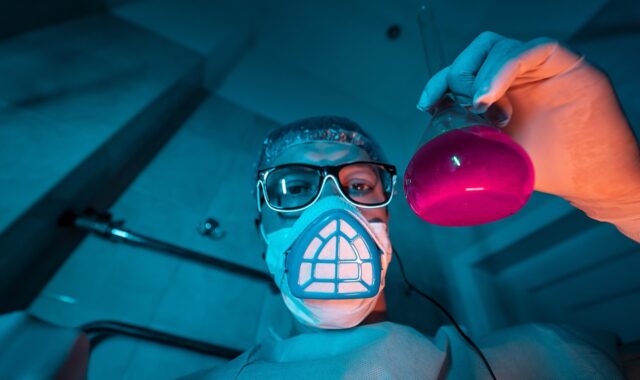
How to choose laboratory aprons for chemical splash protection

What laboratory aprons are meant to do
Laboratory aprons are secondary protective clothing used when a lab coat alone may not provide enough protection against splashes, corrosive liquids, irritating chemicals, or tasks with a higher likelihood of skin contact. Selection starts with the hazard: the chemical, concentration, volume, temperature, splash pattern, exposure time, and whether fire or heat is also present. In practice, buyers should treat laboratory aprons as one part of a broader PPE program, not as a universal barrier. OSHA’s general PPE rule requires employers to assess workplace hazards, select PPE that protects against the identified hazards, communicate those selections, and choose PPE that properly fits affected employees. (osha.gov)
For purchasing teams, the useful question is not “Which apron is strongest?” but “Which apron material and design match the task?” This buying guide focuses on material compatibility, splash coverage, documentation, and realistic limitations.

Start with the hazard assessment, not the apron catalog
A laboratory apron should be specified only after the lab defines the work it is trying to control. OSHA’s laboratory standard requires a Chemical Hygiene Plan for covered laboratories. OSHA’s non-mandatory laboratory guidance also states that additional protective clothing should be used where significant skin-contact exposure is possible, and that the protective characteristics of the clothing must match the hazard. (osha.gov) (osha.gov)
A useful buying specification should answer these questions before naming a material:
- What chemicals are handled? Include the exact substance, concentration, mixture, and expected contaminants.
- How much liquid could contact the apron? A few drops during bench work is different from transferring liters of acid or cleaning process glassware.
- How long could contact last? Short incidental splash and prolonged wet contact require different levels of barrier confidence.
- Where is the exposure likely? Front torso only, lap area, sleeves, legs, or lower body protection may be needed.
- Is there a fire, heat, or static concern? Some chemical-resistant plastics can be poor choices around open flames or flammable materials.
- Will the apron be worn over a lab coat? Many apron programs use the apron as an outer splash layer, not as the only protective garment.
This approach helps avoid a common purchasing error: choosing a thick apron because it feels durable, without checking it against the actual chemicals used in the lab.
Compare apron materials by chemical resistance and limitations
No single apron material is right for every laboratory. NIOSH describes chemical protective clothing performance in terms of penetration, permeation, and degradation. Penetration is movement through holes, seams, tears, or closures; permeation is molecular movement through the material; degradation is physical or chemical breakdown of the barrier. (archive.cdc.gov) (archive.cdc.gov)
| Apron material or type | Common buying use | Key cautions |
|---|---|---|
| PVC or vinyl | General splash protection for some acids, bases, aqueous solutions, and cleaning tasks | May be unsuitable for certain organic solvents, high heat, or flame exposure; verify compatibility data. |
| Neoprene | Often selected for broader chemical splash resistance, including many acids, caustics, alcohols, and some oils | Performance varies by formulation, thickness, backing fabric, and chemical concentration. |
| Rubber-coated apron | Useful as a durable outer layer for corrosive splash protection over a lab coat | Can be uncomfortable for long wear periods and should still be checked against chemicals in use. |
| Butyl or specialty laminate | Considered for more demanding chemical hazards where standard apron materials may not be enough | Usually higher cost; request permeation or compatibility data for the exact chemical. |
| Disposable coated or laminated apron | Short-duration work, contamination control, or tasks where cleaning is difficult | May have limited tear resistance, limited chemical data, and more waste-management requirements. |
University laboratory safety guidance commonly distinguishes lab coats from aprons: lab coats may be suitable for minor splashes and solids contamination, while plastic or rubber aprons are often recommended for corrosive or irritating liquids. The University of Illinois Division of Research Safety also notes that chemically resistant aprons and smocks can provide better chemical splash protection than lab coats and should be checked against manufacturer specifications. (drs.illinois.edu) (ehs.princeton.edu)
Do not ignore fire and heat exposure
Chemical resistance is not the only performance requirement. The National Academies’ Prudent Practices in the Laboratory states that washable or disposable protective apparel, including aprons, may be used for work with especially hazardous chemicals. Selection should consider resistance to physical hazards, flexibility, chemical and thermal resistance, and ease of cleaning or disposal. It also cautions that plastic or rubber aprons can provide good protection from corrosive liquids but may be inappropriate in a fire scenario. (nationalacademies.org) (law.resource.org)
This matters in chemical laboratories where acids, solvents, burners, hot plates, heated baths, or pyrophoric materials may be present. An apron that works well for corrosive splash protection might not be the best outer garment near ignition sources. If a task involves both corrosive liquid and flame or heat risk, the lab should consult its chemical hygiene officer or safety professional and evaluate a combined clothing system, such as a flame-resistant lab coat plus a compatible splash apron where appropriate.
Check design details that affect real protection
Material selection is only part of the buying decision. Laboratory aprons also fail in use when they do not cover the right area, do not stay in place, or create workflow problems that cause users to avoid them.
Coverage and length
For bench work, a bib apron that covers the front torso and upper legs may be enough. For transfers from carboys, acid cleaning, battery testing, etching, or pilot-scale chemical handling, a longer apron or a smock with sleeves may be more appropriate. The lower edge should protect the lap when seated and the upper legs when standing, but it should not be so long that it catches on stools, carts, or steps.
Neck and waist fastening
Adjustable neck straps help position the bib high enough to cover the chest. Waist ties should be long enough for different body sizes, but not so long that they trail into chemicals or moving equipment. Quick-release designs can be helpful where rapid doffing after contamination is part of the emergency plan.
Thickness and flexibility
Thicker materials may improve durability or chemical resistance in some cases, but thickness alone is not proof of protection. Very stiff aprons can restrict movement, create gaps at the sides, and discourage routine use. For long-duration tasks, flexibility and weight affect compliance as much as specification sheets do.
Seams, edges, and attachments
Buyers should inspect whether straps, eyelets, seams, or reinforced points introduce weak spots. For splash work, a smooth front surface with minimal stitching is easier to wipe and less likely to trap liquid. If sleeve protection is needed, an apron alone may not be sufficient.
Ask suppliers for evidence, not broad claims
Labels such as “acid resistant,” “chemical proof,” or “industrial grade” are too vague for laboratory purchasing. A supplier should be able to provide a chemical compatibility chart, test references, recommended use limits, cleaning guidance, storage requirements, and a statement of material composition. See also: Storage Systems.
Two test concepts are especially useful. ASTM F903 is a standard test method for resistance of protective clothing materials to penetration by liquids, but ASTM notes that the method does not address penetration of a full garment or ensemble. ASTM F739 addresses permeation of liquids and gases through protective clothing materials under continuous contact conditions. These tests can support apron selection, but buyers should remember that lab conditions, temperature, mixtures, wear, seams, and user behavior can change real-world performance. (store.astm.org) (yosemite.epa.gov)
NIOSH similarly cautions that chemical protective clothing recommendations are a starting point and that laboratory test information alone should not be assumed to provide adequate workplace protection in every setting. For purchasing, this distinction matters: a compatibility table supports selection, but it does not replace task-level review. (archive.cdc.gov)
Reusable vs disposable laboratory aprons
Reusable aprons are typically a better fit when the lab needs durability, frequent splash protection, and established cleaning procedures. They may reduce recurring purchasing volume, but only if the lab inspects them consistently and removes damaged aprons from service. Cracks, stiffening, swelling, tackiness, discoloration, delamination, tears, and damaged straps are warning signs.
Disposable aprons can make sense for biological contamination, messy one-time operations, visitor use, or tasks where cleaning a reusable apron would be impractical. Disposable does not automatically mean safer. Disposable aprons often have less mechanical durability, and their chemical resistance may be narrower than buyers assume. Waste handling must also be considered if the apron becomes chemically contaminated.
A practical purchasing policy may include both: reusable neoprene or PVC aprons for routine chemical splash work, plus disposable outer aprons for short, contamination-heavy tasks after compatibility has been confirmed.
A buyer’s checklist for laboratory aprons
Before issuing a purchase order, use this checklist to turn safety requirements into a clear specification:
- Identify chemicals, concentrations, mixtures, and expected contact duration.
- Confirm whether the apron is for incidental splash, frequent splash, transfer work, cleaning, or emergency response support.
- Document whether fire, heat, static, cryogenic, biological, or mechanical hazards are present.
- Request manufacturer chemical compatibility data for the exact material and thickness.
- Check whether test data addresses penetration, permeation, or degradation, and under what conditions.
- Specify length, width, strap design, closure type, and whether sleeve protection is needed.
- Decide whether the apron is worn over a lab coat, with chemical-resistant gloves, and with eye or face protection.
- Define inspection, cleaning, storage, replacement, and disposal procedures.
- Buy a size range so the apron fits users properly and does not create trip or entanglement hazards.
- Review the final selection with the lab’s safety lead before standardizing the item across multiple labs.
The most defensible purchase connects each apron feature to a defined hazard. That is more reliable than buying a single “standard lab apron” for every bench, every chemical, and every user.
Frequently asked questions
Are laboratory aprons required in every chemical lab?
Not always. Aprons are usually selected when the hazard assessment shows a meaningful risk of splash, corrosive contact, irritating liquid contact, or contamination that a standard lab coat does not adequately address. Some routine dry work may not need an apron, while acid transfer or equipment cleaning may require one.
Can a laboratory apron replace a lab coat?
Usually no. Many laboratories use an apron as an outer splash layer over a lab coat. A front apron may leave arms, shoulders, and the back exposed, so it should be matched to the task rather than treated as full-body protective clothing.
Is PVC better than neoprene for laboratory aprons?
Neither material is universally better. PVC can be useful for many aqueous splash tasks, while neoprene is often chosen for broader chemical splash applications. The correct choice depends on the chemical, concentration, contact time, temperature, and manufacturer compatibility data.
How often should reusable aprons be replaced?
There is no single replacement interval for every lab. Replace an apron when inspection shows cracking, swelling, tears, stiffening, strap failure, contamination that cannot be cleaned, or any change that raises doubt about barrier performance. High-use areas should inspect aprons more frequently.
What documentation should buyers keep?
Keep the hazard assessment, the selected apron specification, supplier compatibility data, relevant test information, cleaning instructions, and replacement criteria. This documentation helps purchasing, safety, and laboratory teams make consistent decisions when chemicals or workflows change.