Warehouse storage racks for safer and more efficient industrial storage

What warehouse storage racks need to achieve
Warehouse storage racks do more than increase vertical storage. In an industrial facility, they influence safety, inventory accuracy, forklift travel, fire protection, spill control, and the cost of future expansion. A sound rack plan starts with the load, the handling equipment, and the building conditions before beam sizes or rack styles are selected. For chemical equipment warehouses, maintenance stores, spare parts rooms, and production support areas, the same rule applies: the rack must match the material, not the other way around.
This article explains how to evaluate warehouse storage racks without reducing the decision to a price comparison. It covers practical selection factors, common rack types, layout trade-offs, inspection routines, and the questions a facility team should answer before approving a storage design.
For more storage-related topics, see the Storage Systems section.
Start with the stored load
The most important rack specification is not height or color. It is the real load condition the rack must support over time. In many warehouses, rack problems begin when a system designed for one product mix is later used for heavier pallets, irregular containers, drums, tooling, or mixed spare parts.
Before choosing a rack type, a facility should document the heaviest pallet or container, the average load, unit load dimensions, pallet condition, and whether the load is stable enough to sit on beams, decking, or dedicated supports. In chemical and process equipment environments, the review should also consider corrosion risk, liquid leakage risk, temperature, humidity, and whether materials require segregation.
Industrial steel storage rack design in North America is commonly associated with ANSI MH16.1, including the 2023 edition. European facilities often refer to EN 15635 for the application and maintenance of storage equipment. These references are useful because they move the discussion from assumptions to documented capacity, installation quality, safe use, and inspection.
- Unit load weight: Include the pallet, packaging, container, and any liquid or residual material.
- Load footprint: Check whether the pallet or container fully bears on the designed supports.
- Load stability: Consider shrink wrap, strapping, drum cradles, and anti-roll supports where needed.
- Load variation: A rack system used for changing inventory needs more conservative planning than one used for a single product family.
- Environmental exposure: Moisture, fumes, washdown, and outdoor air can affect coating selection and inspection needs.
Common rack types and where they fit
Most warehouse storage racks fall into a few familiar categories, but the right choice depends on selectivity, density, handling method, and operating risk. A rack that saves floor space may reduce direct access. A highly selective system may require more aisles. The best fit is usually the system that supports the actual picking and replenishment pattern with the least handling damage.
| Rack type | Typical use | Main advantage | Key limitation |
|---|---|---|---|
| Selective pallet rack | Mixed pallets, spare parts, general warehouse storage | High access to individual pallet positions | Lower storage density than deep-lane systems |
| Drive-in or drive-through rack | Large quantities of similar products | High density with fewer aisles | More contact risk and lower selectivity |
| Push-back rack | Medium-density pallet storage with repeated SKUs | Better density while keeping front access | Requires careful load compatibility and cart maintenance |
| Pallet flow rack | First-in, first-out inventory rotation | Good for time-sensitive materials | Higher initial design and maintenance complexity |
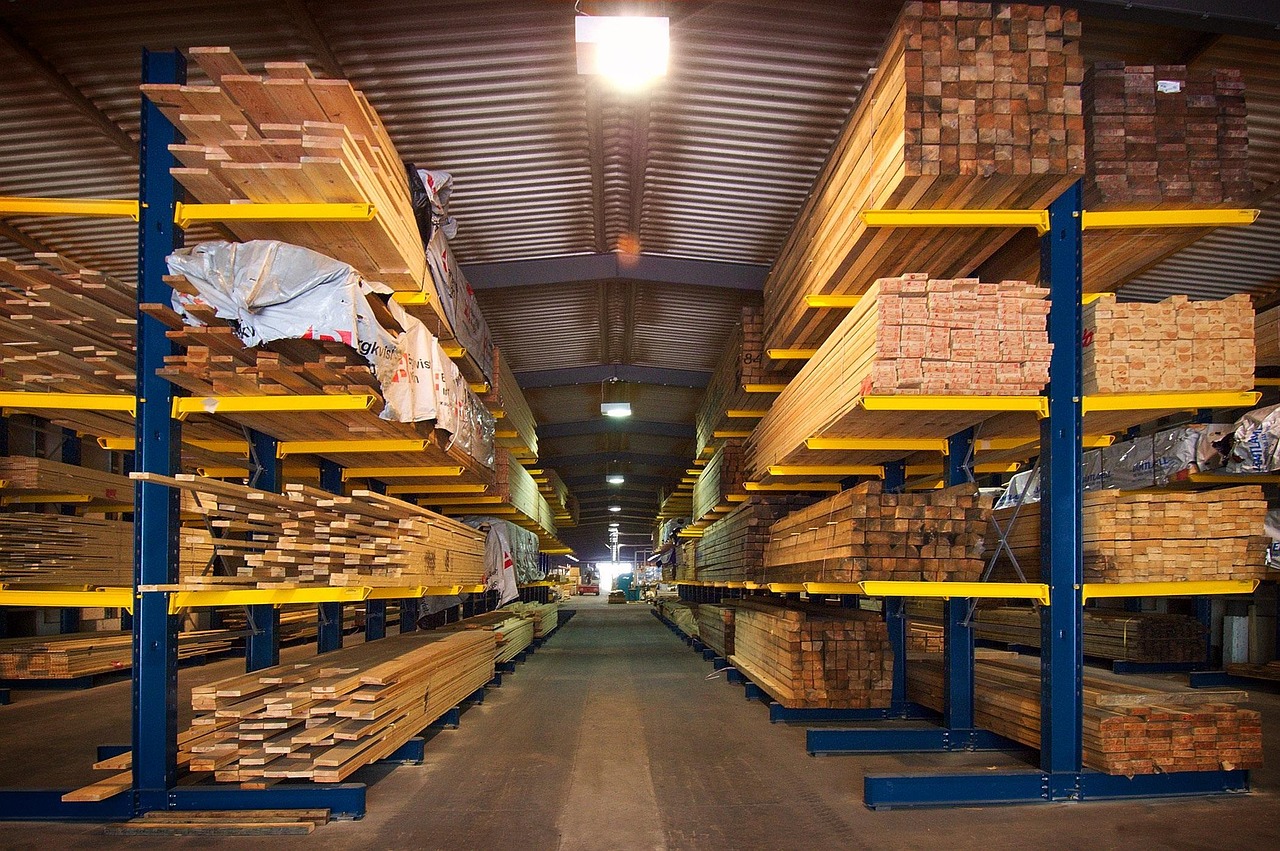
| Cantilever rack | Pipe, profiles, long components, structural parts | Handles long or irregular loads | Needs strong load control and clear aisle discipline |
| Shelving or light-duty rack | Small parts, tools, fittings, maintenance stores | Easy manual access | Not suitable for heavy pallet loads unless designed for them |
Selective pallet rack remains the most flexible option for many industrial facilities because it supports varied inventory and direct access. High-density systems can also make sense when a warehouse stores repeated items in predictable volumes. The key is to compare rack type against inventory movement and handling conditions, not against a catalog image.
Layout decisions that influence safety and productivity
A rack layout should be designed around people, forklifts, pallets, doors, columns, sprinklers, lighting, and emergency routes. If the layout is optimized only for maximum pallet positions, daily work may become slower and more hazardous.
Aisle width is one of the most visible trade-offs. Wider aisles generally improve maneuvering and reduce rack impact, but they reduce storage density. Narrow aisle and very narrow aisle layouts can increase capacity, yet they require compatible lift trucks, floor flatness, guidance systems in some cases, and stricter operating discipline. The practical question is not simply how many rack bays fit in the building. It is whether operators can place and retrieve loads safely every shift.
OSHA warehousing guidance emphasizes issues such as protecting rack uprights from forklift contact and marking permanent aisles where handling equipment operates. In practice, rack design should be supported by floor markings, column protection, end-of-aisle guards, speed control, operator training, and a clear reporting process for damage.
Clearances should be planned, not discovered later
Clearance problems often appear after installation: pallets extend into flue spaces, loads sit too close to sprinklers, or lift trucks cannot turn without striking uprights. These problems are expensive to correct because they may require re-slotting inventory or modifying the rack layout.
Important clearance checks include pallet overhang, beam elevation, aisle width, building column offsets, emergency exits, lighting, sprinkler arrangement, and the distance between stored goods and ceiling fire protection. Fire protection rules vary by jurisdiction, commodity, rack type, storage height, and sprinkler design. For that reason, rack height and load profile should be reviewed with the facility fire protection professional before installation, not after the warehouse is full.
Slotting affects rack damage
Slotting is often treated as an inventory task, but it is also a rack safety issue. Fast-moving products placed in difficult locations increase travel, turning, and impact exposure. Heavy pallets stored too high may increase handling risk. Poorly located slow movers can occupy valuable low-level positions and force operators into less efficient movement patterns.
A practical approach is to keep high-frequency items in accessible zones, place heavy or awkward loads where handling is most stable, and reserve upper levels for lighter or less frequently accessed loads when the rack design allows it. This does not replace engineering capacity checks, but it helps the rack system operate as intended.
Special considerations for chemical and process industry storage
Chemical industry warehouses often store more than standard boxed goods. They may hold drums, intermediate bulk containers, gaskets, valves, motors, hoses, metal parts, catalysts, maintenance chemicals, and contaminated return items. This mix creates storage questions that ordinary retail rack planning may not address.
First, compatibility matters. Materials that should not be stored together should not be placed in the same bay simply because space is available. Facility teams should follow the applicable safety data sheets and internal segregation rules for corrosives, flammables, oxidizers, reactive materials, and other controlled substances. Where liquid containers are stored, spill containment and floor protection should be considered with the rack design.
Second, corrosion can shorten the useful life of racking. Coating damage, chemical fumes, wet pallets, leaking containers, and washdown areas can expose steel components to deterioration. In these environments, inspection should go beyond obvious forklift impact. It should also check rust, pitting, coating failure, anchor condition, and deformation around beam connectors or base plates.
Third, non-standard loads need dedicated supports. Drums, pipe bundles, long shafts, and irregular equipment parts may not sit safely on ordinary pallet rack beams. Depending on the load, the system may require decking, cradles, trays, secondary containment, custom supports, or cantilever rack. Improvised boards and mixed scrap supports may appear convenient, but they can hide load paths and create failure points. See also: Pumps and Valves.
Capacity labels, installation quality, and change control
A rack system should have clear load information available to the people who use it. Capacity labels or load plaques help operators and supervisors understand the maximum permitted load per level, bay, or unit position as defined by the rack design. These labels are not decoration. They are part of the communication system that keeps everyday use aligned with the engineered design.
Installation quality is just as important. Uprights must be plumb, beams must be properly seated, anchors must match the design requirement, and damaged components should not be used as substitutes. A rack system may look strong while still being unsafe if connectors are missing, beam locks are not engaged, frames are out of alignment, or floor anchors are absent where required.
Change control is one of the most commonly overlooked issues in rack management. Moving beams, adding levels, changing pallet weights, adding decking, converting storage use, or relocating a rack line can affect capacity and stability. These changes should be reviewed against the original design documentation or by a qualified rack professional. The same caution applies when used rack components are mixed from different manufacturers or have unknown histories.
Inspection and maintenance should be routine
Warehouse storage racks are exposed to repeated handling activity. Even a well-designed system can become unsafe if damage is ignored. A practical inspection program includes frequent visual checks by warehouse staff, a formal reporting path, and periodic review by a competent person. European practice under EN 15635 places strong emphasis on use and maintenance, including regular inspection of storage equipment.
Inspection should focus on conditions that change the load path or reduce stability. Small dents and twists can matter if they occur in critical locations, especially near base plates, lower uprights, beam connectors, and bracing. Any rack damage should be assessed before the position is returned to service.
- Impact damage on uprights, braces, beams, and end frames
- Missing or loose beam safety locks
- Out-of-plumb frames or visible rack leaning
- Missing, loose, damaged, or corroded floor anchors
- Overloaded positions or loads that do not match posted capacity
- Improper pallet overhang or blocked flue spaces
- Rust, coating failure, or chemical attack on steel members
- Stored goods blocking aisles, exits, sprinkler patterns, or access to emergency equipment
Repair should be controlled. Welding, heating, straightening, or drilling rack components without engineering approval can create new risks. Replacement parts should match the rack system and the design requirement. When damage is severe or uncertain, unloading the affected bay is a safer decision than waiting for the next scheduled inspection.
A practical selection checklist
Before approving a warehouse rack project, facility teams can use a short checklist to reduce the chance of under-specified equipment or costly redesign. The checklist should be completed with input from operations, safety, maintenance, fire protection, and inventory control.
- List the maximum and typical unit loads, including pallet or container weight.
- Confirm load dimensions, overhang, center of gravity, and support requirements.
- Match rack type to inventory rotation, selectivity, and handling frequency.
- Verify forklift type, turning radius, lift height, and aisle requirements.
- Review floor slab condition, anchors, column locations, doors, and traffic paths.
- Check fire protection constraints before finalizing rack height and layout.
- Plan protection for rack ends, uprights, corners, and high-impact zones.
- Define capacity labels, inspection routines, and damage reporting procedures.
- Confirm whether chemical compatibility, spill containment, or corrosion protection is required.
- Document change control rules for beam adjustments, rack relocation, and load changes.
This checklist cannot replace a qualified design review, but it helps decision-makers ask the right questions early. The information it gathers also makes it easier to compare supplier proposals on more than price.
Frequently asked questions
What is the most flexible type of warehouse storage rack?
Selective pallet rack is usually the most flexible because it provides direct access to each pallet position and can handle a wide range of inventory. It is often suitable for industrial warehouses with varied spare parts, packaged goods, and maintenance materials. Its main trade-off is lower storage density compared with deep-lane systems.
How often should warehouse racks be inspected?
Visual checks should be part of routine warehouse activity, especially in high-traffic forklift areas. A more formal inspection should be scheduled periodically based on traffic, rack condition, stored load risk, and local practice. Facilities with corrosive materials, frequent impacts, or changing inventory should inspect more aggressively than low-traffic storage areas.
Can pallet rack beams be moved to create more storage levels?
Beam changes should not be made casually. Moving beams can change frame capacity, load distribution, stability, and clearance. The revised configuration should be checked against the rack design documentation or reviewed by a qualified rack professional before use.
Are used warehouse storage racks a safe option?
Used racks can be acceptable only when their history, condition, compatibility, and capacity are clear. Components with unknown capacity, severe impact damage, missing connectors, corrosion, or mixed incompatible parts should be treated with caution. Documentation and inspection are especially important when buying used equipment.
What makes chemical storage different from ordinary warehouse storage?
Chemical storage may require segregation, spill containment, corrosion protection, ventilation considerations, and stricter control of damaged or leaking containers. The rack must support the load safely while also fitting the facility’s chemical safety procedures and emergency response plan.
Conclusion
Warehouse storage racks should be selected as part of a complete storage system, not as isolated steel components. The strongest plan begins with accurate load data, then connects rack type, aisle design, fire protection, inspection, and operating discipline. In industrial and chemical-related facilities, the decision also needs to consider compatibility, corrosion, spill risk, and non-standard load supports.
A rack system that is properly specified, clearly labeled, carefully installed, and routinely inspected can improve both safety and storage efficiency. A rack system chosen only for short-term capacity can create hidden costs through damage, rework, poor access, and operational risk.