Steel water storage tanks guide to standards, coatings and lifecycle planning

What steel water storage tanks are designed to do
Steel water storage tanks are used when a site needs durable, aboveground storage for potable water, process water, fire protection water or distribution balancing. Their value is not just the strength of steel. Welded and bolted steel tanks can be engineered around defined capacity, site loads, roof requirements, corrosion protection and inspection access. For owners comparing storage options, the main question is not whether steel is always the lowest-cost material. It is whether the tank can be specified, coated, disinfected, monitored and maintained for the intended water service throughout its lifecycle.
This guide focuses on practical specification choices for steel water storage tanks rather than product promotion. It outlines the standards landscape, explains where welded and bolted designs differ, and highlights inspection and water quality details that are often missed during early planning. For more related equipment topics, visit the storage systems section.
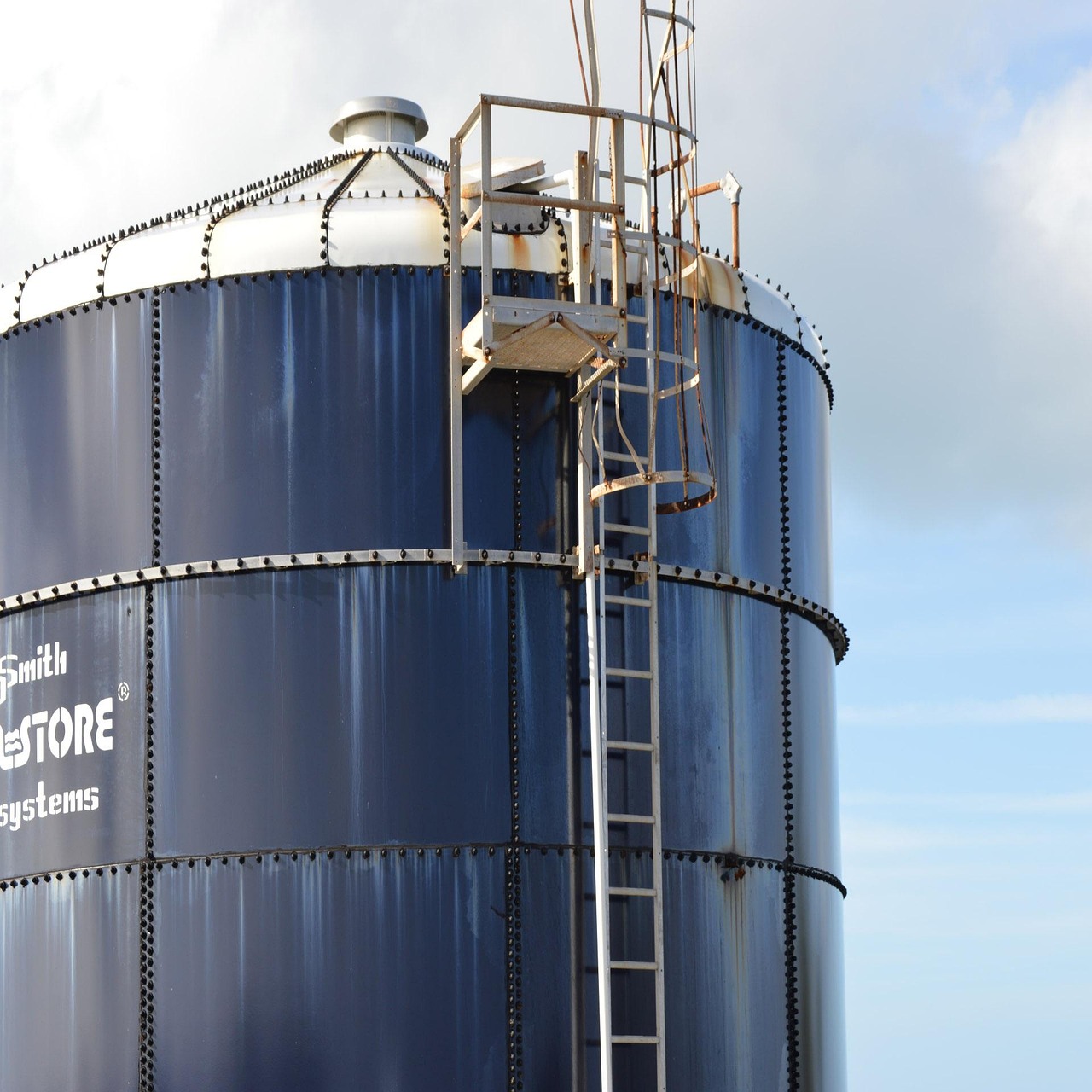
Where steel tanks fit in water storage planning
Steel tanks are commonly selected for ground-level reservoirs, standpipes, elevated tanks and industrial water storage duties. In potable water applications, they must be treated as both structural assets and sanitary infrastructure. A tank may satisfy volume and pressure requirements yet still create operating problems if turnover is poor, roof penetrations are vulnerable, vents are not protected, coatings are not suitable for immersion, or access details make inspection difficult.
The first planning decision is service definition. Potable water, raw water, reclaimed water, fire water and process water can require different coating approvals, disinfection procedures, maintenance intervals and regulatory review. A potable water tank should use interior materials suitable for drinking water contact, while a fire water tank may be driven by different insurance, fire code and hydraulic requirements. Industrial process water tanks may place more emphasis on corrosion resistance, sediment management or integration with pumps and treatment units.
Capacity is only part of the engineering brief. Designers also need to define working volume, dead storage, overflow level, freeboard, fill and draw rates, foundation conditions, wind exposure, seismic criteria, snow or roof loads where applicable, access roads, draining arrangements and safe access for inspection. A well-written specification connects these items before the tank supplier or contractor develops shop drawings.
Key standards that shape steel water storage tanks
In North American practice, AWWA standards are widely used as the baseline for steel water storage tanks. They do not replace project engineering or local regulatory approval, but they help define minimum requirements for design, construction, coatings, inspection and related systems. Current editions and local adoption should always be checked during procurement because standards are revised and project specifications sometimes cite older editions.
| Topic | Common reference | Why it matters |
|---|---|---|
| Welded carbon steel tanks | AWWA D100-21 | Provides minimum requirements for design, construction, inspection and testing of new welded carbon steel tanks for water storage at atmospheric pressure. |
| Factory-coated bolted tanks | AWWA D103-19 | Covers new cylindrical, factory-coated, bolted carbon steel tanks, typically with bases substantially at ground level. |
| Evaluation of existing steel tanks | AWWA D101-24 | Supports assessment of steel water tanks and related facilities when owners need condition data, repair planning or renewal decisions. |
| Coating systems | AWWA D102-24 | Addresses coating materials, systems, surface preparation, application, inspection and testing for steel water-storage tanks. |
| Cathodic protection | AWWA D104-23 and AWWA D106-24 | Applies to impressed-current and sacrificial anode systems for submerged interior surfaces where additional corrosion control is required. |
| Disinfection | AWWA C652 | Addresses disinfection procedures for water-storage facilities, including preparation, disinfectant application and bacteriological sampling concepts. |
| Drinking water contact materials | NSF/ANSI/CAN 61 | Establishes health-effects requirements for materials, components and products in contact with drinking water. |
No single standard covers every design and operating issue. A welded tank standard may address structural design and testing, while coating and disinfection requirements are handled elsewhere. This separation matters in procurement. Documents should clearly state which party is responsible for coatings, holiday testing, disinfection, sampling, access systems, cathodic protection, the foundation interface and commissioning records.
Welded versus bolted steel water tanks
Welded and bolted tanks can both meet water storage needs, but they suit different project priorities. Welded tanks are field-fabricated from steel plate and are often selected for larger custom capacities, complex geometries, standpipes and long-term municipal assets. They can provide robust monolithic construction when welding quality, inspection and coating work are properly controlled. However, field welding and coating also make schedule, weather protection and quality assurance more dependent on site conditions.
Factory-coated bolted tanks use panels manufactured with bolt holes and protective coatings applied under factory conditions. They can be attractive where modular delivery, faster erection, repeatable panel quality or future relocation potential is important. Their performance depends heavily on gasket selection, bolt installation, coating integrity around holes and edges, and proper foundation tolerances. For potable service, all water-contact materials should be checked for applicable drinking water approvals.
The better choice is rarely determined by tank type alone. A remote site with limited skilled labor, a short construction window and moderate capacity may favor a bolted system. A large municipal reservoir with specific geometry, a long design life and extensive site engineering may favor welded construction. Owners should compare total installed cost, not only tank shell price. Foundation work, coatings, cathodic protection, cranes, access systems, mixing equipment, testing, disinfection, inspections and future recoating can all change the lifecycle cost picture.
Coatings, corrosion control and material compatibility
Corrosion protection is one of the most important lifecycle decisions for steel water storage tanks. In potable water service, the interior coating must resist immersion, maintain adhesion, tolerate the operating water chemistry and meet applicable drinking water contact requirements. The exterior system faces different exposures, including ultraviolet light, condensation, temperature cycling, wind-driven rain, industrial atmosphere or marine air.
AWWA D102-24 is especially relevant because it focuses on coating steel water-storage tanks, including surface preparation, coating systems, application, inspection and testing. This is more than a paint selection issue. Coating life is strongly affected by steel preparation, environmental conditions during application, film thickness control, cure time before immersion, repair of damaged areas and inspection quality. A strong coating schedule should identify the generic coating type, number of coats, target dry film thickness, recoat windows, cure requirements and quality control tests.
Cathodic protection may be added where interior submerged steel surfaces need additional corrosion control. Impressed-current systems and sacrificial anode systems use different approaches, and each has its own monitoring and maintenance implications. Cathodic protection should not be treated as a substitute for poor coating work. It is most effective when coating condition, water chemistry, electrical continuity and monitoring access are considered together.
Material compatibility extends beyond the steel shell. Gaskets, sealants, roof hatches, vents, ladders, mixers, overflow screens, level instruments and pipe penetrations can all become weak points if they are not suitable for the stored water or the exposure environment. For potable tanks, NSF/ANSI/CAN 61 is often used to evaluate health effects of materials that contact drinking water, but project teams still need to verify certification scope and product-specific limitations.
Water quality and sanitary risks are design issues
Finished water storage is not passive. Public health agencies have noted that storage facilities can be vulnerable to sanitary risks such as physical openings, damaged vent screens, contamination from birds or insects, and sediment or biofilm accumulation. Tank material alone does not solve these risks. They require proper detailing, routine inspection, cleaning when needed and operational control of water age.
Important sanitary design features include lockable access hatches, screened vents, protected overflows, secure roof penetrations, drainable low points and inspection access that does not unnecessarily increase contamination risk. Roof drainage should prevent ponding near openings. Overflow outlets should be protected against entry by animals, insects and debris. Interior appurtenances should avoid unnecessary ledges and stagnant zones where sediment can collect. See also: Pumps and Valves.
Water turnover is another practical concern. Oversized storage may look conservative from a hydraulic standpoint, but excessive water age can reduce disinfectant residual and increase the likelihood of taste, odor or microbial concerns. Mixing systems, inlet and outlet placement, operating level strategy and seasonal demand changes should be evaluated during design. For industrial users, the same principle applies even when the water is not potable: stagnant water can increase sediment, biological growth, corrosion potential or process variability.
Disinfection and return-to-service procedures should be planned before construction or maintenance begins. AWWA C652 is the common reference for water-storage facility disinfection, including preparation and sampling concepts. Local requirements may define the exact testing, reporting and approval steps before a potable tank is placed back into service.
Inspection and lifecycle planning
A steel tank should be managed as a long-term asset, not a one-time purchase. Inspection programs help identify coating breakdown, corrosion, settlement, roof or shell deformation, leakage, sediment accumulation, damaged screens, unsafe access features and cathodic protection issues before they become emergency repairs. AWWA D101-24 is relevant for evaluating existing steel water tanks and related facilities, while EPA guidance emphasizes that inspection and cleaning help maintain water quality and infrastructure integrity.
Inspection planning should distinguish between routine operator checks, sanitary inspections, coating inspections, structural evaluations and underwater inspections. Operator checks may focus on visible damage, leaks, security, vents, overflow condition and site drainage. More detailed assessments may require coating specialists, structural engineers, divers, remotely operated vehicles or confined-space entry procedures. Safety planning is essential because tanks can involve fall hazards, confined spaces, electrical equipment and disinfection chemicals.
Lifecycle planning should also include budgeting for recoating, gasket replacement, cathodic protection maintenance, mixer servicing, instrumentation updates and foundation or roof repairs. Recoating can be a major cost because it may require draining, containment, surface preparation, environmental controls, curing time and disinfection before return to service. A cheaper initial coating system can become expensive if it shortens the first maintenance cycle or complicates future surface preparation.
Documentation is part of asset value. Owners should retain design calculations, shop drawings, coating data sheets, inspection reports, test results, disinfection records, repair history, cathodic protection readings and as-built drawings. These records help future engineers evaluate whether a tank can be modified, recoated, raised, connected to new piping or kept in service during system upgrades.
Specification checklist for buyers and engineers
Before requesting proposals for steel water storage tanks, project teams should prepare a clear technical brief. The following checklist can reduce ambiguity and make bids easier to compare:
- Define water service, potable status, operating temperature, water chemistry and any treatment chemicals present.
- State usable capacity, overflow elevation, normal operating range, fill and draw rates, and emergency storage requirements.
- Identify the preferred standard references and require bidders to state any exceptions.
- Specify welded, bolted or performance-based alternatives only after considering site constraints and lifecycle costs.
- Define foundation responsibilities, geotechnical data, anchor requirements and settlement tolerances.
- Require coating system details, surface preparation level, inspection method, cure requirements and repair procedures.
- Confirm drinking water certifications for interior coatings, gaskets, sealants and other wetted components where potable service applies.
- Include sanitary details for hatches, vents, overflows, drains, screens and roof penetrations.
- Plan for inspection access, fall protection, confined-space procedures and safe isolation.
- Define testing, disinfection, sampling, commissioning documentation and handover records.
The most useful proposals explain assumptions rather than simply quote a tank size. If two bids use different coating systems, standards editions, foundation responsibilities or disinfection scope, the lower price may not represent the lower lifecycle cost.
Frequently asked questions
Are steel water storage tanks suitable for potable water?
Yes. Steel water storage tanks are widely used for potable water when they are designed, coated, disinfected and maintained according to applicable standards and local requirements. The key is to verify that all interior coatings and wetted components are suitable for drinking water contact and that sanitary features are properly detailed.
Is a bolted steel tank weaker than a welded tank?
Not necessarily. A properly engineered bolted tank can perform well within its intended application. The comparison depends on capacity, site loads, foundation, coating system, gasket design, installation quality and maintenance. Welded tanks often provide more custom flexibility, while bolted tanks may offer modular construction and factory coating advantages.
How often should a steel water tank be inspected?
Inspection frequency depends on local rules, tank age, water quality, coating condition, service criticality and previous findings. Operators should perform routine visual checks, while more detailed sanitary, coating and structural inspections should be scheduled as part of an asset management plan. Potable water systems should follow regulatory and utility-specific requirements.
Do steel water tanks always need cathodic protection?
No. Cathodic protection is a project-specific corrosion control measure. It may be beneficial for submerged interior steel surfaces in certain conditions, but it should be evaluated alongside coating selection, water chemistry, electrical continuity and monitoring needs. It should not be used to compensate for inadequate coating specification or poor surface preparation.
What is the biggest mistake in specifying steel water storage tanks?
The biggest mistake is treating the tank as only a shell and a volume. Long-term performance depends on standards alignment, coatings, water quality, sanitary protection, inspection access, documentation and maintenance budgeting. A complete specification reduces the risk of disputes, premature corrosion and avoidable downtime.