Industrial storage systems for chemical plants and process facilities
What industrial storage systems need to solve
Industrial storage systems should do more than hold material until the next process step. In chemical plants and process facilities, storage design helps preserve product quality, control exposure and release hazards, support safe filling and discharge, and allow inspection without disrupting the wider operation. The right choice depends on material state, hazard profile, batch size, turnover rate, temperature, pressure, compatibility, cleaning needs, and how the storage point connects to pumps, conveyors, packaging lines, or reactors.
A storage decision that looks simple during purchasing can affect process safety and uptime for years. Tanks, silos, hoppers, bins, drum areas, intermediate bulk container stations, pallet racks, and day vessels all need to fit the site layout, drainage plan, fire protection strategy, maintenance routine, and operating procedures. This guide explains how to compare common industrial storage formats and what project teams should verify before selecting equipment.
Main storage formats and where they fit
No single storage format suits every plant. Chemical and process facilities usually combine several systems because raw materials, intermediates, utilities, additives, and finished products behave differently. A sound storage plan starts by matching the material to the vessel, then matching the vessel to the workflow.
Bulk liquid tanks
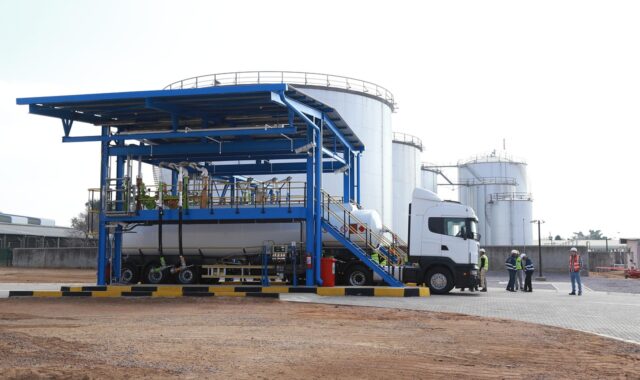
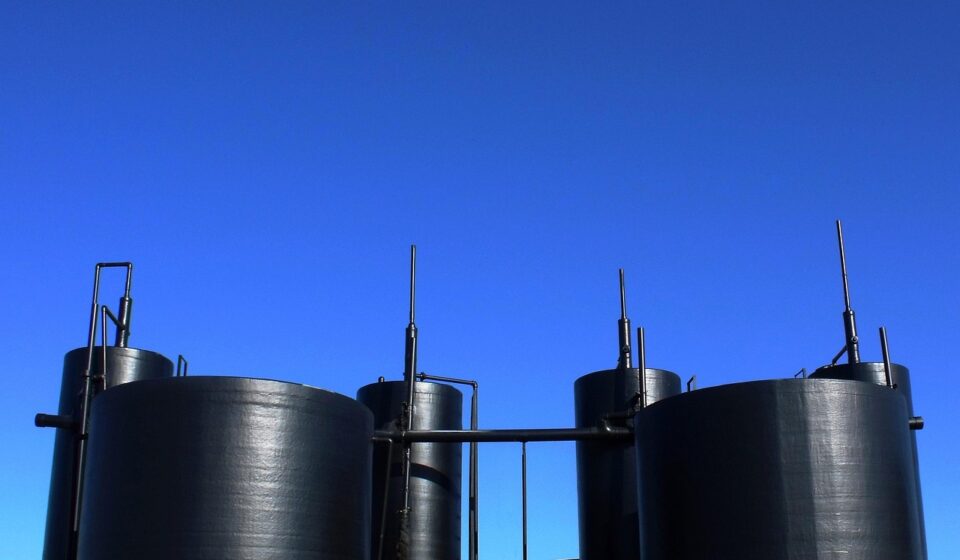
Bulk liquid tanks are used for solvents, oils, acids, caustics, water treatment chemicals, resins, intermediates, and many other process liquids. Atmospheric and low-pressure tanks are common where the product does not require high-pressure containment. For certain petroleum and liquid services, API Standard 650 is widely used as a reference for welded, vertical, cylindrical, aboveground tanks. As of September 2026, API lists the 14th edition of API 650 as an August 2025 update. Existing aboveground tank inspection, alteration, repair, and reconstruction programs commonly reference API Standard 653.
For chemical services, the standard or code is only one part of the decision. Material compatibility, corrosion allowance, internal lining, gasket selection, vent sizing, overfill protection, grounding, secondary containment, and safe access often matter as much as nominal capacity. A tank that is correctly sized but difficult to inspect, drain, or clean can become a recurring operating problem.
Silos, hoppers, and bulk solid bins
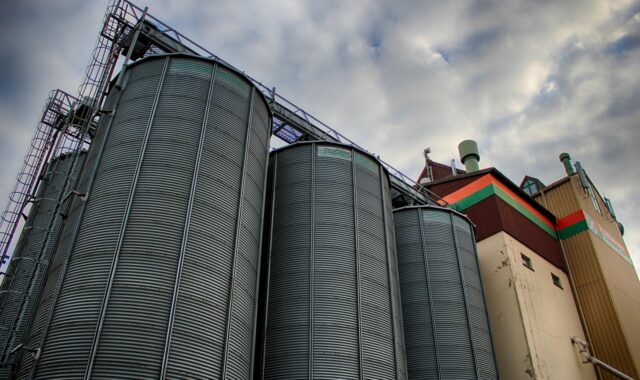
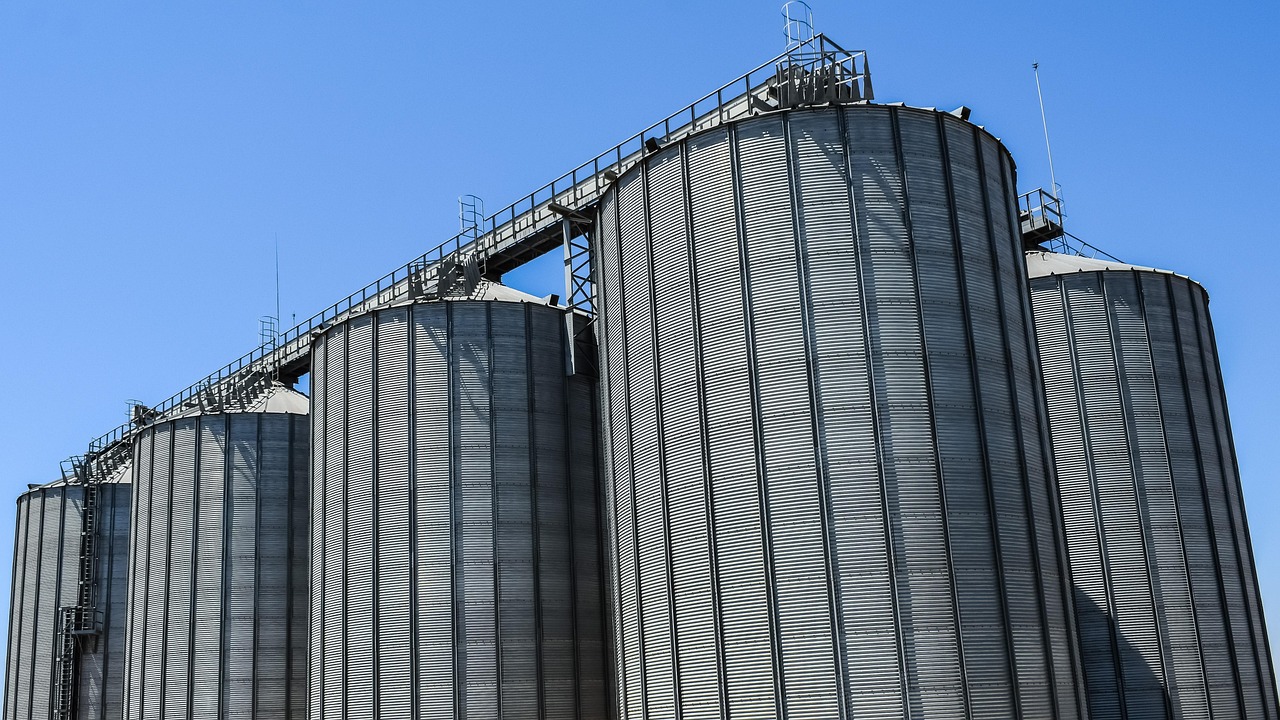
Silos and hoppers are used for powders, granules, pellets, catalysts, pigments, plastic resin, minerals, fertilizers, food ingredients, and other bulk solids. The main engineering issue is not only volume; it is flow behavior. Some materials bridge over outlets, form ratholes, segregate by particle size, absorb moisture, compact over time, or generate combustible dust clouds during filling and discharge.
Reliable bulk solid storage often requires material testing before the final geometry is selected. Cone angle, wall finish, outlet size, aeration, vibration, screw feeders, rotary valves, bin vents, dust collection, explosion venting, and isolation devices should be chosen around the actual powder or granule, not a generic silo drawing.
Packaged chemical storage
Many facilities still handle drums, pails, bags, totes, and intermediate bulk containers because they provide flexibility for smaller batches and varied materials. Packaged storage is not automatically low risk. Incompatible chemicals must be separated, spill collection must match the hazard, labels and safety data sheets must remain available, and traffic routes must protect containers from forklift impact.
Racking, cabinets, containment pallets, drum handling equipment, transfer pumps, grounding cables, and ventilation should be treated as part of the storage system. A packaged storage area that expands without layout control can create hidden hazards such as blocked exits, mixed incompatibles, poor inventory rotation, or difficult emergency access.
The risk profile matters more than vessel volume
Capacity is easy to compare, but risk is rarely proportional to volume alone. A small incompatible chemical container placed in the wrong area may create more immediate danger than a larger water tank. A moderate-size powder bin may need more explosion protection review than a much larger silo holding noncombustible granular material. The useful question is not only how much material can be stored, but what can happen during receiving, storage, transfer, cleaning, maintenance, and emergency response.
| Decision point | Why it matters | Possible design effect |
|---|---|---|
| Material compatibility | Chemicals can attack steel, concrete, coatings, seals, and plastics. | Selection of stainless steel, alloys, linings, compatible gaskets, or corrosion allowance. |
| Physical state and flow | Liquids, slurries, pellets, and powders fail in different ways. | Tank agitation, cone geometry, feeders, heating, insulation, or anti-bridging devices. |
| Fire and explosion hazard | Flammable vapors and combustible dusts need ignition control and protection measures. | Ventilation, grounding, classified electrical equipment, dust collection, deflagration venting, or isolation. |
| Environmental release potential | Leaks can reach drains, soil, surface water, or other process areas. | Secondary containment, leak detection, curbing, drainage control, and inspection access. |
| Human access | Tanks, bins, and silos can create confined-space hazards during inspection or cleaning. | Manway placement, isolation points, ventilation provisions, retrieval planning, and permit procedures. |
The safety data sheet is a starting point, not a complete storage design. Teams should also verify actual concentration, temperature range, impurities, degradation products, moisture sensitivity, particle size distribution, electrostatic properties, and what happens if the material is mixed with cleaning agents, rainwater, air, or another inventory item.
Standards and regulatory triggers to check early
Industrial storage systems are shaped by standards, regulations, insurance requirements, and local authority interpretations. Requirements vary by jurisdiction, material, quantity, and facility use, so final decisions should be reviewed by qualified engineers and the authority having jurisdiction. Even at the concept stage, several reference points are worth checking.
OSHA confined-space guidance is especially relevant because tanks, storage bins, silos, pits, vaults, and similar equipment may meet the definition of confined spaces. If a space has limited entry or exit, is large enough for a worker to enter, is not designed for continuous occupancy, and contains or may contain serious hazards, permit-required procedures may apply. Design choices such as access location, isolation valves, ventilation connections, and rescue planning can reduce risk during future work.
For combustible powders and dust-generating bulk solids, OSHA revised its Combustible Dust National Emphasis Program on January 27, 2023. OSHA guidance identifies equipment such as silos, material storage systems, dust collectors, bucket elevators, mixers, dryers, and mills as locations where combustible dust hazards can arise. NFPA 660, Standard for Combustible Dusts and Particulate Solids, became effective on December 6, 2024, and consolidated several earlier NFPA combustible dust standards into one broader document.
For U.S. facilities storing oil, EPA’s Spill Prevention, Control, and Countermeasure rule is another early screening item. EPA guidance uses thresholds of more than 1,320 U.S. gallons of aggregate aboveground oil storage capacity or more than 42,000 U.S. gallons of completely buried oil storage capacity, with additional location-based conditions. Containers under 55 gallons are generally not counted toward the aboveground threshold. This does not replace site-specific legal review, but it shows why storage capacity, drainage, and containment should be discussed before installation.
Fire codes, building codes, environmental permits, insurance guidance, and local emergency response expectations may add requirements for separation distances, ventilation, fire protection, spill control, emergency shutoff, signage, and maximum allowable quantities. Early review is less expensive than retrofitting containment, moving tanks, or redesigning a warehouse after layout approval.
Engineering choices that affect safe performance
Material compatibility and containment
Compatibility should cover all wetted parts and nearby structures. A compatible tank shell is not enough if the gasket, level instrument, flexible hose, pump seal, coating, or concrete curb fails in service. Corrosive liquids may need lined tanks, specialty alloys, corrosion coupons, cathodic protection, or scheduled thickness checks. Solvents may require seals and plastics that resist swelling. Outdoor tanks may need insulation, heat tracing, freeze protection, sun exposure review, or thermal expansion allowance.
Secondary containment should be designed as part of the operating system, not added later as a concrete afterthought. Operators need safe access to valves and instruments, rainwater needs a managed path, and inspection teams need visibility of tank bottoms, supports, pipe penetrations, and low points where leaks may first appear.
Filling, withdrawal, and inventory control
Storage equipment must match real transfer rates. Fast unloading may require larger vents, vapor control, surge allowance, grounding, interlocks, and overfill protection. Slow discharge from a silo may point to poor flow geometry rather than feeder failure. For high-value or hazardous materials, inventory control may combine level transmitters, load cells, flowmeters, batch records, alarms, and independent high-level protection.
Designers should examine the worst normal operating case, not just average demand. Key questions include whether two deliveries can arrive close together, whether a tank must be isolated for cleaning, whether a batch can be returned to storage, and whether the process can continue if one vessel is out of service. See also: Pumps and Valves.
Cleaning, access, and changeover
Cleanability affects both quality and safety. Multi-product facilities need to prevent cross-contamination, unwanted reactions, odor carryover, and residue buildup. Tanks may require sloped bottoms, drainable nozzles, spray devices, removable internals, or dedicated cleaning connections. Solids systems may need access doors, cleanout ports, purge points, dust-tight seals, and a safe method for removing compacted material.
Maintenance access should be reviewed against actual tasks. If a level device, vent filter, rupture panel, dust collector, or feeder motor cannot be reached safely, the plant may delay necessary inspection. Good storage design makes routine work easier to perform correctly.
A specification checklist for project teams
Before requesting a quotation or approving a layout, project teams should collect enough information to define the service clearly. A short checklist can prevent costly revisions later.
- Material name, concentration, impurities, density, viscosity, particle size, moisture content, and expected temperature range.
- Hazard profile, including flammability, toxicity, corrosivity, reactivity, combustible dust potential, environmental sensitivity, and incompatibilities.
- Required working capacity, maximum capacity, heel volume, batch size, delivery quantity, and future expansion allowance.
- Receiving and discharge method, including truck, rail, tote, pump, conveyor, pneumatic transfer, gravity flow, or manual handling.
- Normal and peak flow rates, filling frequency, residence time, turnover rate, and whether first-in, first-out inventory is required.
- Required materials of construction, lining, insulation, heat tracing, agitation, inerting, drying, ventilation, dust collection, or vapor control.
- Instrumentation needs, including level, weight, pressure, temperature, leak detection, alarms, interlocks, and data connection to plant systems.
- Cleaning method, inspection frequency, confined-space access assumptions, isolation points, and waste handling after cleaning.
- Site constraints, including foundation, floor loading, wind, seismic conditions, drainage, forklift routes, emergency access, and expansion space.
- Applicable standards, permits, insurance requirements, and local authority expectations.
Teams can use this checklist alongside other articles in the Storage Systems section when comparing storage concepts and equipment categories.
Inspection and lifecycle management
Storage systems should be planned for their full lifecycle, not only for commissioning. A practical inspection program starts with baseline documentation: drawings, material certificates, weld records where applicable, coating or lining data, hydrostatic or pressure test records, calibration data, and equipment manuals. Without baseline information, later inspections are harder to interpret.
For tanks, lifecycle planning may include external visual checks, settlement review, nozzle and foundation inspection, corrosion monitoring, vent and relief device maintenance, internal inspection where required, and repair documentation. For silos and hoppers, the program may include structural checks, dust collector inspection, explosion protection device maintenance, feeder wear review, housekeeping audits, and verification that operating changes have not introduced new dust hazards.
Packaged storage areas also need lifecycle control. Racks should be checked for impact damage and visible load ratings. Spill pallets and containment curbs should be inspected for cracks or chemical attack. Labels, segregation maps, emergency equipment, eyewash and shower access, and aisle clearance should remain current as inventory changes.
Management of change is important for storage. A new raw material, new supplier, smaller particle size, higher concentration, different drum size, faster unloading pump, or changed cleaning solvent can alter the hazard profile. Digital sensors and automation can improve visibility, but they do not replace physical inspection, preventive maintenance, operator training, and disciplined procedures.
How storage planning supports a more resilient process
Good storage planning improves resilience because it gives the plant options. The facility can receive material without rushing quality checks, continue production while one vessel is isolated, control spills before they spread, and inspect critical equipment before small defects become outages. Poorly matched storage, by contrast, creates bottlenecks, hidden residues, unsafe access, and emergency workarounds.
The most effective industrial storage systems are usually the result of cross-functional review. Process engineering defines flow and capacity. Safety and environmental teams identify hazards and regulatory triggers. Operations verifies how the equipment will actually be used. Maintenance checks access and spare parts. Procurement compares not only purchase price, but also installation, inspection, cleaning, downtime, and end-of-life costs.
For chemical and process facilities, storage is part of the production system. Selecting the right tank, silo, bin, rack, or container station is a technical decision with safety, compliance, quality, and business continuity consequences.
Frequently asked questions
What is the difference between industrial storage systems and warehouse storage?
Warehouse storage focuses mainly on organized space, picking, and inventory movement. Industrial storage systems in process facilities must also address material compatibility, process connection, containment, pressure or venting behavior, cleaning, inspection, fire protection, and environmental release control.
How do I choose between a tank, a silo, and an IBC?
Start with the material. Liquids usually point toward tanks or IBCs, while powders and granules usually require silos, hoppers, bags, or bins. Then compare consumption rate, delivery quantity, hazard level, cleaning needs, available space, and automation requirements. IBCs offer flexibility for smaller volumes, while fixed tanks and silos usually suit higher-throughput service.
When is secondary containment needed?
Secondary containment is commonly required or strongly recommended when a release could harm workers, equipment, soil, drains, surface water, or incompatible materials nearby. Exact requirements depend on jurisdiction, chemical type, quantity, and site drainage. It should be reviewed early because containment affects foundation design, layout, access, and emergency response.
Are combustible dust controls relevant to storage systems?
Yes. Dust clouds can form during filling, conveying, discharge, cleaning, and upset conditions around bins, silos, hoppers, dust collectors, and packaging stations. If the material can create combustible dust, the storage design should consider dust testing, housekeeping, ignition control, explosion protection, isolation, and safe maintenance procedures.
What information should be collected before asking for a storage system proposal?
Collect material properties, hazards, required capacity, transfer method, flow rate, temperature range, pressure assumptions, cleaning method, inspection access needs, instrumentation expectations, containment requirements, site constraints, and applicable standards. A clear service description helps suppliers and engineers compare realistic options instead of quoting incomplete equipment packages.