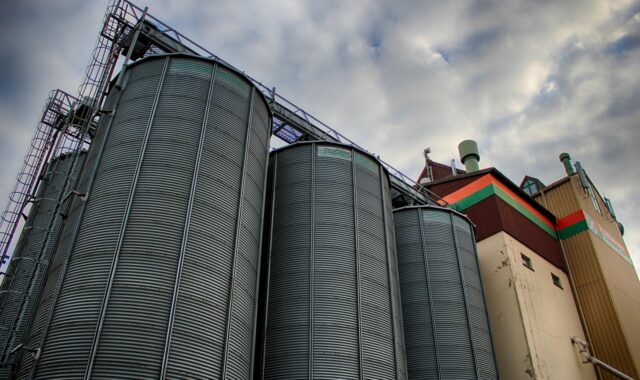
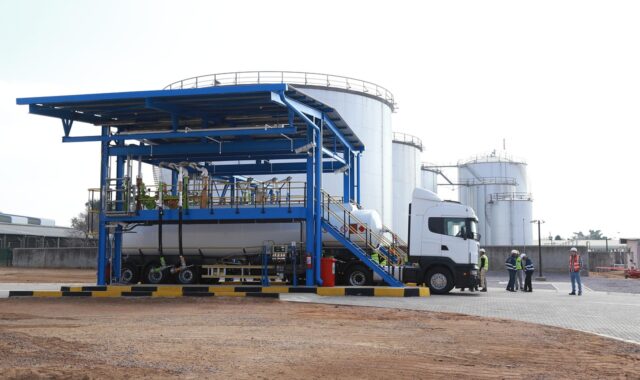
Automated storage systems for chemical warehouses and process facilities

Automated storage systems are no longer limited to high-volume e-commerce warehouses. In chemical warehousing and process facilities, they can reduce forklift travel, improve inventory visibility, support first-expired-first-out handling and move workers away from repetitive or higher-exposure tasks. The challenge is that chemical storage is not a simple automation project. System design depends on hazard classification, container type, fire protection, ventilation, spill containment, incompatible material segregation and control-system security. An AS/RS that performs well with packaged consumer goods may be unsuitable for flammable liquids, corrosives, oxidizers or temperature-sensitive materials unless the storage envelope, sensors, access controls and emergency procedures are engineered for those risks.
What automated storage systems mean in chemical operations
In general industrial use, automated storage and retrieval systems, often called AS/RS, combine storage equipment, handling devices and controls to place and retrieve materials at a defined level of automation. In chemical operations, the term can cover several related technologies: high-bay pallet AS/RS, shuttle systems for totes and cartons, vertical lift modules for spare parts or small containers, automated drum or IBC handling, robotic pallet movement and bulk tank or silo inventory control.

The common feature is not motion alone. It is the link between physical storage locations and a control layer that knows what material is present, where it is stored, whether it is released for use and how it should move next. For readers comparing storage equipment options, the broader Storage Systems category is a useful place to group tank, warehouse and material-handling topics under one operational view.
For chemical facilities, this control layer should be connected to safety and quality data. Lot number, expiry date, hazard class, temperature requirement, container status and segregation group can be as important as SKU and quantity. If these fields are missing or poorly maintained, automation may only move errors faster.
Where automation creates the strongest value
The strongest business case for automated storage systems usually appears where manual storage has become constrained, risky or inconsistent. Chemical sites often face several pressures at the same time: limited floor area, heavier documentation requirements, mixed container formats and the need to control access to regulated or hazardous materials.
- Space utilization: High-bay AS/RS and dense shuttle systems can use vertical cube more effectively than conventional wide-aisle storage, provided the fire protection and structural design support the selected arrangement.
- Inventory traceability: Automated location control can reduce lost pallets, improve batch recall response and support FIFO or FEFO rules for shelf-life-sensitive products.
- Reduced forklift interaction: Fewer manual pallet moves can reduce congestion, rack impact and traffic conflicts, although receiving, staging and maintenance zones still require traffic planning.
- Repeatable handling: Automated equipment can standardize putaway and retrieval sequences, reducing variation caused by shift changes or manual workarounds.
- Controlled access: Software permissions and locked storage locations can help limit who can retrieve restricted materials, samples or high-value additives.
These gains are most realistic when the facility has stable container dimensions, clean master data and predictable order profiles. If container condition, pallet quality or labeling varies widely, those problems should be corrected before automation is specified.
Common system types and where each fits
No single automated storage design fits all chemical products. A warehouse storing palletized bags of resin has different requirements from a plant managing solvents, catalysts, maintenance parts and returned containers. The table below compares common options at a planning level.
| System type | Typical fit | Chemical-specific caution |
|---|---|---|
| Unit-load AS/RS | Palletized drums, bags, cartons or intermediate bulk containers with consistent load geometry | Requires verification of pallet quality, load stability, containment, rack design, fire protection and whether the product is suitable for high-bay storage |
| Shuttle-based storage | High-throughput tote, case or carton handling for small packaged chemicals, samples or production supplies | Needs strict compatibility rules if different chemical groups share the same storage grid or aisle system |
| Vertical lift module | Small parts, tools, PPE, lab consumables or low-volume packaged materials | Not a substitute for approved chemical cabinets, ventilation or flammable-liquid storage controls where those are required |
| Automated guided vehicle or autonomous mobile robot support | Transport between receiving, storage, production and shipping zones | Routes must account for pedestrians, spill response, emergency exits, charging areas and classified electrical zones where applicable |
| Tank or silo inventory automation | Bulk liquids, powders and resins connected to process equipment | Level measurement, overfill prevention, interlocks, venting, grounding and process safety reviews are central to the design |
A practical rule is to define the material first and the robot second. Container compatibility, allowable stacking, spill consequences and emergency access should drive the automation concept, not the other way around.
Safety, fire protection and compliance must lead the design
Hazard classification comes before equipment selection
Before selecting automated storage systems for chemicals, facilities should classify materials using safety data sheets, internal hazard reviews and applicable regulations. OSHA’s Hazard Communication Standard requires employers to communicate chemical hazard information to workers, and OSHA’s warehousing guidance notes that chemical warehouse and distribution facilities may also need to consider Process Safety Management or HAZWOPER requirements when covered hazardous substances or release scenarios are present.
For flammable liquids, OSHA’s 29 CFR 1910.106 applies to the handling, storage and use of liquids with flashpoints at or below 199.4°F, or 93°C, unless a specific exception applies. This matters because automated equipment introduces motors, sensors, charging systems and electrical cabinets that must be evaluated against the actual hazard environment.
Fire protection is not an afterthought
Dense storage changes the fire scenario. High-bay racks, narrow aisles, plastic packaging, aerosols, IBCs, combustible pallets and open-top containers can all affect sprinkler design and emergency response. NFPA standards such as NFPA 13 for sprinkler systems and NFPA 30 for flammable and combustible liquids are commonly used by qualified fire protection professionals, but the correct design depends on commodity classification, storage height, ceiling height, rack geometry, container type and the authority having jurisdiction.
Automated systems also need fire department access, coordination with smoke and heat detection, emergency stop logic and safe recovery procedures after an alarm or discharge. A system that maximizes density but blocks inspection, drainage or firefighting access may create more risk than value.
Nonroutine work often carries the highest risk
Automation can reduce routine manual handling, but it does not remove people from the facility. Technicians still clear jams, inspect sensors, maintain lifts, clean spills and restart equipment after faults. OSHA’s robotics guidance notes that many robot-related accidents occur during nonroutine conditions such as maintenance, programming, testing or setup. In chemical storage, these tasks may also involve exposure to residues, vapors, damaged containers or unstable loads.
Good design therefore includes lockout and energy isolation, safe access platforms, clear fault-recovery procedures, guarding, light curtains or scanners where appropriate, and training that reflects real maintenance conditions rather than only normal production flow.
Integration with warehouse, process and control systems
The value of automated storage depends heavily on integration. A standalone AS/RS can move pallets, but chemical operations often need it to coordinate with warehouse management software, ERP systems, batch production schedules, quality release status, weigh scales, barcode or RFID systems and plant control equipment. See also: Pumps and Valves.
Important integration points include:
- Receiving checks that confirm container identity, lot number, label condition and storage restrictions before putaway.
- Quality holds that prevent unreleased or nonconforming material from being issued to production.
- Expiry and retest-date logic for materials that require FEFO picking.
- Segregation rules that prevent incompatible materials from being assigned to adjacent or shared locations.
- Interface rules for weighing, dispensing, drum emptying, blending or packaging equipment.
- Exception workflows for damaged containers, missing labels, spill events or inventory discrepancies.
Cybersecurity also belongs in the specification. NIST guidance for industrial control systems emphasizes that operational technology has different reliability, safety and performance requirements than office IT. Automated storage equipment may include PLCs, industrial networks, remote access, cameras and maintenance software. If these systems connect to plant networks or vendor support portals, access control, backup, patch management and incident response should be planned before commissioning.
A practical evaluation framework before investment
Automated storage systems require capital, floor planning and process discipline. The best projects usually begin with a material-flow study rather than an equipment catalog. Before issuing a specification, chemical facilities should answer the following questions:
- What materials are in scope? Separate finished goods, raw materials, intermediates, returns, samples, spare parts and packaging supplies.
- Which hazards control the design? Identify flammable, corrosive, oxidizing, toxic, reactive, temperature-sensitive and environmentally hazardous materials.
- Are containers automation-ready? Confirm pallet dimensions, weight limits, center of gravity, closure integrity, label placement and tolerance for acceleration or vibration.
- What rules govern storage location? Define segregation, temperature, ventilation, spill containment, quality hold and access restrictions in data, not only in work instructions.
- What throughput is actually required? Separate average daily movement from peak shift demand, emergency retrieval and production line starvation risk.
- How will failures be handled? Plan manual recovery, spare parts, vendor response, bypass modes and safe shutdown procedures.
- Who owns master data? Assign responsibility for item dimensions, hazard attributes, expiration rules, barcode standards and location master maintenance.
- What approvals are needed? Involve safety, environmental, fire protection, operations, maintenance, quality, insurers and the local authority having jurisdiction early.
This framework helps prevent a common mistake: using automation to compensate for unclear storage policy. If the facility cannot define where a material is allowed to go and why, software will not solve the problem reliably.
Limits and trade-offs to consider
Automated storage systems can make chemical operations more controlled, but they introduce new dependencies. A crane outage, network failure or corrupted inventory record can stop material flow. Dense storage may reduce walking distance while increasing the consequence of a fire protection or access problem. Standardized containers improve automation reliability, but chemical supply chains often include mixed pallets, damaged drums, returned goods and one-off materials.
There are also organizational trade-offs. Operators who previously solved problems by sight and experience must trust scanners, location data and release status. Maintenance teams need electrical, mechanical and controls capability. Safety teams need to review not only chemical exposure, but also stored energy, motion hazards and emergency access.
For this reason, phased implementation is often safer than a large one-step conversion. A facility may begin with automated storage for spare parts, packaging supplies or stable finished goods, then expand to more complex materials once data quality, maintenance response and operating discipline are proven.
Frequently asked questions
Are automated storage systems suitable for hazardous chemicals?
They can be suitable, but only after hazard classification, container compatibility, fire protection, electrical classification, spill containment, ventilation and emergency access are reviewed. Automation does not remove the need for chemical storage controls.
What is the difference between AS/RS and a normal warehouse rack?
A normal rack stores goods but relies mainly on manual equipment and operator judgment for putaway and retrieval. AS/RS adds automated handling equipment and controls that assign locations, move loads and update inventory records with less manual travel.
Can automated storage reduce chemical warehouse labor?
It can reduce travel, manual searching and repetitive forklift moves, but it also creates demand for controls maintenance, system supervision, data management and formal exception handling. Labor changes rather than simply disappearing.
Should flammable liquids be stored in an AS/RS?
Possibly, but the decision requires specialist review. Flashpoint, container type, quantity, ventilation, electrical equipment, fire suppression, drainage and applicable OSHA and NFPA requirements must be evaluated before choosing an automated design.
What is the first step in planning a chemical automated storage project?
Start with a material and hazard profile. List every material family, container type, storage restriction, movement frequency and compliance requirement. Only then should the facility compare AS/RS, shuttle, vertical module, robotic transport or tank automation options.