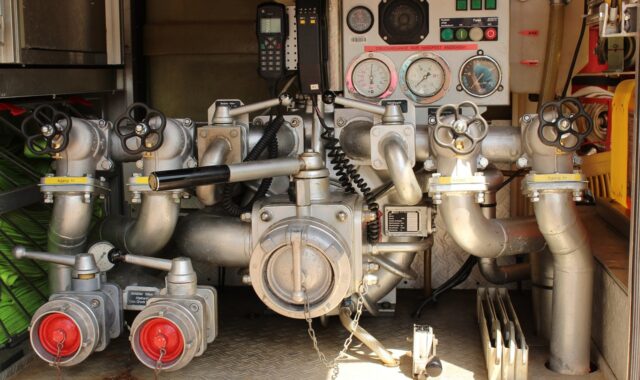
What FM approved valves mean for fire protection systems

FM approval is a listing, not a generic valve label
FM approved valves are valves tested and certified by FM Approvals for a defined fire protection or property loss prevention use. In specification work, the term does not simply mean a well-made industrial valve. It means the approval record is tied to a specific manufacturer, model, size range, pressure rating, construction and intended service.
That distinction matters in fire pump rooms, sprinkler risers, underground fire service mains and water supply connections. A mismatched valve can restrict water delivery, conceal a closed condition, complicate inspection or introduce an unverified component into a life safety system.
FM describes FM Approvals as a third-party testing and certification program for products including fire protection equipment, and FM says approved products are listed in its Approval Guide. The Approval Guide states that it provides real-time information on tested and FM Approved products, along with engineering data and technical information for listed products. (fm.com)
The practical takeaway is straightforward: do not specify FM approved valves as a blanket phrase. Identify the valve type, service, approval standard or category where relevant, size, pressure class, end connection, supervisory accessories, installation orientation and verification method. A model that is FM Approved in one configuration may not be approved in every size, trim, actuator or connection option.
Where FM approved valves appear in fire protection systems
FM approved valves are most often specified in water-based fire protection systems rather than ordinary process piping. They may be used in private fire service mains, sprinkler control assemblies, fire pump discharge piping, backflow prevention arrangements and special water hammer control applications. The correct valve depends on the function it performs in the system.
| Valve role | Typical fire protection use | Specification focus |
|---|---|---|
| Indicating control valve | Shows open or closed status for sprinkler or fire main isolation | Approval category, clear position indication, supervision compatibility and accessibility |
| OS&Y gate valve | Commonly used where visible stem position is preferred | Approved size range, stem/yoke arrangement, pressure rating and end connection |
| Indicating butterfly valve | Compact control valve for sprinkler risers and certain mains | Disc clearance, tamper switch provision, pressure loss and installation limits |
| Check valve | Prevents reverse flow at pump discharge, tanks or service connections | Flow direction, maintenance clearance, clapper access and hydraulic loss |
| Backflow preventer assembly | Protects potable supply where required by authorities | Approval, pressure loss, test access and local water authority acceptance |
| Pressure reducing or regulating valve | Controls downstream pressure where system pressure is excessive | Set pressure, full-flow testing, maintenance access and effect on sprinkler demand |
FM Data Sheet 3-10, revised in April 2025, recommends using FM Approved equipment, materials and services whenever they are applicable and available. The same data sheet gives practical valve guidance for fire service mains, including valve opening direction, the use of indicating valves where position visibility is needed, accessibility for check valve inspection and maintenance, and the need to account for friction loss through special anti-water hammer check valves. (fm.com)
How to verify an FM approved valve before purchase
Verification should happen before procurement, not after material arrives on site. A datasheet that says FM Approved is useful, but it is not a substitute for checking whether the exact configuration is currently listed. Buyers and engineers should treat approval verification as part of the submittal process.
- Check the manufacturer and model against the current Approval Guide rather than relying only on catalog language.
- Confirm that the valve type and approval category match the application, such as indicating valve, gate valve, check valve, backflow preventer or pressure regulating device.
- Match the size, pressure rating, end connection, material, trim and accessory package to the approved listing.
- Confirm whether the actuator, supervisory switch or gearbox is part of the approved arrangement.
- Review installation limits such as flow direction, vertical or horizontal orientation, cover clearance and accessibility for inspection.
- Keep the approval evidence in the project submittal file so the authority having jurisdiction, insurer, owner and commissioning team can review the same information.
FM Approvals also publishes certification mark usage rules. Those rules state that FM Approvals certification marks are to be used only on FM Approved products in accordance with listing requirements, and that advertising or catalog use must not blur the difference between approved and non-approved products. (fmapprovals.com)
Selection factors that affect performance
Valve indication and supervision
In fire protection, a valve accidentally left closed can be more serious than a valve that leaks. That is why indicating valves and supervisory switches are common in sprinkler and fire main service. A visible OS&Y stem, post indicator or approved indicating butterfly arrangement helps operators and inspectors confirm valve status. Where electronic supervision is required, the tamper switch and mounting arrangement should be reviewed as part of the approved assembly rather than treated as a generic add-on.
Hydraulic loss and system demand
Every valve affects hydraulics to some degree. A fully open gate valve typically creates less obstruction than a butterfly valve, while check valves, backflow preventers and pressure reducing valves can add significant loss. FM guidance for private fire service mains specifically notes that friction loss through special anti-water hammer check valves should be accounted for before installation, and it directs users to consult the Approval Guide for individual FM Approved anti-water hammer valve friction loss. (fm.com)
For this reason, valve selection belongs in the hydraulic review, not only in the purchasing schedule. A valve may carry the right approval and still be unsuitable if its pressure loss prevents the system from meeting sprinkler, standpipe, hydrant or hose stream demand.
Access for inspection and repair
A valve that cannot be inspected becomes a long-term reliability problem. FM Data Sheet 3-10 says check valves on water mains should be accessible for inspection, testing and maintenance, and that valves with side-mounted covers need enough clearance for clapper removal. It also notes that some check valves without covers must be removed from the system for clapper replacement or repair. (fm.com)
That guidance has a direct purchasing implication. The lowest-cost valve body may not be the lowest-risk option if it requires pipe removal for internal work, lacks clearance in a pit or forces maintenance crews to shut down a larger section of the system than necessary.
FM Approved, UL Listed and project acceptance are related but not identical
Many project specifications use FM Approved and UL Listed together, especially for fire protection valves. The two phrases should not be treated as interchangeable. FM Approval is certification by FM Approvals under its applicable approval or examination criteria. UL Listing is a separate certification route under UL standards. A project may require one, the other or both, depending on the owner, insurer, local code, authority having jurisdiction and design standard. See also: Storage Systems.
OSHA explains that a Nationally Recognized Testing Laboratory is a private-sector organization recognized to test and certify products using appropriate test standards, and OSHA lists FM Approvals as an NRTL with a defined scope of recognition. OSHA also states that recognition of an NRTL is not an endorsement of the certified equipment. (osha.gov)
For engineers and buyers, the practical rule is to read the project documents carefully. If a specification says UL Listed and FM Approved, a valve carrying only one mark may not satisfy the submittal requirement. If the specification says listed or approved, the authority having jurisdiction may decide what is acceptable. When in doubt, ask before purchase; replacing a nonconforming valve after installation can be far more expensive than verifying it during submittal review.
Common specification mistakes to avoid
- Using FM approved as a universal description. Approval is specific to the listed product and conditions. It should not be used as a generic synonym for high quality.
- Ignoring size limitations. A product family may be approved only in certain nominal sizes or pressure classes.
- Changing end connections after approval review. Grooved, flanged, wafer, lug and threaded versions may not share the same approval scope.
- Forgetting supervisory accessories. A valve body and a tamper switch should be checked as a compatible arrangement.
- Overlooking maintenance clearance. Check valves, backflow assemblies and pressure regulating valves need working space for testing and repair.
- Not coordinating with hydraulic calculations. Approval does not remove the need to confirm pressure loss and flow capacity.
- Failing to document approval evidence. Keep records for commissioning, inspection and future maintenance teams.
For broader pump and valve specification topics, see the Pumps and Valves section on Aizhika.
A practical checklist for engineers and buyers
When a project calls for FM approved valves, use a checklist that connects compliance language with field conditions:
- Identify the system function: control, isolation, check, backflow prevention, pressure regulation or water hammer control.
- Confirm the governing documents: design standard, insurer guidance, owner specification and AHJ requirements.
- Verify the exact listing: manufacturer, model, size, pressure rating, connection and accessories.
- Check hydraulic impact: equivalent length, pressure loss and effect on required demand.
- Review installation: orientation, flow direction, access, freeze protection, pit requirements and position indication.
- Plan maintenance: isolation valves, test points, cover clearance and replacement access.
- Archive documentation: approval evidence, datasheets, installation instructions and commissioning records.
This process does more than satisfy a specification line. It reduces the chance of nonconforming material, delayed inspections, hydraulic shortfalls and maintenance problems after the project is handed over.
Frequently asked questions
Does FM approved mean the valve can be used in any fire protection system?
No. The approval applies to the listed product and its stated conditions. The valve still has to match the system design, size, pressure, service, connection type, installation orientation and local acceptance requirements.
Is an FM approved valve automatically accepted by the authority having jurisdiction?
Not automatically. Approval is strong evidence of third-party certification, but the authority having jurisdiction, insurer, owner or water authority can still require specific documentation, installation details or additional listing marks.
Can a standard industrial valve replace an FM approved fire protection valve?
It should not be substituted where the project requires an approved or listed fire protection valve. Industrial valves may be suitable for process service, but fire protection applications often require verified performance, position indication, supervision and maintenance access.
Why do some specifications require both UL Listed and FM Approved valves?
Some owners and insurers want both certifications to reduce acceptance risk and align with established fire protection procurement practice. The requirement depends on the project documents and should be confirmed before purchase.
What is the first thing to check on a valve submittal?
Start by confirming that the exact manufacturer, model, size, pressure class, connection and accessory arrangement are within the current approval listing. If those details do not match, the submittal needs clarification before the valve is ordered.