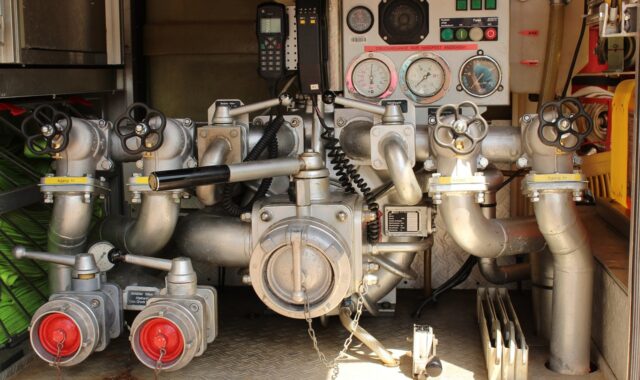
Permian pump and valve demand in 2026 shifts toward reliability and water handling
What the Permian pump and valve market means in 2026
For buyers, engineers and maintenance teams, the phrase Permian pump and valve may refer to a local service search. It also describes a wider equipment requirement across the Permian Basin: keeping oil, gas and water systems moving safely in one of North America’s most active oil and gas regions. In 2026, the issue is not simply the need for more hardware. Buyers are putting more weight on reliability, faster repair cycles, water handling capacity, emissions discipline and clearer specification control.
Public information from the U.S. Energy Information Administration, the University of Texas Bureau of Economic Geology, state regulators and API standards updates points to the same operating reality: in the Permian, pumps and valves are increasingly treated as uptime-critical assets rather than commodity components.

This article focuses on regional equipment trends rather than evaluating any individual supplier. For related equipment coverage, see the Pumps and Valves category.
Why the Permian still sets the pace for oilfield equipment
The Permian Basin spans West Texas and southeastern New Mexico, and it remains central to U.S. crude supply. In a September 10, 2026 analysis based on its Short-Term Energy Outlook, the U.S. Energy Information Administration forecast Permian oil production averaging 6.8 million barrels per day in 2026, about 3% higher than in 2025. For pump and valve planning, even a modest percentage increase in such a large basin translates into significant fluid movement, maintenance activity and replacement demand.
The equipment impact is practical. Operators are not only installing pumps and valves for new production. They are also upgrading gathering systems, water transfer networks, saltwater disposal infrastructure, tank batteries, lease automatic custody transfer points, gas handling equipment and processing connections. Each node can require isolation valves, check valves, relief devices, control valves, strainers, seals, actuation packages and pump systems that can tolerate abrasive, corrosive and remote-service conditions.
Capital discipline across the shale sector has also changed the buying conversation. The lowest purchase price is less convincing when a failed seal, passing valve, cavitating pump or delayed repair can interrupt production, increase trucking costs or create compliance exposure. In Permian service, lifecycle cost is often a more useful measure than unit cost.
The data signals behind current demand
A clear view of Permian pump and valve demand comes from looking at production, water, regulation and standards signals together. The figures below are based on public sources available by September 30, 2026, including federal energy data, university water research, state rules and API standards information.
| Signal | Dated source basis | Key point | Equipment implication |
|---|---|---|---|
| Oil production | EIA analysis dated September 10, 2026 | Permian oil output was forecast to average 6.8 million b/d in 2026, about 3% above 2025. | High utilization supports demand for dependable transfer, injection, metering and isolation equipment. |
| Produced water | University of Texas Bureau of Economic Geology discussion published in 2026 | Produced water in the Permian was estimated at about 21 million b/d in 2025, with flowback lifting the combined water stream to roughly 22 million b/d. | Water transfer, disposal and reuse systems can be larger pump and valve drivers than crude handling alone. |
| Gas capture | New Mexico statewide natural gas capture rules | Operators are required to capture at least 98% of produced natural gas by December 31, 2026. | Valve integrity, actuation reliability and gas-handling uptime are linked to flaring reduction and system availability. |
| Testing and specification | API standards plan and catalog information current in 2026 | API 610 13th edition was listed with a June 2026 date, while valve standards such as API 598 and API 6D remain common specification references. | Purchasers should verify edition numbers, test requirements and service assumptions before ordering. |
Produced water is the hidden driver of pump and valve selection
Oil output attracts most of the attention, but water often determines the equipment duty. Permian wells can generate large volumes of produced water that must be separated, gathered, treated, reused, trucked, piped or injected. That changes pump and valve specifications in several important ways.
High volume changes pump duty
Transfer pumps in produced water systems may run for long periods, often at remote sites where power quality, suction conditions and maintenance access are not ideal. Centrifugal pumps are common for high-volume transfer when pressure requirements are moderate. Positive displacement and plunger pumps are used where higher pressure, metering accuracy or injection duty is required. The right selection depends on flow rate, total dynamic head, suction pressure, solids content, temperature, chloride concentration and the expected operating range.
Solids and chemistry change materials
Produced water is rarely clean water. Sand, scale-forming minerals, hydrocarbons, dissolved gases and high salinity can cause erosion, corrosion, plugging and seal damage. For pumps, this puts attention on metallurgy, coating systems, impeller design, seal plans, bearing protection and flush arrangements. For valves, it raises questions about trim materials, seat design, stem packing, cavity relief, corrosion allowance and whether the valve can still seal after abrasive service.
Water systems need more than one valve type
Isolation valves are needed for maintenance and line segmentation. Check valves protect pumps from reverse flow and hydraulic shock. Control valves may regulate pressure or flow into treatment or injection systems. Relief valves protect equipment from overpressure. Actuated valves can support automated routing, shutdown and remote operation. A single water gathering system may need all of these valve types, and each service point should be specified by duty rather than copied from a generic bill of materials.
Where pumps are most exposed to failure
Permian pump failures are often tied to a gap between assumed design conditions and actual field conditions. A pump selected for clean liquid can struggle with entrained gas, intermittent flow, abrasive solids or unstable suction. A pump selected around a narrow duty point may operate inefficiently as well conditions change over time.
Three areas deserve close attention. First, suction conditions must be realistic. Inadequate net positive suction head margin can lead to cavitation, vibration and seal failure. Second, solids management should be designed into the system. Screens, separators, flush plans and wear components need practical maintenance access. Third, seal and bearing systems should match the operating environment. A low-cost seal arrangement can become expensive if it increases downtime at a remote lease or disposal site.
API 610 remains a common reference for centrifugal pumps in petroleum, petrochemical and natural gas industry services. However, referencing a standard is not a substitute for defining the service. Project teams still need to state design flow, rated flow, minimum continuous stable flow, liquid properties, operating temperature, pressure, driver type, installation environment and testing expectations. The standard helps structure quality requirements; it does not replace engineering judgment.
Valve requirements are moving beyond basic isolation
Valves in the Permian are expected to isolate, control, protect and help document system performance. A gate, ball, plug, butterfly, globe, check or relief valve may look simple on a line list, but the service conditions can be severe. A passing isolation valve can delay maintenance. A slamming check valve can damage piping and pumps. A packing leak can become an emissions issue. A relief valve without proper testing history can create compliance and safety concerns. See also: Storage Systems.
Isolation and emergency service
Ball, gate and plug valves are widely used for isolation, but selection depends on pressure class, media, solids, frequency of operation and whether tight shutoff is required after long periods without movement. For automated or emergency service, the actuator, power supply, fail position, local override and control signal are as important as the valve body.
Testing and documentation
API 598 is commonly associated with valve inspection and pressure testing, while API 6D is frequently specified for pipeline and piping valves such as ball, check, gate and plug valves. For purchasers, the practical point is to avoid vague purchase descriptions. A useful request should identify the standard, edition if required, pressure class, end connection, material, trim, seat type, test requirements, documentation package and any fugitive emission or fire-safe expectations.
Sour and corrosive service
Where H2S or other sour conditions are present, material selection should be reviewed against sour-service requirements such as NACE MR0175 and ISO 15156. Not every pump or valve needs the same materials, but the consequence of using incompatible materials can be severe. Elastomers, bolting, trim, springs and weld overlays should be checked, not just the pressure-containing body.
Emissions and gas-capture rules increase the value of reliable components
Regulation is another reason pump and valve choices are receiving closer review. The EPA oil and gas methane rule published in the Federal Register on March 8, 2024 addressed new, modified, reconstructed and existing sources and included areas such as fugitive emissions, pumps, equipment leaks at gas plants, associated gas and compressors. Details can change through rulemaking, litigation or state implementation, so operators should verify the current requirements that apply to a specific site.
State rules also matter. In Texas, the Railroad Commission’s Statewide Rule 32 addresses flaring and venting exceptions and generally allows flaring while drilling and for up to 10 days after completion for well potential testing, with exceptions required in certain circumstances. In New Mexico, the natural gas capture framework requires operators to reach at least 98% capture by December 31, 2026. These rules do not make every pump and valve an emissions control device, but they do make mechanical reliability more valuable. Leaking packing, failed relief devices, malfunctioning controls and unavailable gas-handling equipment can increase operational and compliance risk.
A practical procurement checklist for Permian service
Because Permian conditions vary by asset, there is no universal pump or valve package. A better approach is to ask field-specific questions before ordering.
| Decision point | Why it matters | Questions to ask |
|---|---|---|
| Fluid profile | Water cut, solids, salinity and gas affect wear and sealing. | What are the expected solids, chlorides, H2S, CO2, temperature and hydrocarbon carryover? |
| Operating range | Shale wells and water systems may not run at one steady duty point. | What are minimum, normal and maximum flow and pressure conditions? |
| Maintenance access | Remote locations make repair time costly. | Can seals, packing, seats, bearings and actuators be serviced without major disassembly? |
| Documentation | Standards and test records reduce ambiguity. | Which API, ASME, NACE or ISO references apply, and which edition is required? |
| Lead time and spares | Downtime often depends on parts availability. | Which wear parts, gaskets, packing sets, seal kits, seats and actuators should be stocked locally? |
Local repair capability can be important, especially for valves and pumps that are too large or too time-sensitive to ship long distances. Service proximity, however, should not replace specification discipline. The best results usually come from combining clear engineering requirements, documented testing and realistic maintenance planning.
Frequently asked questions
Is Permian pump and valve a company name or a market term?
It can be both, depending on search context. Some users may be looking for a specific Texas-based service provider, while others use the phrase to research pumps and valves for Permian Basin oilfield service. This article addresses the broader regional equipment market.
Which pumps are most common in Permian oilfield service?
Common categories include centrifugal pumps for transfer service, positive displacement or plunger pumps for high-pressure or metering duty, chemical injection pumps, and artificial-lift-related pumping systems. The correct choice depends on flow, pressure, fluid chemistry, solids, gas content and maintenance strategy.
Which valve standards are often relevant?
API 6D, API 598, API 600-series valve standards, ASME pressure and piping standards, and NACE MR0175 or ISO 15156 for sour service may be relevant, depending on the application. The applicable standard should be stated in the purchase specification rather than assumed.
Why does produced water matter so much for pumps and valves?
Produced water volumes can exceed oil volumes and often contain salts, solids, hydrocarbons and dissolved gases. That combination affects pump wear, seal life, valve seating, corrosion resistance, pressure control and maintenance frequency.
What is the main takeaway for 2026 planning?
The Permian is still a growth and maintenance-intensive basin, but the equipment priority is shifting from simple capacity additions to dependable lifecycle performance. Pumps and valves should be selected for real service conditions, documented standards, repairability and compliance-sensitive uptime.