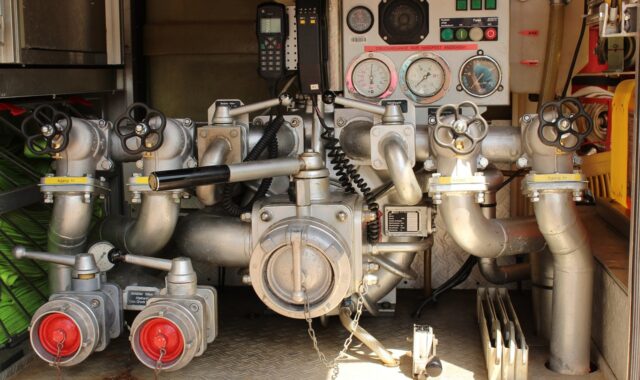
How laboratory consumables and chemical supplies shape pump and valve selection
Why consumables and chemicals matter to pumps and valves
Laboratory consumables and chemical supplies are often managed as purchasing categories. In daily operation, they also determine how fluids move through a laboratory. Reagents, solvents, buffers, tubing, pipette tips, sample vials, cartridges, filters, and waste containers all interact with pumps and valves. A poor match can lead to swelling, leaks, inaccurate dosing, cross-contamination, pressure loss, or premature equipment failure.
A more reliable approach is to select pumps, valves, and consumables as one fluid-control system. The review should cover chemical compatibility, required flow range, pressure conditions, cleanliness requirements, waste rules, and the laboratory’s written safety procedures.
This article explains the practical connection between consumable choice and fluid-control equipment. It is written for laboratories, pilot units, quality-control teams, and purchasing staff that need a clearer framework before reviewing pump and valve options in the Pumps and Valves category.
The main search intent behind laboratory purchasing
Most people searching for laboratory consumables and chemical supplies are not looking for a single item. They usually need a structured way to buy repeat-use materials without interrupting testing, damaging equipment, or creating unnecessary safety risk. The search intent is broader than a simple product list.
In practice, the question is usually: which supplies are needed, which specifications matter, and how will they affect laboratory operation? For pump and valve systems, procurement teams should look beyond catalogue descriptions and consider how each consumable behaves under actual laboratory conditions.
- Frequency of use: Pipette tips, filters, septa, tubing, bottles, gloves, and wipes may be consumed daily, so small specification errors can multiply quickly.
- Chemical exposure: Solvents, acids, bases, oxidizers, oils, buffers, and biological media can react differently with elastomers, plastics, metals, and glass.
- Cleanliness requirements: Analytical, pharmaceutical, environmental, and research laboratories may need low-extractable, sterile, DNase-free, RNase-free, or particle-controlled supplies.
- Fluid-control reliability: Pumps and valves depend on stable tubing dimensions, compatible seals, appropriate fittings, and containers that can handle vacuum, pressure, or venting requirements.
- Waste management: Empty containers, contaminated tips, spent solvents, and incompatible chemical residues require planned segregation rather than ad hoc disposal.
Consumables are not passive accessories. They define the operating environment for pumps, valves, sensors, and analytical instruments.
Common consumables that affect fluid handling
Laboratory consumables cover many product groups, but several categories have a direct effect on pump and valve performance. Understanding these categories helps teams avoid overspecifying low-risk items while underspecifying parts that control flow, sealing, cleanliness, or chemical resistance.
Tubing, fittings, and connectors
Tubing is one of the most important consumables in a fluid path. Its internal diameter affects flow rate, pressure drop, priming time, and hold-up volume. Wall thickness affects pressure rating and flexibility. Material selection affects chemical resistance and extractables. Silicone tubing may be useful where flexibility is important, while PTFE, FEP, or PFA tubing is often considered where stronger solvent or chemical resistance is needed. Polyurethane, PVC, and other plastics may be suitable in some applications and unsuitable in others.
Fittings and connectors also deserve close review. A pump may be chemically resistant, but a low-grade connector or incompatible gasket can become the weak point. Laboratories handling aggressive chemicals should verify the complete wetted path, including tubing, ferrules, adapters, clamps, check valves, and seals.
Filters, cartridges, and membranes
Filters protect pumps, valves, columns, nozzles, and analytical instruments from particles. The membrane material still needs to match the fluid. A membrane that performs well with aqueous buffers may not be appropriate for strong organic solvents. Filter pore size, housing material, pressure rating, extractables, and adsorption behavior can all influence results.
For precision work, the question is not only whether a filter removes particles. It is also whether the filter changes the sample. Adsorption of analytes, leaching of additives, or shedding of particles can affect downstream testing.
Containers, vials, and reservoirs
Reservoirs and containers influence pump suction conditions. A collapsible container, poor venting design, narrow neck, or unsuitable cap liner can create unstable flow. Glass bottles may be preferred for some solvents, while HDPE or polypropylene containers may be more practical for many aqueous solutions. Strong acids, bases, oxidizers, and volatile solvents require closer review.
Vials, septa, and closures also affect automated sampling. Septum coring, evaporation, adsorption, and cap compatibility can create errors that look like pump or valve problems but actually begin at the container.
Pipette tips and volumetric consumables
Pipette tips, syringes, and volumetric tools are not usually grouped with pumps and valves, but they support the same objective: controlled liquid transfer. ISO 8655:2022 covers piston-operated volumetric apparatus such as pipettes, burettes, dilutors, dispensers, and manually operated precision laboratory syringes. The standard is useful because it reminds laboratories that liquid handling accuracy depends on both the instrument and the disposable or replaceable part used with it.
For laboratories that combine manual liquid handling with metering pumps, inconsistency between pipette practices and pump dosing methods can create avoidable variation. Calibration intervals, operator technique, tip fit, pre-wetting practices, and fluid viscosity should be reviewed together.
Chemical supplies change the specification of pumps and valves
Chemical supplies are not just inventory items. They define operating risk. A pump or valve that works well for water may fail quickly with acetone, concentrated acid, sodium hydroxide, oxidizing agents, oils, or viscous polymers. Before selecting equipment, laboratories should collect chemical information from safety data sheets, internal procedures, and supplier technical documents.
The most important point is that compatibility is conditional. Concentration, temperature, exposure time, pressure, mechanical stress, and cleaning method can all change material performance. A compatibility chart can be a useful starting point, but it should not replace application review.
| Selection factor | Why it matters | Practical check |
|---|---|---|
| Chemical compatibility | Incompatible materials can swell, crack, leach, corrode, or lose sealing force. | Review all wetted materials, including seals, diaphragms, tubing, fittings, and valve seats. |
| Flow range | Oversized pumps may pulse or dose inaccurately at low flow. | Match normal operating flow, not only maximum flow. |
| Pressure and suction conditions | Restrictions, filters, long tubing runs, and viscous fluids increase load. | Check tubing diameter, filter pressure drop, reservoir height, and priming behavior. |
| Cleanliness | Particles, extractables, residues, and cross-contamination can affect test results. | Use appropriate filters, single-use parts, cleaning procedures, and segregated fluid paths. |
| Waste pathway | Spent chemicals may be hazardous or incompatible with other waste streams. | Plan labeled containers, secondary containment, and removal frequency before operation. |
For valves, special attention should be paid to dead volume, crevices, actuation speed, seal material, and cleanability. A valve used in a corrosive transfer line has different priorities from a valve used in a low-volume analytical sampling loop. See also: Storage Systems.
For pumps, the choice between peristaltic, diaphragm, gear, syringe, piston, or magnetic-drive designs should be based on the fluid and the measurement objective rather than habit.
Safety and compliance considerations for chemical supplies
Laboratories using hazardous chemicals should manage supplies within a documented safety framework. In the United States, OSHA’s Laboratory Standard, 29 CFR 1910.1450, requires a written Chemical Hygiene Plan where hazardous chemicals are used in laboratories. That plan addresses procedures, equipment, personal protective equipment, and work practices intended to protect workers from chemical hazards.
Waste handling also matters. EPA hazardous waste generator rules and related guidance emphasize proper identification, container management, and prevention of leaks, spills, emissions, and dangerous reactions. Academic laboratories may also encounter EPA Subpart K rules where applicable. The exact obligations depend on the facility, generator category, state implementation, and waste profile, so laboratories should verify requirements with qualified environmental health and safety personnel.
Fire protection should not be overlooked. NFPA 45 is a widely referenced standard for laboratories using chemicals. Its relevance to pumps and valves is practical: flammable liquids, ventilation, storage quantities, transfer methods, and emergency planning can influence whether a fluid-control setup is acceptable for a laboratory space.
These references do not replace local legal review, but they help create a disciplined purchasing process. If a consumable or chemical requires special storage, grounding, bonding, ventilation, spill control, labeling, or waste treatment, that requirement should be considered before pump and valve equipment is installed.
A practical selection workflow
A structured workflow reduces rework and helps purchasing teams compare offers more fairly. It also gives engineers and laboratory staff a shared language when they review risks and specifications.
- Define the fluid list. Record chemical names, concentrations, temperatures, expected impurities, viscosity, solids content, and whether fluids are hazardous, sterile, flammable, corrosive, or light-sensitive.
- Map the wetted path. Include bottles, tubing, caps, filters, pump heads, diaphragms, gears, pistons, valve bodies, seats, seals, sensors, fittings, and waste containers.
- Identify single-use and reusable parts. Decide which parts are disposed of, cleaned, sterilized, calibrated, or periodically replaced.
- Check compatibility by material and condition. Review plastics, elastomers, metals, and glass under actual concentration, temperature, pressure, and exposure time.
- Confirm performance requirements. Define flow range, accuracy, repeatability, pressure, suction lift, priming time, pulsation tolerance, and allowable dead volume.
- Plan contamination control. Consider filters, backflow prevention, check valves, dedicated lines, disposable tubing sets, and validated cleaning steps.
- Plan waste before purchase. Ensure compatible waste containers, labels, secondary containment, and removal procedures are available.
- Document substitutions. If a tip, tube, seal, membrane, solvent, or reagent changes, record the change and assess whether pump or valve performance may be affected.
This workflow is especially useful when laboratories scale a method from manual preparation to semi-automated transfer. Many problems appear during scale-up because the chemistry remains the same while residence time, tubing contact area, pressure, and cleaning demands change.
Common mistakes that create hidden costs
The cheapest consumable is not always the lowest-cost consumable. Hidden costs appear when supplies shorten equipment life, cause failed runs, increase waste, or require repeated troubleshooting.
- Changing tubing without checking internal diameter: A small diameter change can alter flow rate, pump loading, and calibration.
- Assuming all plastics behave the same: Polypropylene, polyethylene, PVC, PTFE, PFA, FEP, and silicone have different chemical and temperature limits.
- Ignoring elastomers: O-rings, diaphragms, valve seats, and gaskets often fail before rigid housings.
- Using one filter type for every solvent: Membrane compatibility and analyte binding can affect both equipment protection and analytical results.
- Treating waste containers as an afterthought: Chemical waste containers must be compatible with their contents and managed to avoid leaks and incompatible reactions.
- Replacing a pump before checking consumables: Air leaks, clogged filters, swollen tubing, blocked vents, or damaged check valves can imitate pump failure.
Good procurement practice combines technical review with inventory control. Laboratories should maintain approved lists for recurring consumables, but those lists need review when methods, chemicals, suppliers, or regulatory requirements change.
Frequently asked questions
What are laboratory consumables and chemical supplies?
Laboratory consumables are items that are used up, replaced frequently, or dedicated to a specific method. Examples include pipette tips, tubes, filters, vials, syringes, gloves, wipes, tubing, fittings, septa, and containers. Chemical supplies include reagents, solvents, standards, buffers, acids, bases, cleaning chemicals, and related materials used in testing, preparation, cleaning, or calibration.
Why do consumables affect pump and valve performance?
Consumables define the fluid path around the pump or valve. Tubing diameter affects flow and pressure. Filters affect restriction and particle control. Seals and fittings affect leak tightness. Containers affect suction, venting, and waste collection. If these parts are poorly matched, even a suitable pump or valve may perform poorly.
How should laboratories check chemical compatibility?
Start with the chemical’s safety data sheet and supplier technical data, then compare all wetted materials under the actual operating conditions. Concentration, temperature, exposure time, pressure, cleaning chemicals, and mechanical stress should be considered. For critical processes, compatibility should be confirmed through testing or documented supplier guidance.
Should laboratories standardize consumables?
Standardization is useful when it reduces variation, simplifies training, and supports repeatable results. However, it should not force one consumable into chemically different applications. A better approach is to standardize approved options by use case, such as aqueous buffers, organic solvents, corrosive reagents, sterile transfer, or waste handling.
What should be reviewed before changing a consumable supplier?
Review dimensions, material grade, sterilization method, certificates, extractables information where relevant, packaging, shelf life, lot traceability, and compatibility with existing pumps, valves, instruments, and containers. A supplier change may look minor, but it can alter sealing, flow, sample recovery, or contamination risk.
Conclusion
Laboratory consumables and chemical supplies should be selected as part of the fluid-control system, not as isolated purchasing lines. The most reliable approach is to map the full wetted path, verify chemical compatibility, match performance requirements, plan waste handling, and document approved substitutions. For pump and valve applications, this reduces avoidable leaks, dosing errors, contamination, equipment damage, and compliance gaps.