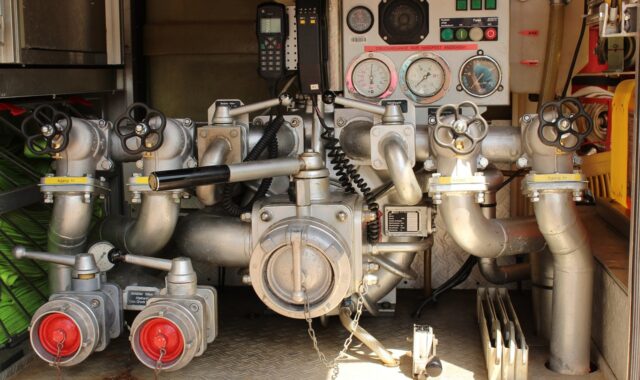
35mm pump valves for chemical equipment selection and sizing considerations

What a 35 mm pump valve description usually means
In chemical equipment, the phrase 35mm pump valves usually identifies a measured feature, not a complete engineering specification. It may refer to an internal port, a hose connection, a check valve seat, a valve ball, a cartridge part or a supplier-specific pump accessory. It should not be treated as a standard pipe size unless the drawing or manufacturer data confirms that meaning. For process piping, valve selection normally starts with the line class, nominal size, pressure rating, connection type, fluid properties and required function. If the only known detail is 35 mm, the first step is to confirm which part of the pump or valve was measured and then compare that detail with the process duty.
This distinction matters because pump valves do not all perform the same function. A valve installed near a pump may be an isolation valve, discharge check valve, throttling valve, pressure relief valve, air release valve or drain valve. In a diaphragm, metering or reciprocating pump, the term pump valve may also mean an internal suction or discharge check valve that opens and closes on every stroke. Those two meanings lead to very different selection and replacement questions.
For broader coverage of pump and valve topics, the Pumps and Valves category includes related industry articles and equipment notes.
Do not convert 35 mm directly into a nominal valve size
A common mistake is to assume that 35 mm is the same as a nominal valve size. In international pipework, DN designations are nominal references rather than exact measured inside diameters. ISO 6708 defines the DN system for pipework components, while many North American specifications use NPS. In mainstream process piping, DN32 and DN40 are common sizes around the 35 mm measurement range, but 35 mm alone is not enough to select either one.
The measured number can come from several places:
- Actual bore or port diameter: A 35 mm internal opening may be part of a special valve or pump head geometry.
- Hose tail or tube outside diameter: A 35 mm hose connection does not necessarily match a DN35 process valve.
- Check valve component: In a diaphragm or metering pump, the ball, seat or cartridge may have a nominal component dimension.
- Manufacturer model code: Some pump series or spare parts use numbers that look dimensional but are not direct pipe sizes.
- Wear part measurement: A worn elastomer, swollen seal or eroded seat can measure differently from its original design.
Before ordering a replacement, compare the tag number, pump model, part drawing, connection standard and measured dimensions. A caliper measurement can help catch obvious mismatches, but it does not confirm pressure rating, chemical resistance or interchangeability.
Sizing 35 mm pump valves around the pump duty
Valve size should be checked against the pump duty, not selected from diameter alone. The minimum information includes flow rate, suction pressure, discharge pressure, liquid density, viscosity, vapor pressure, temperature, solids content and whether the pump is centrifugal or positive displacement. A 35 mm opening may be adequate for one low-viscosity transfer service and restrictive in another service with higher flow, slurry, vapor pressure sensitivity or long suction piping.
For centrifugal pumps, excessive pressure loss on the suction side can reduce available net positive suction head and increase the risk of cavitation, noise, vibration and unstable operation. Suction isolation valves are normally selected to create minimal restriction when fully open. Where flow control is required, it is usually handled on the discharge side or by speed control, depending on the system design.
For positive displacement pumps, the main concern is different. A closed or blocked discharge can cause a rapid pressure rise unless the system includes suitable relief protection. In metering and diaphragm pump service, small internal check valves must also match the stroke rate, chemical viscosity, crystallization tendency and particle load. Selecting only by a 35 mm dimension can miss the dynamic behavior of the valve element.
| Selection question | Why it matters for a 35 mm valve |
|---|---|
| What is the pump type? | Centrifugal, diaphragm, gear, peristaltic and plunger pumps create different valve duties and failure modes. |
| What flow rate is required? | The same bore can produce very different pressure loss at different velocities and viscosities. |
| Is the valve on suction or discharge? | Suction valves should avoid unnecessary restriction; discharge valves must handle pump shutoff or relief conditions. |
| Is the fluid clean, viscous or particle-laden? | Solids can affect seat sealing, check valve response and erosion at the port. |
| What is the allowed pressure drop? | Pressure drop affects pump operating point, energy use and process stability. |
Material compatibility is more than the valve body
Chemical service requires checking every wetted part, not only the visible body. A valve body may be polypropylene, PVDF, stainless steel or another alloy, while the seat, ball, diaphragm, O-ring, gasket, spring or trim may use a different material. A 35 mm pump valve can fail quickly if a small elastomer part is incompatible with the chemical, even when the main body appears suitable.
Common material choices each have limits. PTFE is widely used for broad chemical resistance, but it is not automatically correct for every dynamic sealing or check valve application. EPDM is often considered for many aqueous chemicals and alkaline conditions, but it is generally not selected for oils and many hydrocarbons. FKM can be useful in some solvent, oil and acid services, yet it may be unsuitable in some hot caustic environments. Stainless steel can be appropriate for many duties, but chloride content, temperature and concentration can change corrosion risk.
Compatibility guides from pump and valve manufacturers are useful screening tools, but they are not a substitute for process review. Concentration, temperature, impurities, cleaning chemicals, batch carryover and intermittent dry running can all change the real service condition. For critical chemicals, material selection should be checked against chemical supplier data, pump or valve manufacturer guidance and the plant material standard.
Pressure, temperature and standards to check
A 35 mm valve used near chemical equipment should be specified with a defined pressure and temperature envelope. A simple size description does not show whether the valve can handle normal operating pressure, pump shutoff pressure, cleaning pressure, relief scenarios or thermal expansion. The pressure rating must be checked at the actual operating temperature, because many materials lose allowable pressure as temperature rises.
For metallic industrial valves, ASME B16.34 is a common reference for pressure-temperature ratings, materials, dimensions, testing and marking for flanged, threaded and welding-end valves. It is relevant when the valve is built and specified under that system, but it does not automatically apply to every plastic, sanitary, hose-end or proprietary pump valve. For metric pipework, ISO 6708 helps define DN terminology, while flange or connection standards must still be confirmed separately.
Pump standards also need careful interpretation. ISO 2858 is associated with dimensions and designation of certain end-suction centrifugal pumps, and ISO 5199 is often referenced for technical requirements of rotodynamic pumps in process use. These standards can help frame pump selection, but they do not turn a 35 mm spare part into a complete valve specification. The valve still needs its own material, rating, connection and testing requirements.
If the valve is part of a chemical dosing pump, metering pump or air-operated diaphragm pump, manufacturer documentation becomes especially important. Internal check valve geometry, ball density, seat hardness, spring loading and elastomer formulation may be proprietary. Substituting a visually similar 35 mm component can change priming, dosing accuracy, suction lift or leak-tightness.
Installation details that often decide performance
Even a correctly selected valve can perform poorly if it is installed without regard to pump hydraulics. Around a pump, the valve should support stable flow, safe isolation and practical maintenance. It should not add avoidable turbulence at the pump suction, place excessive load on the pump nozzle or trap gas or liquid in a way that interferes with priming, draining or flushing. See also: Storage Systems.
For suction lines, keep the layout as simple and low-loss as the system allows. Full-port isolation valves are often preferred where restriction must be minimized. If a reducer is required near a horizontal suction nozzle, the piping detail should be reviewed to avoid gas pockets. For corrosive or hazardous fluids, drain and vent points should be planned so maintenance personnel do not have to loosen a valve blindly to depressurize or empty the line.
For discharge lines, a check valve may be needed to prevent reverse flow, protect the pump from backspin or maintain line pressure. The correct location and type depend on the pump type and system layout. Swing, lift, ball, spring-loaded and diaphragm-style check valves do not respond the same way to low flow, pulsation or solids. In pulsating pump service, a dampener or back-pressure valve may be more important than increasing nominal valve size.
Mechanical details are also important. The valve should be aligned without forcing the pipe into position. Supports should carry piping loads rather than transferring them into pump casings or small plastic valve bodies. If the valve includes threaded plastic connections, overtightening can crack the body or distort the seat. If the valve has flanges, gasket type, bolt torque and flange compatibility should match the line specification.
Maintenance and replacement checklist
Maintenance planning for 35 mm pump valves should be based on service conditions and observed performance rather than a generic interval. Chemical valves can fail through erosion, corrosion, swelling, hardening, crystallization, fouling, spring fatigue or seat wear. The first sign may be loss of prime, unstable discharge pressure, reduced flow, leakage past a check valve or difficulty holding calibration on a dosing pump.
When troubleshooting, document the symptom before disassembly. A check valve that leaks backward may have a damaged seat, a swollen ball, trapped solids or chemical deposits. A valve that sticks may be affected by crystallization, polymerization or an elastomer that has absorbed the process fluid. A valve that repeatedly loosens or cracks may be experiencing vibration, water hammer, poor support or incompatible thread sealant.
Use this practical checklist before replacing a 35 mm pump valve or component:
- Confirm whether 35 mm refers to bore, connection, ball, seat, cartridge, hose tail or another dimension.
- Record the pump model, valve tag, line number and service fluid.
- Check pressure, temperature, concentration, viscosity and solids content.
- Verify body, trim, seat, gasket, O-ring and spring materials separately.
- Confirm the connection standard, face-to-face dimension and orientation.
- Compare the old part with the approved drawing, not only with a visual match.
- Inspect nearby piping for strain, vibration, blockage or poor support.
- After installation, check for leakage, priming behavior, pressure stability and abnormal noise.
For hazardous or regulated chemicals, replacement should follow the plant isolation, cleaning, disposal and restart procedures. A valve may be physically small, but it can still contain trapped pressure or residual chemical. Safe maintenance depends on the full system condition, not only on the component size.
Specification summary for purchasing and engineering teams
The most useful purchasing description is not simply 35 mm pump valve. A clearer specification states the valve function, pump type, process fluid, normal and maximum pressure, temperature range, wetted materials, connection type, flow requirement, seal material, applicable standard and manufacturer part reference where available. This reduces the risk of receiving a part that fits physically but fails chemically or hydraulically.
For engineering review, treat 35 mm as a starting clue. If the valve is external to the pump, verify the line size and pressure class. If the valve is internal to the pump, verify the original equipment part and the wetted material code. If the valve is being redesigned, run the hydraulic and compatibility checks before changing bore, spring, seat or elastomer materials. This approach avoids two common errors: treating a proprietary pump part as a generic valve, or sizing a process valve from one measured dimension.
Frequently asked questions
Is a 35 mm pump valve the same as DN32 or DN40?
Not automatically. DN32 and DN40 are nominal pipework sizes, while 35 mm may be an actual measured bore, hose dimension, seat diameter or spare part reference. The correct match depends on the drawing, connection standard and service conditions.
Can a 35 mm valve be used for chemical dosing pumps?
Only if it matches the pump design and chemical service. Dosing pumps often rely on specific check valve geometry and materials to maintain priming and metering accuracy. A similar-looking valve may not perform correctly.
Which material is safest for corrosive chemicals?
No single material is safest for all corrosive chemicals. PTFE, PVDF, polypropylene, stainless steel, EPDM and FKM can all be suitable or unsuitable depending on chemical identity, concentration, temperature and exposure pattern.
Should pump valves be installed on the suction side or discharge side?
Both sides may need valves, but they serve different purposes. Suction valves are usually for isolation and should minimize restriction. Discharge valves may provide isolation, control, reverse-flow protection or relief-related functions depending on the pump and system design.
What information should be confirmed before ordering?
Confirm the measured feature, pump model, valve function, connection type, wetted materials, pressure rating, temperature range, chemical concentration and original part reference. Without these details, 35 mm is not a complete specification.