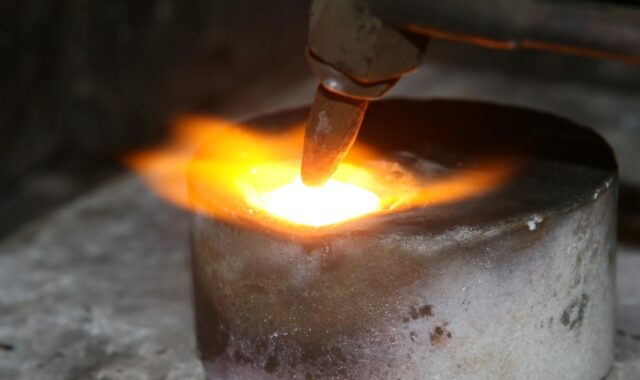
Chemistry laboratory equipment for process development and quality control
What chemistry laboratory equipment needs to accomplish
Chemistry laboratory equipment is more than a set of instruments on a bench. In process industries, the lab is often the first controlled environment where raw materials are characterized, reactions are screened, impurities are investigated, and operating assumptions are tested before work moves toward pilot or production scale. A useful lab setup has to do three things at once: generate reliable data, protect people from chemical and physical hazards, and produce results that process engineers can translate into larger equipment decisions.
That balance is easy to miss when an equipment list is built around individual instruments rather than workflows. A quality control lab may need rapid, repeatable analysis. A process development lab may need flexible reactors, temperature control, separation tools, and accurate sampling. A failure analysis lab may need stronger containment and better analytical resolution. The right starting point is not “what is common in a chemistry lab,” but “what decisions must this lab support?”
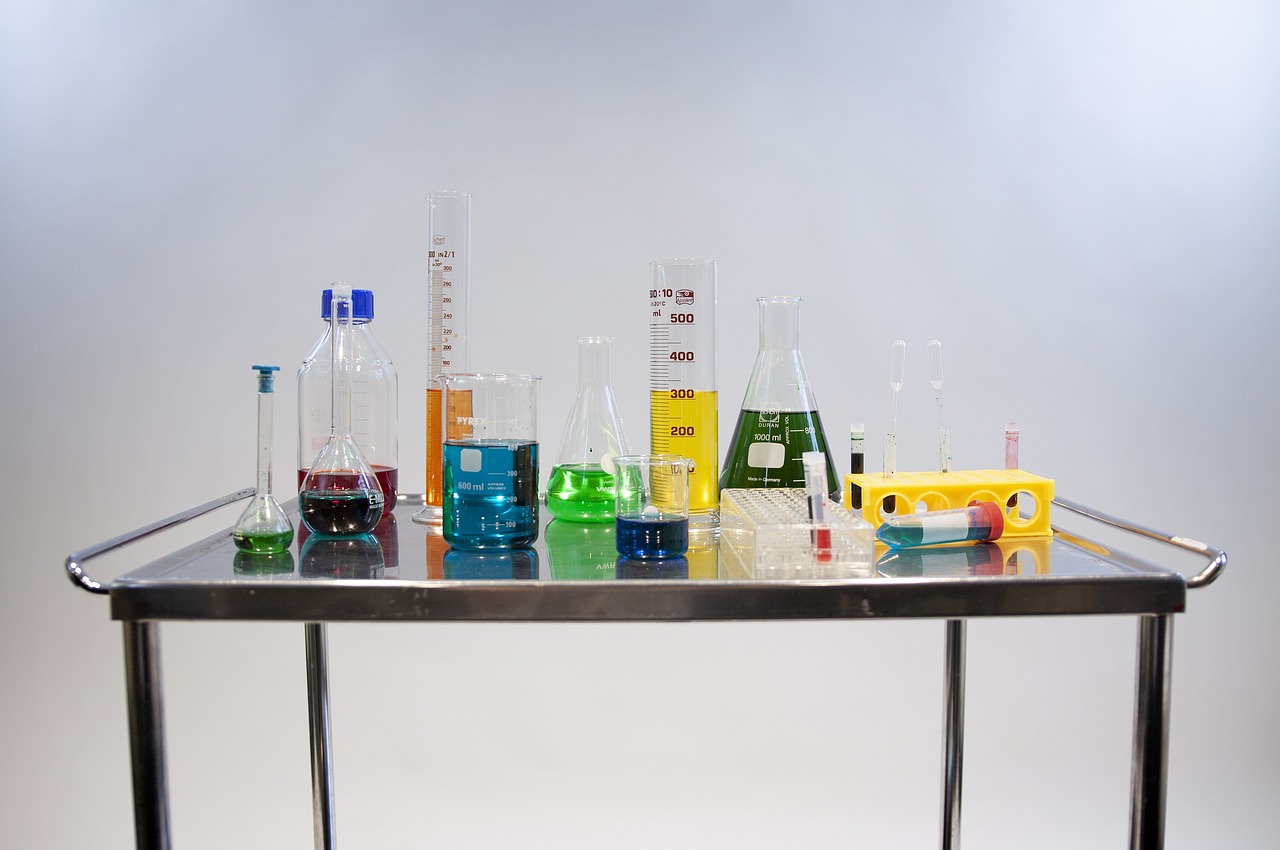
The main categories of chemistry laboratory equipment
Most chemistry labs combine several equipment groups. The exact mix depends on whether the lab supports research, production troubleshooting, incoming inspection, environmental monitoring, or release testing. For process-related work, the following categories are usually the most important.
- Containment and ventilation equipment: chemical fume hoods, local exhaust arms, ventilated enclosures, storage cabinets, and gas cylinder restraints.
- Reaction and mixing equipment: glass reactors, jacketed vessels, magnetic stirrers, overhead stirrers, hot plates, heating mantles, reflux setups, and small pressure-rated reactors where appropriate.
- Thermal equipment: ovens, furnaces, chillers, baths, incubators, refrigerated storage, and temperature-controlled circulators.
- Separation equipment: centrifuges, filtration assemblies, vacuum systems, rotary evaporators, distillation equipment, chromatography systems, and membrane or drying tools.
- Analytical and measurement instruments: balances, pH meters, conductivity meters, titrators, spectrometers, chromatographs, particle size instruments, moisture analyzers, and viscosity meters.
- Sample preparation tools: mills, grinders, pipettes, dispensers, digestion systems, ultrasonic baths, sieves, and homogenizers.
- Safety and emergency equipment: eyewash stations, safety showers, spill kits, compatible PPE, fire extinguishers, waste containers, and labeling systems.
The practical issue is integration. A reactor without reliable temperature measurement can produce misleading kinetic data. A balance without a suitable calibration and environmental control plan can weaken formulation work. A fume hood used as general storage can reduce usable workspace and complicate airflow management. Equipment should be selected as part of a controlled laboratory system, not treated as isolated assets.
Selection criteria before buying or specifying equipment
Before comparing models, define the operating envelope. This includes chemicals handled, sample volume, pressure, temperature, corrosion risk, required accuracy, throughput, cleaning method, and waste stream. In chemical process environments, compatibility is a primary concern. Wetted parts, seals, tubing, coatings, and gaskets must match the solvents, acids, bases, oxidizers, salts, or reactive intermediates expected in the lab.
Capacity should be judged against both normal and peak workload. A single analytical balance may be adequate for occasional checks but become a bottleneck in a release-testing workflow. A small centrifuge may handle research samples but fail to represent solids behavior relevant to filtration or settling at larger scale. Oversizing has costs as well: larger ovens, hoods, and chillers consume space and utilities even when they are underused.
Documentation is another key selection factor. For regulated or customer-audited environments, procurement should consider manuals, certificates, calibration options, software records, maintenance procedures, and spare parts availability. Even in non-regulated research labs, clear documentation supports repeatability when experiments are transferred between teams or scaled up.
| Decision area | Questions to ask | Why it matters |
|---|---|---|
| Chemical compatibility | Will wetted materials tolerate the actual solvent, pH, temperature, and cleaning chemicals? | Prevents contamination, corrosion, swelling, leaks, and premature failure. |
| Measurement quality | What accuracy, precision, resolution, and calibration evidence are required? | Determines whether data can support release testing, troubleshooting, or scale-up decisions. |
| Containment | Does the operation generate vapors, dust, aerosols, pressure, heat, or splash risk? | Connects equipment choice with ventilation, shielding, PPE, and emergency planning. |
| Utilities | Are power, exhaust, cooling water, gases, vacuum, drains, and floor loading adequate? | Avoids buying equipment that the room cannot safely or efficiently support. |
| Scale relevance | Does the laboratory method preserve the process variable being studied? | Helps prevent misleading conclusions when moving toward pilot or plant equipment. |
Core equipment groups and their process value
For process development, reaction equipment is often the center of the laboratory. Jacketed reactors, controlled stirrers, dosing pumps, condensers, and temperature sensors allow teams to study heat release, mixing behavior, order of addition, crystallization, and impurity formation. The goal is not only to make a target material, but also to understand which variables change yield, purity, safety margin, and downstream separability.
Separation equipment connects laboratory chemistry with plant design. Filtration tests, centrifugation, evaporation, distillation, drying, and chromatography can show whether a reaction mixture is easy to work up or likely to create production problems. Lab-scale separations should be documented carefully because cake resistance, solvent retention, foaming, emulsion formation, and thermal sensitivity may become larger issues at scale.
Analytical equipment provides the evidence base. Chromatography, spectroscopy, titration, pH measurement, moisture analysis, density, viscosity, and particle size testing all answer different questions. A lab supporting chemical equipment decisions should not treat analysis as an afterthought. If the analytical method is slow, unstable, or poorly calibrated, process teams may end up optimizing the wrong variable.
Thermal and environmental equipment also deserves attention. Ovens, baths, chillers, freezers, and stability chambers influence drying studies, sample preservation, viscosity measurement, crystallization, and reaction control. Temperature uniformity, ramp rate, recovery after door opening, and sensor placement can affect results. For labs connected to production support, these details are often more useful than nominal capacity alone.
Safety and compliance checkpoints
Safety requirements vary by country, state, facility type, and chemical inventory, so equipment decisions should be reviewed by qualified safety personnel before purchase and installation. In the United States, OSHA’s Laboratory Standard, 29 CFR 1910.1450, applies to covered laboratory work with hazardous chemicals and requires a Chemical Hygiene Plan. That plan is not simply a binder; it should shape how equipment is used, maintained, and paired with engineering controls.
Ventilation is one of the clearest examples. Chemical fume hoods are commonly used to help control exposure to hazardous vapors and reactions, but hood performance is not determined by face velocity alone. Guidance from the National Academies’ Prudent Practices in the Laboratory emphasizes that containment depends on design, sash position, room air currents, user behavior, and testing conditions. A hood should not be selected or judged only by a single airflow number without considering the actual operation.
Fire protection and chemical storage should be considered early. NFPA 45, Standard on Fire Protection for Laboratories Using Chemicals, is commonly used in laboratory fire protection planning. Its relevance depends on jurisdiction and facility design, but the general point is universal: storage quantity, flammability, ventilation, ignition control, emergency access, and segregation of incompatible chemicals affect both lab layout and equipment choice.
Waste handling is another equipment issue, not just an administrative task. Containers, secondary containment, labels, accumulation areas, and compatibility of waste streams must fit the chemistry being performed. EPA hazardous waste rules under RCRA affect many U.S. facilities, and academic laboratories may fall under specific alternative requirements in 40 CFR Part 262 Subpart K when eligible. Industrial laboratories should verify their own generator status and local requirements rather than assuming academic rules apply.
Calibration, qualification, and data quality
Laboratory data is valuable only when users understand its uncertainty and limitations. For balances, thermometers, pipettes, pressure gauges, flow meters, pH meters, and analytical instruments, calibration should be planned according to risk, frequency of use, manufacturer guidance, and the effect of error on decisions. A rarely used thermometer in a low-risk water bath does not carry the same consequence as a balance used for release testing or a pressure gauge used near a safety limit.
ISO/IEC 17025:2017 sets general requirements for the competence of testing and calibration laboratories. A facility does not need to be accredited to learn from its structure. The standard highlights competence, impartiality, consistent operation, and reliable results. For process laboratories, that translates into trained personnel, controlled methods, suitable equipment, valid calibrations, traceable measurements, and records that allow results to be reviewed later. See also: Storage Systems.
NIST guidance on metrological traceability reinforces a useful principle: traceability is not just a label on a certificate. It depends on an unbroken chain of comparisons, stated measurement uncertainty, appropriate procedures, and measurement assurance. In practical terms, a lab should know which instruments require traceable calibration, how intervals are justified, what happens when equipment is found out of tolerance, and whether previous results may have been affected.
Qualification can be simple or formal depending on risk. Installation qualification verifies that equipment was installed correctly. Operational qualification checks whether it operates as intended across defined conditions. Performance qualification confirms that it works for the actual laboratory method. Even when these terms are not formally required, the logic is useful: do not assume a device is fit for purpose until it has been checked under realistic use conditions.
Connecting laboratory equipment with pilot and plant equipment
A chemistry lab supporting process work should be designed with scale-up questions in mind. Laboratory glassware can show whether a reaction is feasible, but it may not reproduce mixing intensity, heat transfer, residence time, vapor disengagement, solids suspension, or wall effects in larger vessels. These differences are why lab results should be paired with engineering judgment before selecting larger process equipment.
Mixing is a common source of scale-up error. A small stir bar may disperse a reagent quickly in a flask, while a larger vessel may develop dead zones, gradients, or poor solids suspension. Heat transfer is another major difference. A reaction that appears controllable in a small flask can be harder to manage at larger scale if heat removal is limited. Filtration and drying may also change because particle size distribution, crystal habit, cake compressibility, and solvent retention do not always scale linearly.
For this reason, a process-oriented lab should record more than final yield or purity. Useful records include addition rates, temperature profiles, agitation settings, observed viscosity changes, gas evolution, foaming, filtration time, cake appearance, wash volumes, drying conditions, and cleaning observations. These details help engineers decide whether a result belongs in a beaker, a pilot unit, or a larger production review.
Readers following equipment scale-up and industrial handling topics can find related coverage in the Process Equipment section.
A practical procurement checklist
The following checklist can help teams turn equipment planning into a repeatable decision process.
- Define the laboratory workflow before listing instruments.
- Identify hazardous chemicals, pressure risks, heat sources, dusts, vapors, and waste streams.
- Confirm room utilities, ventilation capacity, bench strength, clearance, drainage, and emergency access.
- Check wetted material compatibility for normal use, cleaning, and accidental exposure.
- Specify measurement requirements, including accuracy, resolution, calibration, and uncertainty where relevant.
- Review safety standards, internal procedures, and local regulatory requirements before installation.
- Plan maintenance, spare parts, consumables, service access, and expected downtime.
- Confirm whether software, data export, audit trails, or electronic records are needed.
- Document installation checks, user training, calibration status, and acceptance criteria.
- Review whether the equipment produces data that can support process or quality decisions.
The strongest equipment plan is usually not the longest one. It is the one that clearly links each item to a chemical operation, a safety control, a measurement need, or a process decision.
Frequently asked questions
What is the most important chemistry laboratory equipment for a new lab?
There is no universal list because the answer depends on the lab’s purpose. A basic chemistry lab often needs balances, glassware, stirring and heating tools, ventilation, storage, PPE, emergency equipment, and waste containers. A process development or QC lab may also require reactors, filtration equipment, chromatographs, titrators, ovens, chillers, and documented calibration systems.
How should a lab choose between research-grade and production-support equipment?
Research-grade equipment may prioritize flexibility, while production-support equipment usually needs repeatability, documentation, serviceability, and stronger method control. If results will influence release testing, troubleshooting, or process changes, the equipment should support calibration, maintenance records, and consistent operating procedures.
Is a chemical fume hood enough to make a procedure safe?
No. A fume hood is an engineering control, but safe use also depends on the chemical hazards, sash position, airflow testing, room conditions, user technique, storage practices, PPE, and emergency planning. Some hazards may require additional shielding, closed systems, inerting, scrubbers, or specialized containment.
Why is calibration important for chemistry laboratory equipment?
Calibration connects instrument readings to known references and helps users understand whether data is reliable enough for its intended decision. Without suitable calibration and records, small errors in mass, temperature, volume, pressure, or analytical response can lead to incorrect conclusions about quality or process behavior.
How does laboratory equipment affect process scale-up?
Laboratory equipment shapes the data used for scale-up. Differences in mixing, heat transfer, separation behavior, gas handling, and material compatibility can create gaps between bench results and plant performance. Recording operating details and choosing lab equipment that reflects key process variables reduces that risk.