How safety monitors strengthen chemical process safety
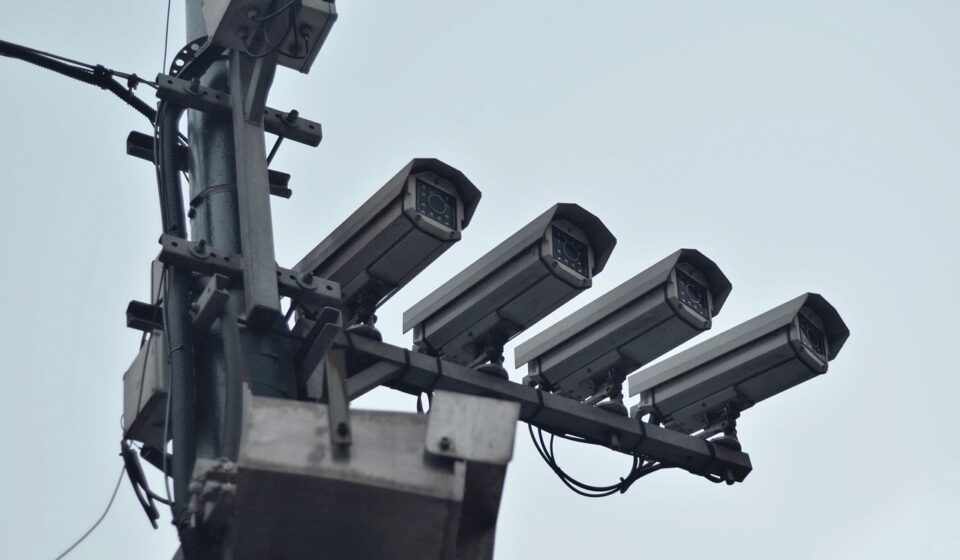
Safety monitors are safeguards, not standalone protection
Safety monitors are most effective when they give operators or automated systems enough time to stop an event from escalating. In chemical equipment and processing areas, they may detect flammable vapor, toxic gas, oxygen deficiency, abnormal pressure, high temperature, vibration, loss-of-containment indicators or other process deviations. Their purpose is not simply to trigger a flashing light on a panel. A useful monitor connects a credible hazard to a defined alarm, operator response, shutdown action, ventilation function or emergency procedure. OSHA’s Process Safety Management standard treats early detection as part of process hazard analysis, including process monitoring, control instrumentation with alarms and detection hardware such as hydrocarbon sensors. (osha.gov)
That distinction is important. A monitor can create a false sense of security if the sensor is poorly matched to the chemical, installed in the wrong location, left uncalibrated or connected to alarms that operators cannot interpret quickly. For broader coverage of industrial safeguards and related equipment topics, visit the Safety Systems section.
What safety monitors include in chemical equipment
The term safety monitors covers several device families. Some are dedicated safety instruments; others are process instruments whose alarms are used as safeguards. The right classification depends on the hazard, the required response time and whether the monitor is part of a basic control layer, a safety instrumented function or an emergency response system.
Fixed gas and vapor detection
Fixed gas detection is common around pumps, compressors, reactors, storage vessels, loading areas, enclosed skids and analyzer shelters. Typical applications include flammable gas detection, hydrogen detection, chlorine or ammonia detection, oxygen deficiency monitoring and volatile organic compound monitoring. These devices are not interchangeable. Electrochemical sensors, catalytic bead sensors, infrared sensors, photoionization detectors and open-path detectors respond differently to target gases, humidity, temperature, oxygen level, poisons and cross-interfering compounds.
A practical specification starts with the credible release scenario, not the instrument catalog. Engineers need to identify which chemical can escape, whether it is heavier or lighter than air, where it could accumulate, how quickly it could reach a hazardous concentration and what action must follow detection. NIOSH’s Pocket Guide to Chemical Hazards is often used as a reference for chemical hazard information, exposure limits and emergency health considerations, but site-specific process conditions still determine monitor selection and placement. (cdc.gov)
Process condition monitoring
Many safety-related warnings come from process measurements rather than dedicated gas detectors. High-high pressure, low flow, rising reactor temperature, abnormal differential pressure, seal failure indication, flame failure, tank overfill and cooling-water loss can all be monitored through transmitters connected to a control system or safety logic solver. When a process hazard analysis credits these signals, the facility should document what the alarm means, who responds, how much time is available and whether the response is realistic during abnormal operation.
Portable and temporary monitors
Portable gas monitors remain important for confined space entry, maintenance, turnaround work, leak investigation and hot work verification. OSHA has warned that direct-reading portable gas monitors can become inaccurate because of irregular maintenance, calibration drift, sensor degradation, harsh environmental exposure and interfering gases. OSHA also notes that whether a warning or danger alarm occurs at the proper concentration depends on detection capability, accurate reading and the presence of interfering gases. (osha.gov)
The standards and guidance that shape monitoring decisions
Safety monitors sit at the intersection of regulation, engineering standards and company procedures. In the United States, OSHA’s PSM standard applies to processes involving highly hazardous chemicals above covered thresholds. For those covered processes, the process hazard analysis must address engineering and administrative controls and their interrelationships, including appropriate detection methodologies for early warning of releases. This does not mean every installed monitor is automatically sufficient. It means detection must be evaluated as part of the broader risk control strategy. (osha.gov)
For functions intended to move a process to a safe state, ISA/IEC 61511 is a key process-industry standard. ISA describes ANSI/ISA-61511-1-2018, based on IEC 61511-1:2016 with amendment, as addressing the framework, definitions, system, hardware and application programming requirements for safety instrumented systems in the process industry sector. The standard covers the lifecycle from specification and design through installation, operation and maintenance. (isa.org)
Alarm management is another essential layer. A technically accurate signal can still fail as a safeguard if it arrives as one of hundreds of poorly prioritized alarms. EEMUA describes alarm systems as an essential part of operator interfaces for large industrial facilities, and states that ISA 18.2 and IEC 62682:2023 are aligned with EEMUA 191. (eemua.org) In practice, every safety-relevant alarm should have a defined meaning, priority, response and performance review.
Where safety monitors add the most value
Safety monitors deliver the greatest risk reduction when they are tied to credible, time-sensitive scenarios. A monitor near a pump handling flammable solvent may provide early warning before vapor reaches an ignition source. A hydrogen detector in a battery room or process enclosure may trigger ventilation and evacuation before an explosive atmosphere forms. An oxygen monitor near nitrogen purging or cryogenic systems may warn workers before an atmosphere becomes oxygen-deficient. A high-high level alarm on a storage tank may prevent overfill if the operator has enough time and authority to stop transfer.
Monitoring value is much weaker when the device is used to compensate for poor primary design. A detector should not be the only reason an incompatible material is stored near a drain, a relief stream is routed to an unsafe location or a maintenance task proceeds without isolation. Inherently safer design, containment integrity, ventilation, safe layout, pressure relief, emergency isolation and procedures still come first. Monitors help reveal loss of control; they do not remove the hazard.
A useful way to judge value is to write a short cause-and-effect statement: if this condition occurs, this monitor will detect it within this time, this alarm or trip will occur, this person or system will act, and this action will prevent or reduce this consequence. If any part of that statement is vague, the safeguard needs more engineering work.
Incident lessons show why lifecycle control matters
Major incident investigations repeatedly show that detection failures are rarely caused by the sensor alone. They often involve a combination of wrong application, disabled logic, poor maintenance, weak management of change, missing procedures and unclear emergency response.
In the Watson Grinding incident in Houston, Texas, an accidental propylene release accumulated and exploded on January 24, 2020. The U.S. Chemical Safety and Hazard Investigation Board reported in 2023 that the release involved a degraded and poorly crimped hose, a manual shutoff valve left open after production, and an inoperative automated gas detection alarm, exhaust fan startup and gas shutoff system. The CSB also identified weaknesses in emergency response planning. (csb.gov)
The AB Specialty Silicones explosion in Waukegan, Illinois, on May 3, 2019, offers another lesson. CSB investigation material stated that the facility had not replaced hydrogen detector sensors by the time of the incident. It also emphasized that facilities should communicate the intended application and operating environment to the detector manufacturer so the correct sensor technology can be selected, installed and maintained. (csb.gov) See also: Storage Systems.
These findings are not reasons to distrust safety monitors. They are reasons to manage monitors as safety-critical equipment. A detector that is bypassed, blinded, poisoned, out of calibration or not connected to a working response system cannot perform the role assumed in a hazard analysis.
A practical lifecycle checklist for safety monitors
Monitoring should be managed as a lifecycle, not as a one-time purchase. The following checklist can help engineers, maintenance teams and safety reviewers identify gaps before a monitor is credited as a safeguard.
| Lifecycle step | Key question | Why it matters |
|---|---|---|
| Hazard definition | Which chemical, deviation or unsafe atmosphere must be detected? | The target hazard determines sensor type, range, alarm point and response time. |
| Scenario analysis | Where can the release or deviation occur, and how fast can it escalate? | Placement and action time must match the credible event. |
| Technology selection | Is the sensor suitable for the gas, vapor, temperature, humidity and background chemicals? | Cross-sensitivity, poisoning and environmental limits can defeat detection. |
| Alarm philosophy | What does each alarm require the operator to do? | Unclear alarms create delay and inconsistent response. |
| Integration | Does the monitor only alert, or does it also start ventilation, close valves or trip equipment? | The required risk reduction determines whether manual response is enough. |
| Testing and calibration | How often is calibration, bump testing or proof testing performed? | Sensor drift and hidden failures must be discovered before demand. |
| Bypass control | Who approves bypasses, and how are compensating measures documented? | Temporary defeats can become long-term unmanaged exposure. |
| Performance review | Are nuisance alarms, failed tests, overdue calibrations and near misses trended? | Metrics reveal whether the monitoring program is improving or degrading. |
CCPS guidance on process safety metrics emphasizes selecting and monitoring leading and lagging indicators to reduce process safety risk. For safety monitors, useful leading indicators may include overdue calibrations, failed bump tests, disabled detectors, alarm floods, repeated nuisance alarms and open corrective actions. Lagging indicators may include releases detected late, alarms missed by operators or incidents where a credited monitor did not function. (ccps.aiche.org)
How to turn monitor data into safer decisions
Modern chemical plants can collect large volumes of data from transmitters, detectors, control systems and historians. More data does not automatically make a plant safer. The objective is to convert data into timely, reliable decisions.
First, safety alarms should be rationalized. Each alarm should have a documented cause, consequence, priority, operator action and allowable response time. If an alarm has no defined action, it may be an event log item rather than a true alarm. Second, alarms should be tested in realistic operating modes, including startup, shutdown, cleaning, purging and maintenance. Some of the most serious monitoring gaps appear outside steady-state production.
Third, monitor health should be visible. Operators and maintenance teams need to know when a detector is faulted, inhibited, in calibration mode or overdue for service. Fourth, monitor performance should feed management review. Repeated detector failures, frequent bypasses or high alarm rates are not merely instrumentation issues; they may indicate deeper process safety management weaknesses.
Finally, safety monitors should be reviewed after any process change. New raw materials, catalysts, cleaning agents, ventilation changes, enclosure modifications, production rate increases or equipment layout changes can alter detection requirements. A monitor selected for yesterday’s process may not be adequate for tomorrow’s hazard.
Frequently asked questions
Are safety monitors required in every chemical processing area?
No. The need depends on the chemical hazards, release scenarios, occupancy, ventilation, ignition sources, regulatory requirements and risk analysis. However, when a process hazard analysis credits early detection as a safeguard, the monitor and its response should be specified, maintained and tested accordingly.
What is the difference between a safety monitor and a safety instrumented system?
A safety monitor detects a condition and may provide an alarm or signal. A safety instrumented system is an engineered system designed to achieve or maintain a safe state through defined safety instrumented functions. Some monitors provide inputs to a safety instrumented system, but many are used only for warning, trending or operator response.
How often should gas detectors be calibrated?
There is no universal interval that fits every gas detector and environment. The interval should follow manufacturer instructions, site procedures, regulatory expectations, service history and exposure conditions. Harsh environments, sensor poisons, extreme humidity or critical applications may require more frequent bump checks, calibration checks or proof tests.
Can alarms from safety monitors create risk?
Yes. Too many nuisance alarms, poorly prioritized alarms or alarms without clear response instructions can overload operators and delay action. Alarm management standards and guidance exist because an alarm is only useful when the operator can understand it and respond in time.
What is the most common mistake when applying safety monitors?
A common mistake is treating the device as the safeguard without proving the full detection-to-action chain. Effective monitoring requires the right sensor, correct placement, reliable calibration, functional logic, clear alarms, trained responders and documented performance review.