Vertical storage systems for chemical plants and process facilities

What vertical storage systems solve in chemical facilities
Vertical storage systems are used when a chemical facility needs more usable capacity without spreading tanks, silos, drums or intermediate bulk containers across a wider floor area. In chemical plants, terminals and process support areas, the benefit is not height alone. A well-planned vertical arrangement can support gravity flow, shorten transfer routes, define segregation zones, improve inspection access and make inventory easier to control.
A vertical system may be a field-erected bulk tank, a shop-built chemical tank, a silo for powders, stacked pallet storage, or a vertical lift system for smaller packaged items. The right choice depends on the stored material, hazard classification, transfer method and the maintenance workload the site can realistically support.

For chemical equipment planning, vertical storage should be treated as a complete system, not just a vessel or rack. Foundations, vents, overfill protection, secondary containment, pipe routing, corrosion allowances, access platforms, instrumentation and emergency response space all affect the final design. This is why many facility teams review vertical options as part of broader storage systems planning instead of selecting a tank by volume alone.
Main types of vertical storage systems
The term vertical storage systems covers several equipment families. They use height efficiently, but they serve different materials and risk profiles.
Vertical bulk liquid tanks
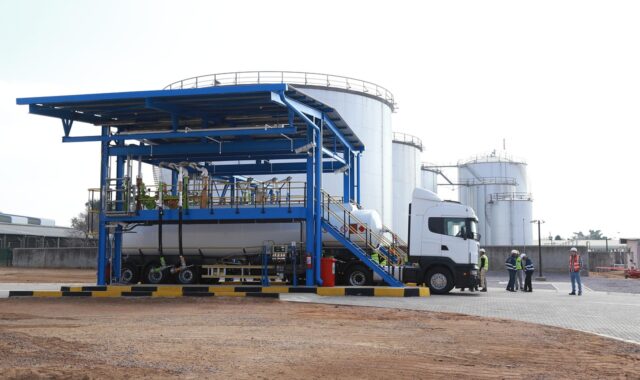
Vertical tanks are common for water treatment chemicals, acids, alkalis, solvents, fuels, intermediates and finished liquid products. Atmospheric vertical tanks are often used when the liquid can be stored near ambient pressure. Low-pressure or pressure-rated vessels may be required when vapor pressure, blanketing, refrigeration or process conditions exceed atmospheric service. Common materials include carbon steel, stainless steel, fiberglass-reinforced plastic, polyethylene and lined steel. Compatibility must still be checked against the chemical, concentration, temperature and cleaning method.
Vertical silos and hoppers
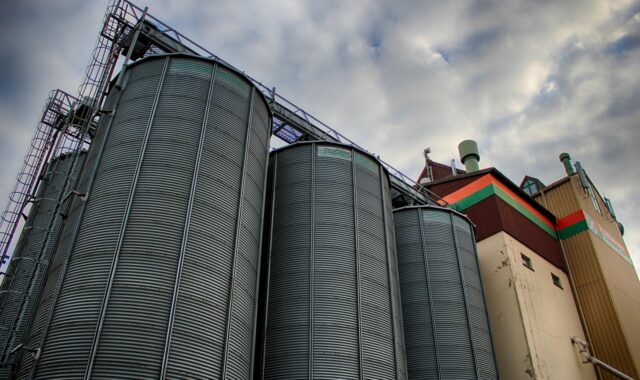
For dry bulk chemicals, minerals, catalysts, resins and additives, vertical silos and hoppers provide high-volume storage with gravity discharge. Their design depends on bulk density, particle size, moisture sensitivity, flowability, dust explosion characteristics and bridging tendency. A steep cone may help some powders discharge, while cohesive materials may need vibration, fluidizing pads, live bottoms or mechanical extraction.
Racking and vertical lift systems for packaged chemicals
Packaged dangerous goods, drums, pails, laboratory chemicals and maintenance materials may use pallet racking, spill-containment shelving or automated vertical lift systems. These systems are not substitutes for a code-compliant bulk tank, but they can improve control of small lots and reduce unnecessary handling. Public guidance from safety authorities such as the UK Health and Safety Executive emphasizes segregation, risk assessment, labeling and emergency arrangements for packaged dangerous substances.
Where vertical storage fits best
Vertical storage is most useful when capacity, footprint and material flow point in the same direction. A vertical tank can often store more liquid per square meter than a horizontal tank of similar capacity, especially in tank farms or process yards where land is constrained. It may also simplify gravity-assisted transfer to downstream equipment if outlet elevation, pump net positive suction head and maintenance access are considered early.
Vertical silos are often preferred when bulk solids arrive by pneumatic conveying or truck unloading and then feed mixers, reactors or packaging lines. In warehouses, vertical racking helps when the product mix changes frequently and inventory must remain visible and segregated. Still, vertical storage is not automatically the best option. A tall vessel increases wind and seismic design considerations, may require more expensive foundations, and can make roof access, vent maintenance and level instrument work more demanding.
A practical selection question is simple: does vertical height reduce total risk and handling effort, or does it only move the problem upward? If operators need frequent top-entry inspection, manual sampling or intervention at height, the design should include permanent platforms, fall protection, safe stairs or alternative access methods. If forklifts operate near vertical racks or tanks, impact protection and traffic separation are part of the storage design, not optional accessories.
Design criteria that should be settled before sizing
Many storage problems start when capacity is chosen before the process requirements are fully defined. For vertical storage systems, the following criteria should be documented before equipment is specified:
- Chemical compatibility: Confirm the liquid or solid against the proposed shell, lining, gasket, valve, coating and instrument wetted materials.
- Physical properties: Include specific gravity, viscosity, vapor pressure, temperature range, freezing point, flash point, bulk density, particle size and moisture sensitivity.
- Operating mode: Identify whether storage is continuous, batch, campaign-based, seasonal, heated, cooled, blanketed, agitated or recirculated.
- Turnover and usable capacity: Separate nominal capacity from working capacity, heel volume, outage space and emergency reserve.
- Transfer method: Review pump suction conditions, gravity flow, pneumatic conveying, loading arms, hose connections and cleanout requirements.
- Site loads: Evaluate foundation bearing, settlement, wind, seismic loads, snow loads where relevant, and the effect of tall connected piping.
- Inspection access: Plan manways, platforms, ladders, confined-space controls, lighting and isolation points before the layout is fixed.
For liquid tanks, nozzle elevation and bottom style can be as important as total volume. Flat-bottom tanks may suit large atmospheric storage, while cone-bottom tanks support better drainage for smaller process chemicals. Dished or sloped bottoms can reduce residue but may require different supports. For powders, cone angle and outlet geometry strongly affect whether the silo empties reliably or forms stagnant zones.
Safety, containment and code considerations
Vertical chemical storage must be reviewed against the laws, codes and standards that apply to the site, the material and the jurisdiction. In the United States, OSHA rules for flammable liquids, EPA Spill Prevention, Control and Countermeasure requirements for oil storage, NFPA 30 for flammable and combustible liquids, and state or local fire codes may all be relevant, depending on the material. Industry standards such as API 650 for welded tanks, API 653 for tank inspection and repair, API 620 for low-pressure welded tanks, and UL 142 or UL 2085 for certain shop-fabricated aboveground tanks are often part of specification discussions. The applicable standard should be selected by qualified engineering and compliance personnel, not by keyword matching.
Secondary containment is one of the most important design areas. It should account for credible releases, drainage paths, compatible containment materials, rainfall where outdoor containment is exposed, firewater, isolation valves and emergency access. A common mistake is to focus only on containment volume while ignoring whether spilled material can attack the containment coating, migrate through drains, react with incompatible chemicals or block safe response routes. See also: Pumps and Valves.
Overfill prevention also needs independent attention. Investigations by chemical safety organizations have repeatedly shown that storage incidents can involve level measurement failures, weak operating procedures, poor alarm response or inadequate separation between normal gauging and independent shutdown functions. For higher-hazard service, a vertical tank may need independent high-level alarms, high-high shutdown, proof-tested interlocks, clearly assigned operator response times and written procedures for deliveries and transfers.
Vent design is another area where storage is sometimes oversimplified. Tanks need protection from overpressure and vacuum during filling, emptying, thermal movement and abnormal conditions. Flammable or toxic vapor service may require flame arresters, pressure-vacuum vents, vapor recovery, nitrogen blanketing or emissions controls. These features must be compatible with the process and maintained so that screens, vents or arresters do not become blocked by corrosion products, polymerized material, ice or dust.
Operation, inspection and maintenance planning
A vertical storage system is only as reliable as its operating discipline. Operators need clear maximum fill levels, transfer checklists, labeling, compatible hose or pipe connections, emergency shutoff points and procedures for abnormal readings. For multi-chemical sites, color coding and connection management can reduce the risk of unloading the wrong material into a tank.
Inspection planning should match the tank type and hazard. EPA guidance for SPCC-regulated oil storage, for example, describes regular integrity testing and external visual checks of aboveground bulk storage containers, including foundations and supports. In practice, inspection programs may include routine walk-arounds, coating checks, ultrasonic thickness measurements, settlement surveys, vent inspections, relief device maintenance, calibration of level instruments and internal inspections when required by the applicable standard.
Maintenance access should be designed in, not improvised later. Roof-mounted instruments, agitator drives, vent devices and sampling points require safe reach. If a tank is too tall for routine maintenance without temporary lifts or scaffolding, the apparent footprint savings may be offset by downtime and safety exposure. For silos, dust collection, bin vents, discharge aids, load cells and explosion protection devices also need reachable inspection points.
Comparison checklist for common vertical storage options
| Storage option | Typical use | Main advantage | Key limitation |
|---|---|---|---|
| Field-erected vertical tank | Large-volume liquid storage | High capacity with efficient land use | Requires engineered foundation, inspection access and code review |
| Shop-built vertical tank | Moderate-volume process chemicals | Controlled fabrication and faster installation | Transportation limits and material compatibility constraints |
| Vertical silo or hopper | Powders, pellets and dry additives | Supports gravity discharge and bulk receiving | Flow problems if cone angle, outlet and material behavior are poorly matched |
| Vertical racking for drums or IBCs | Packaged chemicals and variable inventory | Improves organization and space use | Requires segregation, spill control and forklift risk management |
| Vertical lift module | Small packaged items, spare parts or lab supplies | Reduces picking footprint and improves access control | Not suitable for many hazardous chemicals unless specifically designed and approved |
For most chemical facilities, the strongest storage strategy combines several formats. Large-volume, stable liquids may belong in dedicated vertical tanks. Powders may require silos with controlled discharge. Smaller hazardous packages may be safer in segregated cabinets, containment racks or dedicated rooms. The aim is not to make every material vertical; it is to give each material the storage method that lowers handling, exposure and loss-of-containment risk.
Frequently asked questions
Are vertical storage systems only for liquids?
No. In chemical facilities, vertical storage systems can include liquid tanks, dry bulk silos, drum racking, IBC storage, automated vertical lifts and specialized cabinets. The engineering requirements change significantly depending on whether the material is liquid, solid, flammable, corrosive, toxic, reactive or moisture-sensitive.
When is a vertical tank better than a horizontal tank?
A vertical tank is often better when the site needs high capacity in a smaller footprint and can provide suitable foundation, containment, access and inspection arrangements. A horizontal tank may be preferable for lower-profile installations, some shop-built applications, easier access or locations where height restrictions, wind loads or seismic concerns dominate.
Which standards apply to vertical chemical storage?
There is no single standard for all vertical chemical storage. Depending on the material and location, designers may need to consider OSHA requirements, EPA SPCC rules, NFPA 30, local fire codes, API tank standards, UL tank standards, ASME pressure vessel rules and company engineering specifications. The applicable standard must be confirmed for the exact service.
How often should vertical tanks be inspected?
Inspection frequency depends on the tank design, stored material, corrosion risk, regulatory obligations, service history and the inspection standard used. A good program includes routine operator checks, documented external inspections, instrument calibration and formal integrity evaluations when required, especially after material repairs or service changes.
Can incompatible chemicals share the same vertical storage area?
They should not be stored together unless segregation, containment and emergency controls prevent credible mixing during leaks, spills, firewater movement or handling errors. Compatibility should be reviewed using safety data sheets, site procedures and qualified chemical safety guidance before the layout is approved.