Traffic safety systems for industrial sites, roads, and work zones
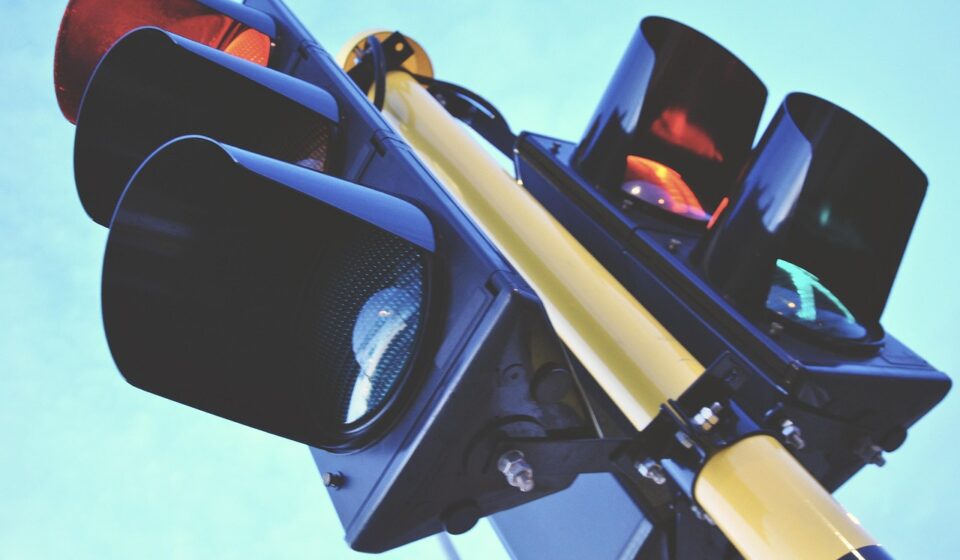
Why traffic safety systems matter beyond public roads
Traffic safety systems are not limited to highway equipment. They include the coordinated signs, pavement markings, barriers, signals, speed controls, pedestrian routes, warning devices, and operating rules that tell drivers and pedestrians where to move, where to stop, and what hazards to expect. The same principle applies in industrial sites, chemical plants, terminals, warehouses, and construction work zones: predictable movement reduces conflict. The strongest system is not a set of cones or signs bought separately. It is a designed layer of controls that separates people from vehicles, manages speed, protects fixed assets, and keeps emergency routes clear.
Recent U.S. safety data show why disciplined design still matters. NHTSA reported an estimated 36,640 traffic fatalities in 2025, down 6.7 percent from 2024, and an estimated first-quarter 2026 fatality rate of 0.99 deaths per 100 million vehicle miles traveled. That improvement is important, but the absolute risk remains high. FHWA work-zone data also show that work zone fatalities decreased from 905 in 2023 to 850 in 2024, while the share of fatal work zone crashes where speeding was a factor increased from 29 percent to 34 percent. For site owners, the message is practical: even when exposure falls, speed, visibility, and separation still need active control.
For more safety-related industrial articles, see the Safety Systems section.
What a complete traffic safety system includes
A practical traffic safety system combines several layers. Each layer should answer a different question for the driver, pedestrian, equipment operator, or maintenance crew. Where should I go? How fast should I move? Who has priority? What happens if someone makes a mistake?
- Regulatory and warning signs: Speed limits, stop controls, one-way routes, pedestrian crossings, loading rules, height restrictions, hazardous area warnings, and emergency access notices.
- Pavement and floor markings: Lane lines, stop bars, crosswalks, forklift lanes, pedestrian walkways, exclusion zones, parking bays, tanker staging areas, and no-storage zones near fire protection equipment.
- Physical separation: Guardrails, bollards, crash-rated barriers where required, pedestrian railings, curbs, wheel stops, dock restraints, and protected walkways.
- Speed management: Posted plant speed limits, geometric narrowing, speed tables where appropriate, rumble strips in selected road environments, gate controls, and driver instructions.
- Visibility and communication: Lighting, reflective materials, convex mirrors, flashing beacons, backup alarms, horn-use rules, radio procedures, and high-visibility clothing requirements.
- Temporary traffic control: Cones, channelizers, portable signs, arrow boards, temporary barriers, flagging plans, and detours for maintenance, construction, shutdowns, and loading changes.
- Inspection and maintenance: Scheduled checks for faded markings, damaged signs, loose bollards, degraded retroreflectivity, blocked aisles, missing cones, and outdated route plans.
These devices work best as a system. A speed limit sign has limited value if the route is too wide, visibility is poor, pedestrians cross unpredictably, and supervisors accept shortcuts. A barrier is also incomplete without the right end treatment, foundation, offset, and inspection program. Safety depends on the fit between design, hardware, behavior, and maintenance.
Standards and references that shape system design
In the United States, public-road traffic control is strongly influenced by the FHWA Manual on Uniform Traffic Control Devices, commonly called the MUTCD. FHWA states that the MUTCD defines national standards for traffic control devices, including signs, pavement markings, and traffic signals, on streets, highways, pedestrian and bicycle facilities, and site roadways open to public travel. The 11th edition was adopted by final rule on December 19, 2023, became effective on January 18, 2024, and Revision 1 became effective on March 5, 2026. Where an industrial access road is open to public travel or connects directly to public streets, project teams should confirm which state or local MUTCD adoption and supplement apply.
Roadside hardware adds another standards issue. FHWA guidance explains that the AASHTO Manual for Assessing Safety Hardware, known as MASH, is used for crash testing and evaluation of roadside safety hardware such as barriers, terminals, crash cushions, sign supports, and work zone devices. FHWA eligibility letters are related to federal-aid reimbursement and are not a universal product certification for every private site application. For owners, this distinction matters. A device described as crash-tested may still need engineering review for speed, vehicle mix, foundation, available deflection space, impact angle, drainage, and maintenance access.
Inside industrial workplaces, OSHA requirements and guidance become more relevant. OSHA requires permanent aisles and passageways to be clear and appropriately marked where mechanical handling equipment is used. Its powered industrial truck rules also require operators to observe traffic regulations, including authorized plant speed limits, and to operate at speeds that allow the truck to stop safely. OSHA pedestrian traffic guidance recommends separating pedestrians from lift trucks where possible through walkways, railings or protective barriers, adequate walking space, floor striping when barriers cannot be used, convex mirrors at blind aisle intersections, traffic control signs, and posted plant speed limits.
Matching controls to site hazards
The most defensible way to select traffic safety systems is to map hazards before selecting devices. A chemical plant loading area, for example, may have slow but heavy tanker traffic, limited turning space, hose connections, spill containment, pedestrians performing inspections, and emergency response access. A warehouse may have frequent forklift-pedestrian interaction and blind rack aisles. A road work zone may have high approach speeds and drivers who encounter queues unexpectedly. These environments need different combinations of controls.
| Traffic environment | Main conflict | Useful system elements | Design caution |
|---|---|---|---|
| Plant entrance and security gate | Visitor vehicles, trucks, guards, and pedestrians converge | Advance signs, lane markings, stop control, speed reduction, lighting, pedestrian refuge, gate interlocks | Avoid queues that spill back onto public roads |
| Tank truck loading rack | Heavy vehicles move near operators, hoses, pipes, and containment structures | Wheel chocks or restraints, defined staging lanes, bollards, stop bars, overhead clearance signs, emergency access markings | Protect equipment without blocking evacuation and firefighting routes |
| Warehouse forklift aisle | Forklifts and pedestrians share narrow or obstructed spaces | Marked walkways, railings, convex mirrors, horn rules, posted speed limits, pedestrian gates | Floor striping alone may be inadequate where speed, mass, or visibility risk is high |
| Temporary maintenance zone | Normal routes change and drivers may not expect workers | Temporary signs, cones, channelizers, barriers, flagging, lighting, pre-task communication | Remove or cover obsolete signs when the phase changes |
| Public-facing work zone | Drivers approach workers, equipment, queues, or lane shifts at speed | Advance warning, taper design, positive protection where justified, rumble strips, arrow boards, speed management | Plan for night visibility, rear-end risk, and emergency vehicle passage |
This kind of mapping gives the site team a stronger basis for decisions than a generic product list. It also helps procurement teams avoid two common mistakes: buying hardware that is overbuilt for the risk, or buying low-cost devices that do not address the crash energy, exposure, or human factors present at the site.
Public-road systems versus industrial-site systems
Public-road and industrial-site traffic safety systems share a goal, but they differ in authority, user expectations, and vehicle mix. Public roads depend heavily on uniformity because drivers cannot be trained for every local condition. Consistent colors, shapes, sign placement, markings, and signal meanings allow road users to react quickly. That is why the MUTCD is so important for public travel environments.
Industrial sites can add more site-specific controls because users can be trained, authorized, and supervised. A plant may require induction training, delivery route maps, escort rules, radio check-in, permit systems, low speed limits, and restricted access zones. These administrative controls are valuable, but they should not replace sound physical design. A delivery driver who visits once a month should still be able to understand the route without relying on memory. A contractor arriving during a shutdown should not need local knowledge to identify pedestrian walkways, no-go zones, or emergency exits.
The strongest approach is to use public-road conventions where they support quick understanding, then add industrial controls where the hazard is site-specific. Standard stop signs and pavement arrows can guide general vehicle movement, while plant-specific signs can identify PPE zones, grounding requirements, tanker staging rules, or hazardous area restrictions. The result is familiar enough for drivers and specific enough for the facility.
Selection criteria for durable and maintainable systems
Selection should start with risk, not catalog availability. A useful specification asks what the system must withstand, how it will be installed, how it will be inspected, and what failure would mean. For barriers and bollards, this includes expected vehicle type, speed, impact direction, foundation, corrosion exposure, clear space behind the device, and replacement method. For signs and markings, it includes visibility distance, lighting conditions, retroreflectivity, language needs, chemical exposure, floor wear, cleaning methods, and seasonal weather. See also: Storage Systems.
Industrial and chemical environments add durability issues that are easy to overlook. Solvents, salts, acids, alkalis, fuels, washdown water, steam, dust, and ultraviolet exposure can degrade coatings, adhesives, reflective sheeting, plastics, and painted floor markings. Heavy vehicles can loosen anchors or break curbs. Snow removal, sweepers, and forklifts can damage low-profile devices. If maintenance teams cannot quickly replace a damaged component, the system may remain compromised for weeks.
A good procurement checklist should include the following:
- Applicable road authority, plant standard, insurance requirement, and legal requirement.
- Design vehicle, including tanker, emergency vehicle, forklift, yard tractor, or passenger car.
- Operating speed and likely impact speed, not only posted speed.
- Separation distance between vehicles, pedestrians, process equipment, and structures.
- Visibility during night, rain, fog, steam release, dust, or power outage conditions.
- Compatibility with drainage, spill containment, fire lanes, evacuation routes, and snow removal.
- Inspection frequency, replacement parts, repair responsibility, and documentation method.
For any crash-rated product claim, the site team should request the test basis, installation drawings, limitations, and change history. If a product is altered in the field, installed on a weaker foundation, placed without the required clear zone, or repaired with non-equivalent parts, its real performance may differ from the test condition.
Inspection, training, and management of change
Traffic safety systems often fail gradually. Markings fade, signs become dirty, barriers get struck, cones migrate, mirrors lose alignment, temporary routes become permanent by habit, and storage slowly encroaches into walkways. An inspection program should therefore cover both hardware condition and human behavior.
At minimum, inspections should verify that traffic routes remain open, permanent aisles are unobstructed, speed limit signs are visible, pedestrian markings are legible, barriers are anchored, dock areas are controlled, emergency access is clear, and temporary traffic control matches the current work phase. Near misses and minor impacts should be treated as useful data, not just operational inconvenience. Repeated bollard strikes or skid marks near a crossing may indicate poor geometry, poor visibility, unrealistic speed limits, or a route that conflicts with actual workflow.
Management of change is especially important in chemical and heavy industrial sites. A new loading pattern, contractor gate, process unit expansion, turnaround plan, warehouse layout, or emergency response route can change traffic risk. Before the change goes live, the site should review turning paths, pedestrian exposure, signage, lighting, temporary controls, and communication needs. After implementation, a short field verification can confirm whether drivers and pedestrians are using the system as intended.
Frequently asked questions
Are traffic safety systems the same as road safety products?
No. Products such as signs, cones, barriers, bollards, mirrors, and markings are parts of a system. A traffic safety system also includes layout, rules, training, inspection, maintenance, and management responsibility. The system is what makes the individual devices work together.
Do private industrial roads need to follow the MUTCD?
It depends on jurisdiction and whether the road is open to public travel. The MUTCD applies to traffic control devices on public roads and site roadways open to public travel. Even when a private internal route is not legally covered in the same way, using familiar signs, markings, and signal conventions can improve driver understanding.
When should a site use physical barriers instead of floor markings?
Physical separation should be considered when pedestrians are close to moving vehicles, visibility is limited, vehicle mass is high, operating speed is meaningful, or the consequence of impact is severe. Floor markings can guide behavior, but they do not stop a forklift, tanker, or yard truck.
How often should traffic safety systems be inspected?
Inspection frequency should reflect exposure and risk. High-traffic loading areas, forklift aisles, temporary work zones, and public-facing entrances may need frequent checks, while low-use areas may be reviewed on a scheduled basis. Any collision, layout change, shutdown, or complaint should trigger a targeted inspection.
What is the biggest mistake in traffic safety planning?
The biggest mistake is treating traffic safety as a purchasing task rather than a design and management task. Devices should be selected only after the site understands users, routes, speeds, blind spots, vehicle types, pedestrian exposure, emergency access, and maintenance limits.