Height safety systems for chemical equipment access and maintenance
What height safety systems need to do
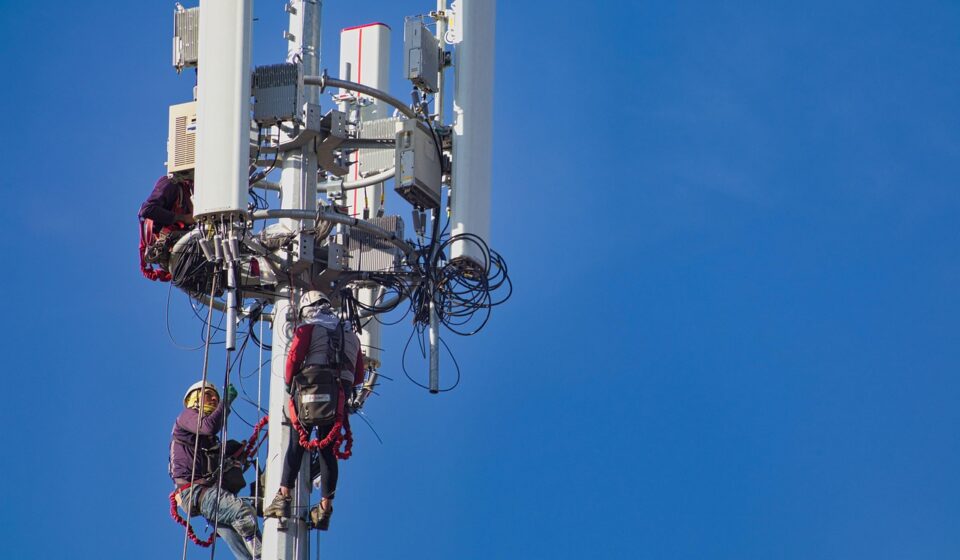
Height safety systems are not a single product added at the end of a project. In a chemical plant or equipment yard, they are a planned combination of access design, guardrails, platforms, engineered anchorages, lifelines, fall restraint or fall arrest equipment, training, inspection and rescue arrangements. The main aim is to keep workers away from fall edges where possible, and to reduce injury where the fall exposure cannot be removed. The practical question is not simply whether a worker is wearing a harness. It is whether the whole system fits the task, the equipment geometry, the chemicals present, the rescue route and the legal requirements that apply to the work.
This matters because work at height appears in routine chemical operations more often than many teams expect. Sampling ports, manways, agitator drives, tank roofs, pipe racks, scrubbers, filter presses, heat exchangers and loading gantries can all create fall exposure during inspection, cleaning, turnaround or emergency maintenance. According to the U.S. Bureau of Labor Statistics, falls, slips and trips accounted for 844 fatal work injuries across U.S. sectors in 2024. OSHA also continued to list fall protection among its most frequently cited standards for fiscal year 2025, showing that the control gap remains common even in mature safety programs.
Use the hierarchy before selecting equipment
A good specification starts with the hierarchy of controls. Safety regulators such as OSHA, HSE and NIOSH generally place elimination and engineering controls above administrative controls and personal protective equipment. For height safety systems, the first design question is whether the elevated task can be removed, relocated or made accessible from a protected position.
Eliminate or reduce the climb
In chemical equipment design, elimination may be as simple as moving a gauge, valve handwheel, sample point or inspection window to grade level. Remote instrumentation, automated sampling, extended valve stems and ground-level wash connections can remove repeated climbing. When a new tank, reactor skid or separation package is being designed, the safest access solution is often the one that prevents work at height from becoming a normal operating step.
Prefer collective protection for recurring access
Where elevated access is unavoidable, collective protection usually gives a stronger day-to-day control than personal equipment. Fixed stairs, permanent platforms, guardrails, self-closing gates, toe boards and non-slip walking surfaces protect every authorized worker who uses the access route. For U.S. general industry, OSHA 29 CFR 1910.28 sets a common federal baseline requiring protection for employees on unprotected sides and edges 4 feet or more above a lower level, while construction work under 29 CFR 1926.501 commonly uses a 6-foot trigger for many unprotected sides and edges. Facilities should still check state, local and project-specific rules, because the applicable standard can change with the type of work being performed.
Use personal systems where engineered access cannot remove exposure
Personal fall protection remains important for temporary tasks, unusual maintenance positions, tank roof access, mobile platforms and retrofit work. The key distinction is between restraint and arrest. Restraint is intended to prevent a worker from reaching the fall edge. Arrest is intended to stop a worker after a fall has begun. In most industrial layouts, restraint is easier to rescue from and less severe on the body, but it requires careful planning of lanyard length, anchor location and work position. Fall arrest adds further checks for clearance, swing fall, rescue time and compatibility between every component.
Common systems and where they fit in a chemical plant
| System type | Typical chemical equipment use | Key limitation to review |
|---|---|---|
| Fixed platforms and stairs | Routine access to vessel manways, agitator drives, filters, tank vents and instrument racks | May need corrosion protection, drainage, toe boards and clearance from hot or moving equipment |
| Guardrails and self-closing gates | Edges of platforms, ladder openings, loading racks and roof hatches | Must meet dimensional and strength criteria; OSHA criteria commonly reference a 42-inch top rail height plus or minus 3 inches |
| Vertical ladder safety systems | Fixed ladders on tanks, silos, stacks and tall structures | For U.S. general industry, fixed ladders over 24 feet face phased requirements for ladder safety or personal fall arrest systems, with full transition dates extending to November 18, 2036 |
| Horizontal lifelines | Long runs across tank roofs, pipe bridges or maintenance zones where fixed guardrails are impractical | Need qualified design because end loads, deflection and fall clearance can be much higher than expected |
| Single-point anchorages | Short-duration inspection, confined space entry support or localized maintenance | Must not be assumed from pipework, handrails or nozzles unless a qualified person has verified the load path |
| Mobile access platforms and gantries | Tank truck loading, railcar access, bag dump stations and temporary maintenance | Stability, wheel locking, ground condition and safe transfer between equipment and platform must be controlled |
This comparison shows why height safety systems should be treated as a system selection issue, not just a purchasing category. The same harness and lanyard that may be acceptable for one task can be unsuitable beside a hot line, over a bund wall, near a rotating agitator or above a congested pipe rack with limited fall clearance.
Key design checks before installation
Map the work, not only the elevation
A fall hazard survey should identify the actual work posture and travel path. Workers rarely stand still in the ideal location shown on a drawing. They carry tools, open hatches, remove bolts, position hoses, handle samples, lean around insulation and step over process piping. A useful survey records the task, frequency, number of workers, duration, surface condition, weather exposure, lighting, adjacent process hazards and whether the activity takes place during normal operation or shutdown.
Chemical equipment adds specific complications. Acid mist, solvent vapor, caustic residue, steam, product dust, oil films and washdown water can all affect walking surfaces and PPE. A platform that is safe when dry may become slippery after CIP cleaning or during rain. A carbon steel anchor may be structurally adequate at installation but less reliable after years of corrosion under insulation or exposure to chlorides. Inspection plans should therefore cover both the safety hardware and the surrounding process environment.
Engineer the anchor and the load path
Anchorage is one of the most common weak points in fall protection planning. U.S. OSHA rules for personal fall protection systems include two widely used options for anchorages: support at least 5,000 pounds per employee attached, or be designed, installed and used under the supervision of a qualified person as part of a complete system with a safety factor of at least two. Horizontal lifelines are especially sensitive because cable sag and fall energy can multiply forces at the end anchors. A handrail, pipe support, cable tray bracket or tank nozzle should never be treated as a tie-off point just because it looks substantial.
Design review should also calculate free fall, total fall distance, deceleration distance, D-ring shift, worker height, lanyard extension, lifeline deflection and clearance to the next lower level. In dense chemical plants, lower levels may include pipework, valves, containment curbs, platforms or energized equipment. If the worker can strike an object before the system stops the fall, the system has not solved the hazard.
Check compatibility with the chemical environment
Material compatibility is easy to overlook. Webbing, stitching, connectors, energy absorbers and labels can be damaged by acids, alkalis, solvents, UV exposure, welding sparks or high temperatures. Metallic parts may require stainless steel, galvanizing, coatings or other corrosion-resistant selections depending on exposure. In classified or flammable areas, the plant should also review static control, hot work, dropped-object and ignition-source procedures before adding mobile platforms, tools or temporary anchor devices.
Plan rescue before work starts
Fall arrest is incomplete without rescue. OSHA requires prompt rescue after a fall, and the practical challenge in a chemical plant can be severe: the suspended worker may be above a vessel, inside a diked area, near hazardous vapors or at a point unreachable by a standard ladder. Rescue planning should define who responds, how they reach the worker, what equipment they use, how process hazards are isolated and how emergency medical care is summoned. A rescue plan that depends only on calling public emergency services may be too slow or too unspecific for elevated process equipment. See also: Storage Systems.
Retrofit priorities for existing facilities
Existing plants often contain legacy ladders, narrow platforms and access points added over many years. A practical retrofit program should rank improvements by exposure frequency and consequence rather than trying to upgrade everything at once. Start with tasks performed every shift or every week, especially those involving tank roofs, loading racks, open hatches, temporary scaffolds, fixed ladders over 24 feet, unguarded platforms and areas above hard or congested lower levels.
Next, review access used during shutdowns and turnarounds. Temporary conditions create different risks: insulation removed from pipes, grating lifted for maintenance, scaffolds erected near process units, reduced lighting, contractors unfamiliar with the site and multiple trades working at the same elevation. The equipment may be offline, but the fall exposure can increase. Permit systems should therefore integrate work-at-height controls with line breaking, confined space, lockout, hot work and lifting plans.
Finally, address management of change. If a new sampling station, analyzer, vent line, cable tray or platform extension changes where people stand or climb, the fall protection file should be reviewed. Small modifications can create new reach distances, trip points or unprotected edges. Height safety should be treated as part of the equipment lifecycle, not as a one-time compliance project.
Procurement and audit checklist
Before buying or approving a height safety system, safety and engineering teams should ask for evidence that the proposed solution fits the plant, not only a catalog description. Useful checks include:
- Defined task scope, user group, frequency and maximum number of connected workers.
- Applicable regulatory basis, including whether the work is general industry, construction, maintenance, loading or contractor activity.
- Engineering verification for anchorages, lifelines, platforms and supporting structures.
- Fall clearance and swing fall calculations for each expected work position.
- Material compatibility with chemicals, washdown, outdoor exposure and temperature.
- Inspection intervals, rejection criteria, component traceability and recordkeeping method.
- Training requirements for authorized users, competent persons and rescue responders.
- Rescue method tested against the actual equipment layout, not only discussed in a procedure.
- Interface with other permits such as confined space, lockout, hot work and lifting.
- Plan for dropped-object prevention, including toe boards, tool lanyards, exclusion zones or screening where needed.
Documentation should remain accessible to operations and maintenance teams. If drawings, calculations and inspection records sit only in a project folder, the installed system may gradually be used outside its design limits.
Frequently asked questions
Are harnesses enough for chemical equipment maintenance?
No. A harness is only one component of a personal fall protection system. The system also needs a suitable anchorage, connector, lanyard or lifeline, clearance, training, inspection and rescue plan. For recurring maintenance, permanent stairs, platforms and guardrails may provide a more reliable control than asking each worker to tie off correctly every time.
What is the difference between fall restraint and fall arrest?
Fall restraint keeps the worker from reaching the fall edge. Fall arrest stops the worker after a fall has started. Restraint is generally preferred when the layout allows it because it avoids suspension trauma, impact forces and complex rescue. Fall arrest is used when restraint or collective protection cannot reasonably control the exposure.
Can a pipe, handrail or equipment nozzle be used as an anchor?
Only if it has been evaluated and approved for that use by a qualified person. Many plant components can carry process loads but are not designed for fall arrest forces, dynamic loading or the direction of force created by a fall. Unverified tie-off points are a serious weakness in many informal work-at-height practices.
How often should height safety systems be inspected?
Personal fall protection equipment should be checked before use and removed from service if damaged, contaminated or subjected to impact loading until a competent person determines it is safe. Permanent systems such as platforms, ladders, guardrails and anchorages should be inspected on a documented schedule that reflects corrosion risk, use frequency, weather exposure and manufacturer instructions.
Final thoughts
For chemical plants, height safety systems should be selected with the same discipline used for pressure, corrosion and process safety decisions. Strong programs reduce the need to climb, protect common access routes with engineered collective systems, reserve personal fall protection for tasks that genuinely require it and verify rescue before work begins. For related industrial safety topics, see the Safety Systems section.