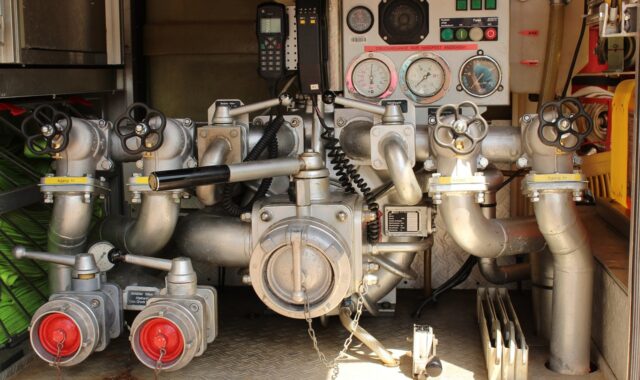
Weir pump and valve solutions for slurry handling and dewatering

What Weir pump and valve solutions cover
Weir pump and valve solutions are best viewed as a slurry-handling portfolio, not as a single product line. In mining, aggregates, oil sands and heavy industrial plants, the selection question is rarely just which pump is strongest. It is which pump, valve, material package and service approach suit the slurry, pressure, solids content and planned maintenance window. Weir’s public product information groups the portfolio around pumps for slurry transport, process duties, dewatering and positive-displacement service, together with valves for isolation, flow control and reverse-flow protection in abrasive service. The main names buyers will encounter include WARMAN® slurry pumps, GEHO® piston and piston-diaphragm pumps, MULTIFLO® dewatering systems, ISOGATE® slurry valves and Delta Industrial™ knife gate valves. (global.weir)
For equipment comparisons, duty is the most useful starting point. A cyclone-feed pump, a tailings pipeline pump, an in-pit dewatering unit and a high-pressure isolation valve solve different problems. Treating them as one generic pump and valve package can lead to oversizing, short wear life, difficult maintenance or unsafe isolation. For broader equipment coverage, see the Pumps and Valves section.

The pump side of the portfolio
Horizontal slurry pumps for abrasive process duties
WARMAN® horizontal slurry pumps are the most visible part of Weir’s slurry-pump portfolio. Weir describes this range as suitable for mill-circuit, process, high-pressure, froth, tailings, gravel, dredging and flue-gas-desulfurization applications. The company’s horizontal slurry pump information also states that Charles Warman developed the original concept in 1938, giving the line a long operating history in mining and industrial slurry service. (global.weir)
The engineering issue behind this category is abrasive wear. A pump moving dense mineral solids needs different hydraulic clearances, liners, impellers and sealing arrangements from a clean-water pump. Selection should begin with particle size distribution, slurry density, corrosiveness, flow rate, head, pump speed and expected duty cycle. If the slurry contains entrained air or froth, a conventional slurry pump may not perform predictably, which is why Weir separates froth-pumping options from standard horizontal slurry service.
Positive-displacement pumps for high-pressure slurry pipelines
GEHO® piston diaphragm pumps sit in a different part of the performance map. Weir’s product catalogue describes GEHO® pumps for abrasive ore slurries, tailings, dirty mine water and long-distance pipeline transport. Public product information states that certain GEHO® crankshaft-driven pumps are designed for slurry transport over distances up to 550 km and elevations of more than 2,000 m, while GEHO® hydraulic piston pumps are described for high-density slurries, mine backfill and sludges with solids content up to 90%, depending on model and application conditions. (global.weir)
The key distinction is that positive-displacement slurry pumps are not direct substitutes for centrifugal slurry pumps. They become relevant when pressure, distance, high solids content or controlled pipeline movement dominates the design. They also require close attention to pulsation control, pipeline design, non-return valves, maintenance access and shutdown procedures. For this type of duty, a buyer should not compare purchase price alone; the better comparison is total system cost for the pipeline duty.
Dewatering pumps for changing site conditions
MULTIFLO® dewatering solutions address another operating need: moving water around a mine, quarry or industrial site. Weir’s public description covers mobile diesel-driven pump units, pontoon barge systems, pump houses, submersible options and modular floating arrangements for fluid management. The brand positioning is strongly tied to in-pit dewatering, reclaim water, process water movement and site-specific water control. (global.weir)
Dewatering duties often change faster than fixed process duties. Rainfall, pit development, pond levels, access roads and sediment load can all change the required pump location or head. For that reason, portability, lifting arrangements, power source, hose routing, priming method, solids tolerance and field serviceability matter as much as nominal flow and head.
The valve side of slurry service
In abrasive plants, valves are not secondary accessories. Weir’s slurry-valve information covers knife gate, pinch and check valves for mining and industrial applications, with ISOGATE® and Delta Industrial™ named as key product ranges. The same public information emphasizes low maintenance, long wear life and reliable performance in abrasive or corrosive slurry conditions. (global.weir)
Knife gate valves for isolation
Knife gate valves are commonly specified for slurry isolation because the gate can cut through settled solids more effectively than many general-service valve types. Delta Industrial™ knife gate valves are described by Weir as heavy-duty valves for abrasive, high-temperature and high-pressure slurry applications. Weir’s product page for heavy-duty Delta Industrial™ knife gate valves lists size ranges up to 1,500 mm, depending on valve choice, and pressure capability up to 10,200 kPa, depending on the selected valve and material. (global.weir)
Pinch and check valves for control and protection
Pinch valves can be useful where the sleeve can isolate abrasive slurry from metallic valve internals. Check valves are used to reduce the risk of reverse flow. In slurry systems, both choices depend on solids size, line velocity, pressure class, cycling frequency, chemical compatibility and maintenance access. A check valve that works in clean water may perform poorly in slurry if solids settle, jam the mechanism or accelerate wear at the sealing surface.
Application map for common duties
The table below is an editorial application map based on Weir’s public product categories and standard slurry-system design logic. It is not a substitute for manufacturer sizing or a site engineering review, but it helps clarify where each family is commonly considered. Hydraulic Institute standards include ANSI/HI 12.1-12.6 for rotodynamic centrifugal slurry pumps, and HI/Europump life-cycle-cost guidance emphasizes evaluating the whole pumping system rather than purchase price alone. (pumps.org)
| Duty | Primary engineering concern | Relevant Weir product family | Valve focus |
|---|---|---|---|
| Mill circuit and cyclone feed | Abrasion, uptime, liner and impeller wear | WARMAN® horizontal slurry pumps | Isolation for maintenance and shutdown |
| Froth flotation transfer | Air entrainment and unstable flow | WARMAN® froth pump options | Flow stability and accessible isolation |
| Tailings pipeline | Pressure, distance, solids concentration and availability | GEHO® piston diaphragm pumps | Check valves, isolation and safe depressurization |
| Mine dewatering | Mobility, head, changing water levels and sediment | MULTIFLO® dewatering pumps and pontoons | Non-return protection and quick field maintenance |
| High-pressure slurry isolation | Leak-tight isolation, pressure class and abrasive sealing | Delta Industrial™ knife gate valves | Bi-directional isolation and material compatibility |
| Abrasive process flow control | Wear at throttling or closure points | ISOGATE® slurry valve range | Pinch, knife gate or check selection by duty |
Selection criteria buyers should verify
Because slurry behavior changes with solids, chemistry and operating pattern, equipment selection should be based on a duty sheet rather than a brand name alone. A practical duty sheet should include flow rate, total dynamic head, static head, slurry density, percentage solids by weight and volume, particle size distribution, pH, chloride level, temperature, abrasion index if available, expected operating hours, start-stop frequency and required availability.
-
Materials and wear parts. Liners, impellers, seats, sleeves, gates and elastomers should be matched to both abrasion and corrosion. A hard metal that resists abrasion may not be the best choice for every corrosive slurry, while an elastomer may be limited by temperature or chemical attack.
-
Hydraulic fit. Oversizing a pump can move the operating point away from the preferred efficiency region, increase recirculation and accelerate wear. Undersizing can overload the motor or fail to maintain line velocity. See also: Storage Systems.
-
Maintenance access. Slurry equipment is maintained more frequently than many clean-fluid systems. Space for liner changes, valve removal, lifting beams, flushing lines and safe isolation should be reviewed before purchase.
-
System controls. Variable speed drives, pressure monitoring, flow measurement and condition monitoring can improve operation, but only if the instrumentation survives the environment and operators receive usable data.
-
Standards and documentation. Buyers should request curves, material certificates where required, pressure ratings, test documentation, installation manuals and maintenance procedures.
Why integration matters more than a single component
The strongest argument for considering pump and valve solutions together is reliability. A pump may be correctly sized, but if the isolation valve leaks, jams or cannot be safely operated, maintenance time still increases. A valve may be properly rated, but if the pump produces pressure surges or the pipeline allows solids to settle, valve life can be shortened. This is why life-cycle-cost analysis is relevant: the Hydraulic Institute and Europump guide frames cost around the complete pumping system, including design, operation, maintenance, energy, piping and controls. (pumps.org)
Recent corporate reporting also shows why the topic remains commercially relevant. In its half-year results published on July 29, 2026, Weir reported first-half 2026 order growth of 8% year on year and cited demand in copper, gold, iron and oil sands among positive activity areas. That does not prove performance for any individual site, but it does indicate continuing demand for mineral-processing equipment and aftermarket support in sectors where slurry pumps and valves are heavily used. (global.weir)
Limitations and procurement cautions
There are three practical cautions for anyone evaluating Weir pump and valve solutions. First, published product ranges describe capability envelopes, not automatic suitability. A pressure rating, size range or solids-content statement must be checked against the exact model, material, temperature, slurry properties and installation conditions. Second, a recognized brand does not remove the need for hydraulic calculation, surge analysis, pipe design or safe isolation planning. Third, aftermarket support should be evaluated locally, because lead times, inventory, service coverage and repair capability can vary by region.
For brownfield plants, the best procurement approach is often a failure-mode review. Identify where the current system loses availability: worn liners, gland water problems, unstable froth pumping, blocked valves, leaking isolation, reverse flow, high energy use, difficult change-outs or spare-parts delays. That review narrows the equipment decision and helps avoid paying for features that do not solve the actual constraint.
Frequently asked questions
Are Weir pump and valve solutions only for mining?
No. Mining is the core market emphasized in Weir’s public information, but the same product pages also refer to sand and aggregates, general industry, infrastructure, chemical applications, oil sands, power and other abrasive or heavy-duty services, depending on the product family and model.
What is the difference between WARMAN® and GEHO® pumps?
WARMAN® is mainly associated with centrifugal slurry pumps for process, mill-circuit, froth, tailings and similar duties. GEHO® is associated with positive-displacement piston and piston-diaphragm pumps for high-pressure, high-solids or long-distance slurry movement. The right choice depends on the hydraulic duty, slurry behavior and pipeline requirements.
When should a slurry valve be specified instead of a general industrial valve?
A slurry valve should be considered when solids, abrasion, settling, corrosion or high cycling would damage or block a general-service valve. Knife gate, pinch and check valves designed for slurry service can address isolation, control and reverse-flow protection, but each type has limits.
Is total cost of ownership more important than purchase price?
For abrasive slurry systems, yes in most serious applications. Wear parts, downtime, power consumption, maintenance labor, flushing water, safety procedures and spare-parts logistics can outweigh the initial price difference between two options. That is why a life-cycle view is more reliable than a simple quotation comparison.